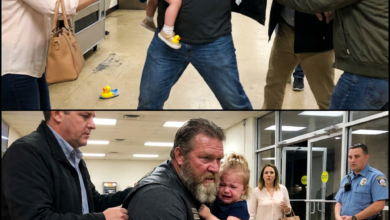
A Seven-Year-Old Girl Tore Up Her Schoolbooks and Threw Them Into the River—Then Told Me She Was Saving Her Mother Money
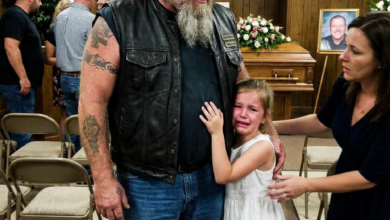
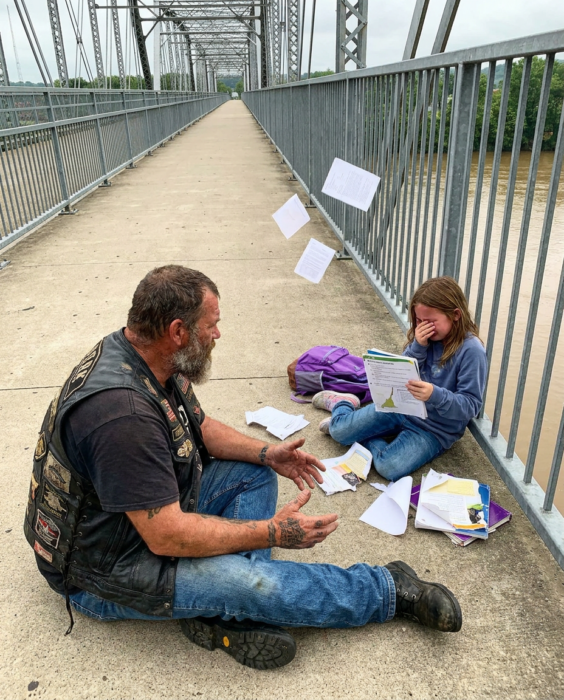
Lucy’s mother arrived wearing mismatched socks and a jacket she had pulled on over a work shirt. Her name was Mara Bennett. She stopped short when she saw the books, then looked at Lucy, then at me. I stood slowly and moved away from the child so there would be no confusion about whether I intended to keep her there. Mara crossed the remaining space and dropped to her knees.
She held Lucy hard enough that the girl complained she couldn’t breathe. Mara loosened her arms immediately, then checked her face, her hands, and the sleeves of her sweatshirt. She wasn’t ignoring the ruined books. She simply had to establish that the living thing in front of her was intact before she could face the things that weren’t.
“Why did you leave?” she asked.
Lucy began explaining, but the words came out tangled. School. Money. Sleeping. The phone call. Mara closed her eyes when she heard that last part.
I told her what Lucy had said to me, carefully, without adding what I imagined it meant. The girl had overheard a conversation about tuition. She believed that if she no longer had books, she could no longer attend, and her mother would no longer need to pay.
Mara sat back on her heels.
“Oh, sweetheart.”
Lucy looked frightened by the tenderness. It wasn’t the reaction she had planned for. She had expected relief, perhaps anger about leaving home, but not the look on her mother’s face.
Mara worked mornings cleaning offices, afternoons at a laundromat when shifts were available, and several evenings helping an older woman with household tasks. Three jobs sounded like three wages. In practice, it meant irregular hours, unpaid travel time between them, and constant calculations about what could be postponed.
The cooperative school had a longer supervised day than the alternatives she could manage within her work schedule. Its tuition was modest by ordinary comparisons. Thirty dollars a month during the school year. But ordinary comparisons don’t help when a car repair has swallowed the grocery money and the power bill is already late.
The evening before, Mara had been speaking to her sister on the phone. She said she couldn’t keep paying the school bill. She said she was exhausted. She said she didn’t know which job she could add without leaving Lucy alone more often.
She thought Lucy was asleep.
Lucy had heard enough to build a plan and not enough to understand the conversation.
Mara told her they would work it out.
Lucy answered, “You always say that.”
The words weren’t cruel. They were worse than cruel. They were observant.
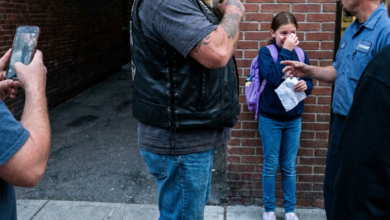
Mara looked toward the river, blinking hard. I turned away and gathered the scraps still caught on the walkway. A passing couple offered a shopping bag. We collected what we could safely reach from the bridge and left the pieces already in the water to people equipped to retrieve them from shore later. Nobody climbed over a railing or went into the river.
When the bag was full, Lucy stared at it.
“I ruined everything.”
“No,” Mara said. “You ruined some books. That’s different.”
I remember that sentence because it gave the child a boundary she could survive. There was damage. There would be a conversation about leaving without permission and putting paper into the river. But Lucy herself wasn’t the damage.
We walked to Mara’s apartment, two streets away. I followed at a distance while they held hands. At the building entrance, I gave Mara my name, the address of my repair shop, and the name of a club member she might recognize from community projects. I didn’t ask to come inside.
She asked whether I had children.
“One daughter. Grown.”
“Did you ever know what you were doing?”
“Not reliably.”
She laughed once, without much happiness, but it was the first breath she had taken that didn’t look painful.
I told her our club could replace the books. She immediately said no. The refusal was so quick that I knew I had touched an old bruise.
“I wasn’t asking for anything,” she said.
“I know.”
“I don’t want people using her picture.”
“We won’t.”
She studied me.
I couldn’t blame her. A stranger had found her child at a vulnerable moment, and now he was offering help that might come with a bill she couldn’t yet see.
I told her she could think about it. I would leave my number. If she wanted only a ride to the school office, or somebody to sit beside her while she asked questions, that was possible too.
At the mention of the office, her shoulders tightened.
“I’ve already asked.”
“What did they say?”
“That it was the amount due.”
I looked at the school name on the ruined folder. I knew the cooperative raised money for full tuition assistance. Our club had contributed to one of its building projects years earlier. That didn’t mean Mara qualified. It didn’t mean the office had made a mistake.
But it meant there was a question worth checking.
I asked whether she had ever applied for assistance.
“Twice.”
She went inside and returned with a thin packet of documents. I didn’t take them from her. She showed me an approval letter from a local hardship program, followed by school bills with the full tuition amount.
Mara pointed to a short code near the top.
“I thought that meant the help was for something else.”
I couldn’t read the code any better than she could.
But I could read the word approved.
I didn’t start by accusing the school of stealing. That would have been satisfying for about thirty seconds and useful for considerably less. I called Mara the next morning and asked whether she wanted me to accompany her to the office. She said she had a laundromat shift. I said we could choose another time. She was quiet, then admitted she was afraid that asking again would make things worse for Lucy.
That was the first obstacle.
Before paperwork, before codes, before anybody opened a computer, there was a mother who believed she could be punished for questioning a bill. She had been late before. She had received reminders. She had heard the careful tone people use when they want you to know they are being patient with you.
I told her I couldn’t promise the answer would change. I could promise she wouldn’t have to ask alone.
We went three days after the bridge.
Lucy stayed with Mara’s sister. Mara had written a note authorizing the office to discuss her own account with me present. I was there as support, not as an investigator with access to everyone’s finances. The secretary asked for identification, checked the appointment, and showed us to two chairs beside a display of children’s artwork.
A paper tree covered the wall.
Each leaf had a student’s answer to the question, “What helps you grow?”
Lucy’s said books.
Mara saw it at the same time I did.
She turned her chair slightly away.
The woman who handled accounts came out carrying a folder. Her name was Denise. She looked tired, not sinister. She had a mug with a chipped handle and a phone that vibrated twice while she greeted us. I mention that because people later wanted a villain they could imagine easily, and what we met was a person working inside a process she had stopped questioning.
Denise reviewed the outstanding amount first.
Ninety dollars.
She explained when payments had been due and offered to split the balance. Mara nodded automatically, the way you nod when you have heard the same terms enough times that they become weather.
I asked about the approval letter.
Denise looked at it.
“That’s the hardship eligibility notice.”
“What does it qualify the family for here?”
She said the school’s participation agreement provided full tuition coverage for families with an approved status. Then she opened the record on her computer.
Her expression changed before she spoke.
I saw her scroll upward.
Then downward.
Then return to the same field.
Mara leaned forward.
“What?”
Denise asked us to wait while she checked with the administrator. She didn’t say everything was fine. She didn’t explain the change in her face. We sat beneath the paper tree while a printer rattled in the next room.
Mara whispered, “Maybe I sent the wrong thing.”
I told her we didn’t know yet.
That mattered. I didn’t want to replace one unsupported certainty with another, even a comforting one.
The administrator, Mrs. Ellis, joined us ten minutes later. She asked when Mara had submitted the approval. Mara gave dates and produced copies. There were stamped acknowledgments among the papers.
The school had received them.
Nobody could reasonably say otherwise.
Mrs. Ellis asked Denise to open the previous year’s record. Then the year before. Lucy had attended kindergarten and first grade there before beginning second grade. Her family’s hardship eligibility had been approved before the first of those years.
The account had remained classified for standard tuition billing.
The approval was present in an attached document.
The status field was wrong.
Mara stared at the screen as though the words might change if she understood them.
“So I wasn’t supposed to pay?”
Mrs. Ellis said the record needed to be checked against the program documentation, but the initial review suggested the tuition charges should not have been issued.
Mara asked again.
“So I wasn’t supposed to pay?”
The second time, nobody hid inside a longer sentence.
“No,” Mrs. Ellis said. “It appears you weren’t.”
Mara put her papers on the desk very carefully. Then she pressed both hands against her knees.
I expected anger.
What came first was arithmetic.
“The cleaning shifts,” she said. “Last winter. I took Sundays.”
Nobody answered.
She listed things she had done to keep paying. An extra shift. A delayed repair. Groceries put back at the checkout. She wasn’t making a speech. She was trying to relocate two years of decisions inside a world where the bill should never have existed.
Denise began apologizing.
Mara raised one hand.
“Please let me understand first.”
That was the strongest thing she said all morning.
Mrs. Ellis confirmed that collection on the account would stop while they completed the review. She promised a written response, not merely a phone call. Mara asked when. We agreed on a date.
As we stood to leave, I asked one more question.
“How was that status entered?”
Denise explained that hardship records had been transferred into the billing system through a shared administrative process used by several cooperative sites. Some classifications were selected manually from a list.
I looked at Mara’s two approval letters.
The same code appeared on both.
“If it happened again when she resubmitted,” I said, “how do you know it only happened to her?”
Denise didn’t answer.
Mrs. Ellis sat back down.
The answer took weeks.
That was frustrating, but it was also necessary. Thirty-five families did not become thirty-five confirmed errors because a biker asked a pointed question in an office. Records had to be compared. Eligibility had to be established for the relevant dates. Charges and actual payments had to be separated. Some families had changed addresses. Others had withdrawn children or fallen behind and paid only part of what they were billed.
Mara’s account was reviewed first.
The school confirmed that her approved status entitled her to full tuition assistance under its charitable program. The code entered in the billing record had classified her as a standard-paying family. The approval documents had remained attached, but the process had never required someone to reconcile the documents with the field that generated invoices.
The next annual update had repeated the classification.
That was how the error survived.
Not because a computer secretly decided to dislike poor people. Not because one mysterious button held the power to ruin every life on the block. A person entered a status incorrectly, and a process trusted that status more than the evidence already in the file.
Another person later carried it forward.
The checks that should have caught it did not.
Denise called Mara herself after the review. She apologized without asking Mara to reassure her. She said the incorrect classification had begun during a period when she was processing a large backlog. Mara listened, then asked whether other accounts were being reviewed.
They were.
That question mattered more to her than the explanation.
I wasn’t given other families’ names or records. The school and the program administrators communicated directly with them. As the review expanded, Mrs. Ellis shared aggregate information through updates families had agreed could be made public.
The first additional cases were found at Lucy’s school.
Then similar errors appeared at other participating sites in the county.
There were thirty-four other households.
Thirty-five including Mara’s.
Some had approval letters folded into kitchen drawers. Some had emailed forms and kept the sent messages. A few had believed assistance was denied because bills continued to arrive. One family had transferred its child after deciding the monthly amount was beyond reach.
The total actually paid in error came to $16,740.
That was the sum of payments, not the larger amount of invalid charges sitting on accounts. The unpaid balances also had to be corrected. Nobody should have remained in debt for tuition covered by an approval the program had already granted.
When Mara heard the number of families, she sat down at my workbench.
I had offered her the chair twice before she accepted it.
“All of them thought it was their fault,” she said.
We couldn’t know that about every household. But we knew it about enough of them to understand what she meant.
The club had expected to buy Lucy some books. Now we were watching an administrative mistake widen into a community problem. Mateo, our treasurer, asked what help was actually needed.
I said transportation, printing, and somebody to sit with people who wanted support while they reviewed letters.
He nodded.
“No marching into offices?”
“No.”
“No putting families online?”
“No.”
He opened the notebook.
“All right. That we can do.”
The quiet work was less impressive than a photograph of thirty motorcycles would have been. It also helped more. A rider drove one mother to a scheduled meeting because her car was unavailable. Another helped a parent print copies of emails at the library. A retired office manager volunteered through an appropriate community group to explain documents, with each family deciding what to share.
Nobody from our club demanded access to the entire list.
People were allowed to want their money back without becoming part of our story.
Mara’s refund was approved, but the timing created a new problem. She had already changed her budget after hearing she owed nothing. Bills still arrived from other places. The school could confirm the amount, but the money had to pass through the organization’s financial process.
She called me one evening, angry.
“I know they need to check things. I checked things when I paid. Every time.”
I didn’t tell her to be patient.
I asked what the written schedule said.
There wasn’t one yet.
The next meeting focused on that. Families needed dates, a contact person, and explanations when a payment was delayed. They needed corrected statements so old balances didn’t reappear. They needed to know the problem was being addressed without calling three different people and telling the whole story again.
The organization produced a refund schedule.
Mara read hers twice.
Then she placed it inside a clear plastic sleeve, beside the approval letter she had once assumed she misunderstood.
Lucy watched from the kitchen doorway.
“Do I still have to leave school?”
“No,” Mara said.
“Because the man helped?”
“Because you were already allowed to stay.”
Lucy looked at me.
I shook my head gently.
Her mother had given the answer that mattered.
The right had existed before anybody on a motorcycle arrived.
Lucy returned to school before the refund arrived.
The books came first.
Our club paid for a replacement set chosen by her teacher and approved by Mara. We didn’t fill a backpack with expensive things that would make her uncomfortable in class. We replaced what was needed: readers, workbooks, notebooks, pencils, and the folder she had torn when she thought school itself was a bill she could cancel.
Mara wanted to contribute.
Mateo told her she could decide later whether there was something she wanted to do for another family. There was no account waiting for her, no favor we would collect. She accepted that more easily than the words “free gift.”
People accustomed to debt sometimes hear an offer and search for the hidden column.
Lucy unpacked the books at the kitchen table.
She touched the covers one at a time.
The new reading book made her cry.
Mara reached for it, thinking something was wrong, but Lucy held on.
“I broke the other one.”
“Yes,” Mara said.
“This one still counts?”
“For what?”
“For school.”
Mara sat beside her.
“Yes. And you count even without it.”
I looked toward the window while they spoke. There are moments a stranger can be invited into without owning them. I had found Lucy on a bridge. I didn’t need to become the center of her kitchen.
Her teacher welcomed her back quietly.
No assembly.
No explanation to classmates beyond what Lucy and Mara wished to share.
The teacher showed her where the replacement materials belonged, helped her catch up on missed work, and left room for ordinary things to resume.
Lucy didn’t become carefree immediately. She asked whether there would be another bill. She checked with her mother before requesting supplies. When the class planned an activity with an optional contribution, she hid the notice in her backpack for two days.
Mara found it.
They talked.
The school began using clearer wording about required charges, optional contributions, and assistance. That change wasn’t a magical cure. It did, however, stop placing all the work of interpretation on parents who were reading forms after exhausting shifts.
The refunds went out according to the revised schedule.
All thirty-five households received the money confirmed as wrongly paid. Accounts were corrected. The organization reviewed the same classification process across its participating schools throughout Ohio.
There were additional checks, but we were not told that every reviewed account contained an error. The point was to examine the process wherever it had been used, rather than declare the county problem solved and assume the rest of the system was fine.
Mara received her payment on a Thursday.
She called me from the bank parking lot.
“It’s there.”
I asked whether the amount matched the statement.
“Yes.”
Then she cried.
I stayed on the line.
When she could speak again, she said she wanted to buy Lucy ice cream. Immediately afterward, she began listing sensible uses for the money: overdue expenses, a repair, a small reserve.
I told her I wasn’t her financial adviser.
“I know.”
“I’m just saying there’s a kid who might like ice cream.”
She laughed through the last of the tears.
They bought one each.
Lucy later described the visit with more detail than she used for the refund. Chocolate sprinkles. A spoon that bent. Her mother sitting down for long enough to finish instead of eating while walking to the next job.
The money mattered.
So did the sitting down.
Mara reduced one of her extra shifts after reviewing what she could manage. She didn’t quit three jobs in a triumphant scene. The household still had limits. But the school bill disappeared, and a little space opened in the week.
Lucy noticed.
She stopped asking whether her mother was tired every time she entered a room.
The teacher told Mara that Lucy remained among the strongest students in her class, particularly in reading and mathematics. Mara was proud. She also began answering the praise differently.
“She loves it,” she said.
Not, “She has to do well.”
Not, “After everything we’ve sacrificed.”
Just that she loved it.
When I visited one afternoon, Lucy showed me a perfect score and then immediately turned the paper facedown.
“What if next time it isn’t?”
“Then it isn’t.”
She studied me.
“You won’t be disappointed?”
“Did I stop on the bridge because of your score?”
“No.”
“There you go.”
She picked up the paper again.
Later, Mara asked whether I had ever finished school.
I told her I left at sixteen and spent years disguising the things I struggled to read. My daughter eventually persuaded me to attend evening classes. I learned to ask questions without feeling that every question proved I had failed.
Mara nodded toward Lucy’s books.
“So this is personal.”
I looked at the new folder.
“Yes,” I said. “But it still belongs to her.”
Buying two hundred additional book-and-supply sets sounded wonderful until we began pricing them.
Our club’s first estimate was wrong. Different grades needed different materials. Some schools supplied readers but not notebooks. Some families needed a bag. Others already had one and didn’t want another. Two hundred identical boxes would have looked good in a photograph and wasted money on things children didn’t use.
We started again.
Teachers and participating community groups helped identify actual needs, without handing us private family records. Families could request support through people they already knew. The club bought materials in stages, gathered donations, and arranged discounts where suppliers were willing.
It took months.
That was fine.
Children needed usable supplies more than they needed our project to happen dramatically.
Not everybody in the club supported the larger plan at first. We had other commitments. One member worried that we were letting a single story pull money from less visible needs.
He was right to raise it.
Mateo put the budgets side by side and told us what we could afford without breaking promises already made. We added voluntary contributions and held a modest fundraiser. Nobody was shamed for having little to give.
I postponed a repair to the appearance of my Harley.
The engine still worked.
The scratches could remain.
By the time the project was complete, two hundred children had received appropriate sets in addition to Lucy’s replacements. Distribution happened through ordinary school and community channels. There was no line of families required to stand beneath our club banner and look grateful.
A teacher sent a note saying one student had opened a notebook and smelled the paper.
I understood that.
New paper can feel like time you haven’t used yet.
Lucy helped sort pencils one Saturday with Mara beside her. We didn’t introduce her as the girl who caused the whole project. She was a child at a folding table, counting items into bundles and correcting me whenever I lost track.
“You put eleven.”
“How do you know?”
“I counted.”
“That would explain it.”
She smiled.
Then she asked whether the children receiving the sets would know she had torn hers.
“No.”
“Good.”
That answer told me we had made the right decision about publicity.
Her worst afternoon did not have to become her permanent name.
We returned to the bridge once, with Mara’s permission and company, during a neighborhood cleanup organized by people who knew how to work safely along the riverbank. Volunteers collected accessible litter from shore. Nobody expected Lucy to recover every page she had thrown or perform remorse for the adults.
She carried a bag along the path.
Mara stayed close.
At one point, Lucy stopped beneath the bridge and looked at the moving water.
“I thought it would help.”
“I know,” Mara said.
“It didn’t.”
“It helped us understand how scared you were. But next time, tell me.”
Lucy leaned against her.
“What if you’re asleep?”
“Wake me.”
That was the whole conversation.
Not every wound needs a speech.
I kept one page recovered from the bridge, after asking Mara and Lucy whether they wanted it. It had several correct addition problems and part of the teacher’s gold star. Lucy said I could have it because the new workbook had more pages.
I placed it inside a drawer at the shop.
For years, I found it when looking for receipts.
Every time, it reminded me to ask what a person believed she was solving before deciding she was merely behaving badly.
It also reminded me to read the documents.
Kindness had replaced Lucy’s books.
A careful review had stopped the wrong bills.
The two kinds of help belonged together.
When Mara later received a school form she didn’t understand, she called the office and asked. She didn’t begin by apologizing for taking their time. She wrote down the answer and requested confirmation.
The person answering gave it.
A small change.
A very different future.
Lucy is fifteen now.
I’m seventy-one, which sounds older when somebody else says it. My beard has gone white in places, and the Harley spends more winter days under a cover than it used to. I still work a few mornings at the shop because I like being useful and because my daughter says I become unbearable when I have nothing to repair.
Lucy still does exceptionally well in school.
She remains at the top of her class.
I am proud of that, but it isn’t the first thing I tell people when they ask about her. I tell them she reads books for pleasure. I tell them she argues thoughtfully. I tell them she once spent an afternoon helping a younger student understand fractions and refused to leave until the child stopped calling herself stupid.
Mara has a steadier job now.
Their life didn’t change in one grand leap after the refund. There were difficult months, better opportunities, setbacks, and ordinary decisions. She trained for a position with more predictable hours. Family helped when they could. She kept asking questions when a document looked wrong.
That habit may have been worth as much as the money returned.
We still meet occasionally for coffee or lunch.
Lucy no longer needs me to explain a bill or carry a box of supplies. Sometimes she asks about the motorcycles. Sometimes she asks about my daughter. Sometimes she comes by the shop simply because she knows where it is.
I like that kind of visit best.
It suggests we have moved beyond the day I found her.
Last autumn, she brought me a school essay.
It was about the difference between an error and a person deciding not to correct an error once it had been noticed. She had interviewed Mara about the bills and spoken to an administrator about recordkeeping, with permission and without using other families’ names.
She asked me to read it.
Slowly.
She knows I still take my time.
The essay didn’t make me a hero.
I was relieved.
It described the bridge, the ruined books, her mother’s approval letter, and the account field that didn’t match the document attached to it. It described the people who reviewed records, apologized, issued refunds, and changed a process.
It also included the people who helped families wait through the work.
There was room for everybody who mattered.
At the end, Lucy wrote that she had once believed education was something her mother had to buy for her at the expense of sleep. Now she understood that adults had responsibilities to children that existed before a child earned a gold star.
I read that paragraph twice.
She waited across the workbench, pretending to study a tray of washers.
“Well?”
“It’s good.”
“Just good?”
“Very good.”
She grinned.
Still fifteen.
Still wanting the person in front of her to mean what he said.
After she left, I opened the drawer and found the torn worksheet. The gold star had dulled. One corner had gone soft from years of being moved between envelopes and receipts.
I didn’t frame it.
I didn’t put it where customers could ask for the story.
Some things can remain small and still hold their weight.
A week later, Mara and Lucy invited me to walk along the river. We passed the bridge on a clear afternoon, with sunlight catching against the railings and traffic moving behind us.
Lucy stopped near the pedestrian entrance.
“This is where you parked.”
I nodded.
She looked toward the place where she had sat eight years earlier.
Then she adjusted the strap of her backpack.
It was heavier now. Textbooks. Notebooks. A library novel she was nearly finished with. All the ordinary things a student carries when she expects there to be another school day.
Mara asked whether she wanted to keep walking.
“In a minute.”
Lucy took the novel out and checked how many pages remained.
There was no ceremony.
No promise to the river.
Just a girl deciding she had time to read a little before going home.
I lowered myself onto the nearby bench, more carefully than I had lowered myself onto the bridge years before. Mara sat beside me. Lucy opened her book.
The wind lifted one page.
She held it down.
Follow this page for more biker stories about overlooked voices, unexpected kindness, and people who stop long enough to help someone find a way forward.