Part 2: The Grandmother Raised Her Grandchild on a Tiny Benefit Check — Years Later, Her Addicted Daughter Returned With a Condition That Outraged the Neighborhood
Part 2
Ruth reached for the folder, but Maisie held it against her chest.
Not defiantly.
Carefully.
As if the plastic sleeves inside carried something breakable.
The neighbors watched from porches, driveways, and behind screen doors. People in that neighborhood knew how to pretend they were not listening, but nobody bothered pretending that afternoon.
Danielle looked at the folder and laughed once.
It was not a happy sound.
“What is this supposed to be?” she asked. “Some little performance?”
Maisie did not answer.
Ruth touched her shoulder.
“Baby, go inside.”
“No,” Maisie said softly.
That one word did more than shouting could have done.
Ruth blinked.
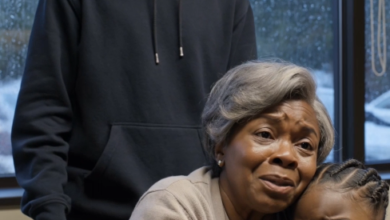
For nine years, she had taught Maisie to be polite when adults were loud. Say yes, ma’am. Step back. Do not give people more anger to hold against you.
But now the child stood on the porch, not rude, not dramatic, simply tired of being discussed like a suitcase someone had left in a station.
Danielle crossed her arms.
“I am her mother.”
Maisie looked at her.
“I know.”
The answer seemed to surprise Danielle.
Maybe she expected tears. Maybe she expected accusation. Maybe she expected the child to run into her arms because blood had finally knocked.
Instead, Maisie opened the folder.
The first page held a receipt from a pharmacy.
Ruth closed her eyes.
Maisie read the date.
“March 12. Antibiotics. Grandma paid eight dollars and forty-three cents after insurance.”
Danielle rolled her eyes.
“You are reading receipts for medicine?”
Maisie turned another page.
“April 2. School shoes. Twelve dollars at the thrift store. Grandma wrote, ‘too big but she can grow.’”
A woman across the street covered her mouth.
Everyone knew Ruth stretched money until it had no shape left.
Her monthly check came on the third. By the twentieth, she cooked beans, cornbread, and potatoes with the calm patience of someone who had learned panic did not fill plates.
She clipped coupons at the kitchen table.
She watered down juice.
She mended clothes until fabric surrendered.
But Maisie had never gone hungry without Ruth going hungrier first.
That was the first thing the folder showed.
Not poverty as neglect.
Poverty as arithmetic done by a woman who refused to let a child see every subtraction.
Danielle stepped closer.
“You put her up to this.”
Ruth shook her head.
“I did not.”
“You always wanted her.”
The sentence struck harder than Ruth expected.
Because it was true in one way and cruel in another.
Ruth had wanted Maisie safe.
She had never wanted her daughter lost.
The afternoon Danielle left, Ruth was folding laundry in the back bedroom. Maisie was asleep on a blanket in the living room. Danielle said she was walking to the store for diapers.
She did not return that night.
Or the next.
Ruth called hospitals. Then police. Then friends who stopped answering after the third question. By the time Danielle appeared six weeks later, thin and shaking on Ruth’s porch, she asked for money, not the baby.
Ruth gave her twenty dollars and begged her to come inside.
Danielle ran.
That was the second thing nobody saw.
Ruth did not steal motherhood.
She inherited the emergency after everyone else walked away.
Maisie turned another plastic sleeve.
This one held a birthday card.
The paper was cheap, pink, and soft at the fold.
“Age four,” Maisie said. “Grandma wrote it because you did not call.”
Ruth whispered, “Maisie.”
The girl looked at her.
“I need to know it out loud.”
Danielle’s face changed for half a second.
Not remorse, exactly.
Recognition.
Then she hardened again.
“I was sick.”
Ruth nodded.
“Yes.”
“You people act like I was partying.”
“No,” Ruth said. “I act like a child still needed breakfast.”
A low murmur moved across the yards.
Danielle flushed.
For years, Ruth had defended her daughter in careful pieces. She told Maisie addiction was an illness. She said people could love you and still be too broken to care for you well. She never let the neighborhood call Danielle trash in front of her.
But defending Danielle’s humanity did not mean erasing Maisie’s hunger for a mother who never arrived.
Maisie pulled out another page.
A handwritten chart.
Danielle squinted.
“What is that?”
“My fevers,” Maisie said. “Grandma wrote them down when I had pneumonia.”
Ruth sat down slowly on the top step.
She remembered those nights.
Maisie was five. Her breathing sounded wrong. Ruth did not own a car, and the neighbor’s truck would not start. She wrapped the child in two blankets and carried her six blocks to the urgent care under streetlights.
At seventy-one, Ruth still felt that walk in her knees, though she had been sixty-five then.
The nurse asked for the mother.
Ruth said, “I am the one here.”
Nobody clapped for that kind of answer.
They just handed her forms.
Maisie turned the page and found a note written in Ruth’s shaky hand.
Call Danielle again after fever breaks. Maybe she will answer if I say it is important.
Maisie looked up.
“You called her?”
Ruth closed her eyes.
Danielle looked away.
“I called,” Ruth said.
“How many times?”
“Enough.”
The word carried nine years inside it.
That was the second crack.
Maisie had believed Ruth stopped asking Danielle to return because she was angry. Now she understood Ruth had asked until silence became another bill she could not pay.
Danielle grabbed at the folder.
Maisie stepped back.
“No.”
“She is poisoning you against me.”
Maisie’s voice trembled.
“She kept your picture beside my bed.”
Danielle froze.
Ruth looked at her granddaughter.
Maisie swallowed.
“She told me to pray for you when I was mad.”
The whole street went quiet.
Because that was the twist Danielle could not answer.
Ruth had not raised Maisie to hate her mother.
She had raised her with enough truth to survive and enough mercy to avoid becoming bitter.
The folder stayed open between them, bright plastic pages in the afternoon sun.
And inside every receipt was a year Danielle had not counted.
Part 3
Danielle did not come back alone.
That became clear when a silver SUV pulled near the curb and a man in a blue button-down stepped out, holding a phone like he was ready to document whatever helped his side.
His name was Travis.
He introduced himself as Danielle’s fiancé.
Ruth had never heard of him.
Maisie looked at him once, then moved closer to her grandmother.
Travis smiled at the neighbors, smooth and practiced.
“I think this is getting emotional,” he said. “Danielle is trying to reunite with her child. That should be encouraged.”
Mrs. Alvarez from next door stepped onto her porch.
“She asked for money before asking the child what she wanted.”
Travis’s smile tightened.
“Financial matters are complicated.”
That sentence sounded expensive enough to make people angry.
Danielle lifted her chin.
“I am not asking for anything unfair. Mom got checks for raising Maisie.”
Ruth looked down at her hands.
Old hands.
Knotted knuckles.
A thin gold wedding ring she still wore though her husband had been gone twelve years.
“The checks paid for her,” Ruth said.
“Then show me what is left.”
A sound moved through the street.
Not shock now.
Disgust.
Maisie’s grip tightened on the folder.
Ruth stood again, slowly.
“Nothing is left because children are not savings accounts.”
Travis looked around, realizing the neighborhood was not turning in their favor.
He lowered his voice.
“Ruth, this can be handled privately. Danielle has legal options.”
That was the word meant to scare her.
Legal.
Ruth had been afraid of that word since the first custody hearing, when a family court clerk explained guardianship papers like Ruth should already understand them.
She did not.
She had never needed a lawyer before Danielle disappeared.
The first twist in this part arrived from Mr. Jenkins, the retired mailman three houses down.
He walked over holding a small stack of envelopes tied with a rubber band.
“I held these because Ruth asked me to keep copies safe,” he said.
Ruth looked startled.
“Earl.”
Mr. Jenkins ignored her.
He handed the envelopes to Mrs. Alvarez, who passed them to Maisie.
“They are certified mail receipts,” he said. “Letters Ruth sent to Danielle at every address she could find.”
Danielle’s face went pale.
Maisie opened one.
Danielle, Maisie started kindergarten today. She wore yellow because she said it made her brave. If you are ready, call me. If you are not ready, please just send a card.
No card came.
Another letter.
Danielle, Maisie asked if your voice sounds like mine. I did not know what to say.
Maisie looked at Ruth.
“You wrote that?”
Ruth nodded once.
The second twist arrived from Mrs. Alvarez.
She came down her steps carrying a faded photo album.
“Ruth, I am sorry,” she said. “But the child should see.”
Inside were pictures from school mornings, Halloween costumes, porch birthday parties, and backyard haircuts. Ruth stood in most of them, thinner each year, smiling like her body did not ache.
In one photo, Maisie was six, missing a front tooth, holding a cardboard sign that said, First Grade.
On the porch rail beside her was a second sign.
For Danielle, if she comes.
Maisie touched the photo.
“You made a sign for her?”
“Every year until fourth grade,” Ruth said.
Maisie’s mouth trembled.
“What happened in fifth?”
Ruth could not answer.
Mrs. Alvarez did.
“You stopped wanting one.”
That silence hurt more than any accusation.
Danielle turned away, wiping under one eye.
For a moment, the woman beneath the white jeans and shiny purse looked less polished. She looked like a girl who had run too far and found the road waiting behind her.
“I was not well,” she said.
Maisie nodded.
“Grandma told me.”
“I am better now.”
“I hope so.”
The answer was gentle.
It was also not surrender.
Travis stepped in quickly.
“Then let this be a new beginning. Danielle can provide more than this neighborhood can.”
Ruth looked at him.
“What does she need to provide, Travis?”
“Stability.”
The word had teeth.
Ruth had heard it before.
From caseworkers.
From a school secretary who asked whether Maisie had “a more stable contact.”
From a church woman who suggested a child needed younger guardians.
Stability, to certain people, meant money, newer cars, better carpets, and not having to tape the refrigerator shelf back into place.
But Maisie had her own definition.
“Grandma knows I hate peas,” she said.
Everyone looked at her.
She kept going, voice shaking now.
“She knows I cannot sleep if the closet door is open. She knows my math teacher makes me nervous, and she puts my spelling words on the fridge. She knows I like the heel of the bread.”
Ruth began crying quietly.
Maisie looked at Danielle.
“She knows I am allergic to cherry medicine. Do you?”
Danielle said nothing.
“She knows I hum when I am scared.”
That broke Mrs. Alvarez.
She turned away, wiping her eyes with the corner of her apron.
Maisie closed the folder.
“I am not saying you cannot know me,” she told Danielle. “But you cannot come back and call Grandma temporary.”
The street went completely still.
That was the main reversal.
The child did not reject her mother’s recovery.
She rejected the idea that recovery gave Danielle ownership over the years Ruth had survived.
Danielle’s mouth trembled.
“I am your mother.”
Maisie nodded.
“You are my mother.”
Then she took Ruth’s hand.
“But she is the one who mothered me.”
Travis exhaled impatiently.
“That is a childish distinction.”
Every porch seemed to lean forward.
Ruth’s voice sharpened.
“Careful.”
It was the first warning she had given all day.
Travis looked at her with surprise.
The third twist came from Danielle herself.
She looked at Travis, then at Maisie, then at Ruth.
“He is not wrong about one thing,” Danielle said quietly. “I came here thinking I had rights.”
Travis frowned.
“Danielle.”
She shook her head.
“No. Let me talk.”
Her eyes filled.
“I told myself if I got clean, if I got engaged, if I had a house, then the world owed me back what I lost.”
She looked at Maisie.
“But you were not lost property.”
Ruth closed her eyes.
That was the first honest thing Danielle had said since stepping into the yard.
Travis said her name again, sharper.
Danielle ignored him.
“I did ask about the money,” she admitted. “Because I am scared. Because starting over costs more than I thought. Because I thought Mom had something saved.”
Ruth stared at her daughter.
The confession did not excuse the demand.
But it made it human.
Ugly and human.
Danielle looked around at the neighbors.
“I am ashamed,” she said.
No one rushed to comfort her.
That was right.
Some shame needs room to do its work.
Maisie opened the folder again and pulled out one last plastic sleeve.
Inside was a drawing from first grade.
A house.
Three stick figures.
Grandma.
Maisie.
Mom?
The question mark was large and dark.
Maisie handed it to Danielle.
“I kept drawing you with a question mark,” she said. “Grandma never erased it.”
Danielle took the picture with both hands.
Her face crumpled.
Travis muttered, “This is ridiculous.”
Danielle turned to him.
“No,” she said. “This is what I left.”
That was the moment the neighborhood shifted.
Not toward forgiveness.
Not yet.
Toward truth.
Danielle looked at Ruth.
“I still want to know her.”
Ruth wiped her face.
“Then come to know her. Not take her.”
Maisie nodded.
“Start with Saturday lunch.”
Danielle blinked.
“Lunch?”
“At the diner,” Maisie said. “Public place. Grandma comes too.”
Ruth almost smiled through tears.
The child had learned boundaries before algebra, and that was both sad and extraordinary.
Danielle looked at Travis.
He looked angry.
She looked back at Maisie.
“Okay,” she whispered. “Saturday lunch.”
The street exhaled.
Not because everything was fixed.
Because a child had just done what adults had failed to do.
She made room for hope without handing it the house keys.
Part 4
The first lunch was awkward.
That word was too small, but it was accurate enough.
Ruth sat beside Maisie in the vinyl booth at Dot’s Diner with her purse on her lap, a habit from years of counting every dollar before ordering.
Danielle arrived alone.
No Travis.
She wore jeans, a plain blue shirt, and no shiny purse. Her hair was pulled back. She looked younger without armor, and older without performance.
Maisie noticed both.
Danielle brought a small gift bag.
Ruth’s face tightened.
Maisie saw it.
“What is it?” the child asked.
Danielle sat down slowly.
“A notebook.”
Maisie opened the bag.
Inside was a yellow notebook with a sunflower on the cover.
Danielle’s voice trembled.
“I thought maybe you could write things you want me to know. Or things you do not want to say out loud yet.”
Maisie touched the cover.
“That is not a big present.”
Danielle gave a sad smile.
“No. I am trying not to buy my way in.”
Ruth looked down at the menu.
That answer mattered.
They ordered grilled cheese, chicken soup, and coffee for Ruth. Danielle asked Maisie what grade she was in, then flushed because she knew the answer should have been easy.
“Sixth,” Maisie said.
“I knew that.”
“No, you didn’t.”
Danielle nodded.
“You are right. I did not.”
Ruth watched her daughter accept correction without turning it into injury.
That was new.
The lunches continued.
Some Saturdays went well.
Some did not.
Danielle cried in the parking lot after Maisie mentioned a father-daughter dance Ruth had attended in old church shoes. Maisie got angry when Danielle called one school story “cute” because it had actually been painful. Ruth snapped once when Danielle tried to suggest a different doctor.
“Do not parent over the woman who learned the medicine schedule,” Ruth said.
Danielle apologized.
Not perfectly.
But quickly.
The court became involved because it had to. Ruth had guardianship, and Danielle had to petition for visitation. This time, Ruth did not go alone.
Mrs. Alvarez drove her.
Mr. Jenkins brought copies of the letters.
A legal aid attorney from a family support nonprofit met them in the courthouse lobby and explained each paper twice because Ruth’s hands shook when forms used too many boxes.
Danielle attended too.
Without Travis.
He had left after she refused to demand money again.
That hurt her pride, but it helped her truth.
At the hearing, the judge asked Danielle what she wanted.
Danielle looked at Maisie.
“I want a chance to become someone safe enough for her to know.”
Ruth cried then.
Quietly.
Because it was the first time Danielle had asked for less than possession.
The judge ordered supervised visitation, counseling, and no disruption to Ruth’s guardianship.
Maisie squeezed Ruth’s hand under the table.
Afterward, Danielle handed Ruth an envelope.
Ruth did not take it.
“What is that?”
“Forty dollars,” Danielle said. “For school supplies. I know it is not enough.”
Ruth looked at the envelope for a long time.
Then she took it.
Not because she needed the forty dollars, though she did.
Because Danielle needed to begin somewhere real.
By winter, Danielle knew three things without checking the notebook.
Maisie hated peas.
Cherry medicine was not allowed.
The closet door stayed closed.
They were small facts.
They were also foundation stones.
Ruth’s health began changing that year.
Not dramatically at first.
A missed step.
A dizzy spell at church.
A cough that lasted too long.
The neighbors noticed because the neighborhood had already learned what happens when people assume silence means fine.
Mrs. Alvarez began bringing soup.
Mr. Jenkins shoveled the porch before Ruth woke.
Danielle came on Tuesday evenings with groceries and did not announce them as rescue. She put them away, took out the trash, and asked Ruth where the coupons went.
One night, Ruth found Danielle standing in the kitchen, crying over the grocery receipts in Maisie’s folder.
“I hated you for keeping all this,” Danielle said.
Ruth leaned against the counter.
“I kept it because I thought one day someone might ask whether I spent the money right.”
Danielle wiped her eyes.
“I was the someone.”
“Yes.”
“I am sorry.”
Ruth did not answer immediately.
Forgiveness was not a light switch.
It was more like Ruth’s old stove burner. It took time, sparked wrong, sometimes needed a match.
Finally, she said, “Help me make her lunch.”
Danielle nodded.
They stood together packing a turkey sandwich, apple slices, and a note for Maisie’s spelling test.
Ruth wrote the note.
Danielle watched.
Then Ruth handed her the pen.
“You write tomorrow’s.”
Danielle stared at it like a key.
The next morning, Maisie found the note in her lunchbox.
You are brave on days nobody notices. Love, Mom.
She read it twice.
Then folded it carefully and placed it in the front pocket of her backpack, right beside Ruth’s older notes.
Years passed in small repairs.
Danielle stayed clean.
Not magically.
Not without hard days.
She went to meetings, worked at a thrift store, then became a peer counselor for women trying to rebuild after addiction. She learned that being forgiven by a child was not the same as being trusted with one.
Trust came slower.
It arrived when she showed up in rain.
When she remembered the science fair.
When she listened to Ruth explain Maisie’s asthma plan instead of pretending she knew.
When she did not make Maisie responsible for her guilt.
Ruth remained the center of Maisie’s home.
That never changed.
But the circle widened.
On Maisie’s high school graduation day, Ruth sat in the front row with a cane across her knees. Danielle sat beside her, holding tissues and trying not to cry too early.
Maisie crossed the stage in a blue cap and gown.
After receiving her diploma, she looked toward the audience and held up two fingers.
Not a peace sign.
A family signal.
Two women.
Two complicated loves.
One who gave her life and had to earn her way back into it.
One who spent the smallest checks on the largest devotion and never asked to be called a hero.
After the ceremony, Danielle hugged Maisie first because Ruth insisted.
Then Maisie bent down and wrapped both arms around her grandmother.
Ruth whispered, “You did it.”
Maisie smiled through tears.
“We did it.”
Ruth shook her head.
“No, baby. I just kept the lights on.”
Maisie looked at her.
“That is not just.”
Danielle stood close enough to hear.
This time, she did not feel pushed out by that truth.
She felt grateful her daughter had survived long enough to say it.
That evening, the whole neighborhood gathered on Ruth’s street. Folding tables appeared. Mrs. Alvarez brought rice and chicken. Mr. Jenkins hung string lights. Danielle brought a cake she had ordered with Maisie’s favorite yellow frosting.
Ruth sat on the porch, watching Maisie laugh with friends under the lights.
The old yellow backpack, now worn beyond use, hung from a chair as a joke. Its zipper still showed Ruth’s stitches.
Danielle touched it.
“I cannot believe she kept that.”
Ruth smiled.
“Children keep proof.”
Danielle nodded.
Then she added softly, “So do mothers.”
Ruth looked at her daughter.
For once, the sentence belonged to both of them.
Follow this page for more heartfelt stories about the quiet people who raise children with love the world often overlooks.