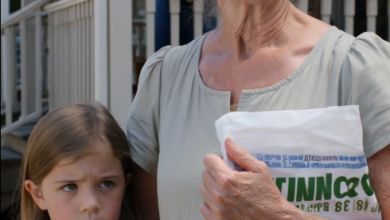
Part 2: The Grandmother Raised Him in a Trailer Park After Both Parents Vanished — When They Returned for Custody, His Answer Silenced the Court
Part 2
For a moment, even the judge did not move.
Judge Marlene Price had heard children say cruel things in custody hearings. Sometimes they said them out of fear. Sometimes from coaching. Sometimes because grown-ups had taught them that love was something to perform for whoever offered the better bedroom.
But Noah did not look coached.
He looked terrified of being misunderstood.
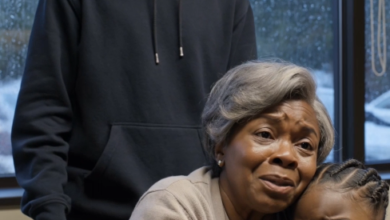
Evelyn Carter sat very still beside him, her lips pressed together, one hand gripping the strap of her old purse. The purse was brown vinyl, cracked near the clasp, and full of things nobody in that courtroom could see.
Tums wrapped in tissue.
A spare inhaler.
A peppermint for Noah’s nerves.
And a photograph of him at four years old, asleep on the couch in her trailer, still wearing dinosaur pajamas because he had arrived with nothing else.
Jenna’s lawyer recovered first.
“Your Honor,” he said, rising with practiced concern, “this is exactly why we believe the child needs stability.”
Noah’s eyes flicked toward him.
Stability.
He had heard that word three times already that morning.
It was strange how often adults used it without naming what they had done to break it.
The lawyer gestured gently toward Jenna and Travis.
“Both biological parents are now employed. They have secured a three-bedroom rental home. They are prepared to reunify as a family unit.”
Family unit.
Evelyn’s fingers tightened around the purse strap.
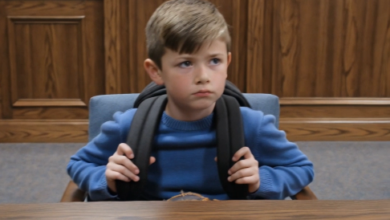
Noah unfolded the grocery receipt under the table.
His hands shook.
Judge Price noticed.
“Mr. Reed,” she said to the lawyer, “I asked Noah a question. I would like to understand his answer.”
The lawyer sat.
The courtroom settled.
Noah looked at the receipt again.
It was old, yellowed, and softened along the folds. The print had faded, but he knew every line because he had carried it for three years.
Bread.
Chicken soup.
Children’s cough syrup.
Two cans of peaches.
One pack of birthday candles.
Total: $18.42.
Evelyn saw the receipt and closed her eyes.
She knew that paper.
Noah had found it in a kitchen drawer when he was nine. He asked why there were birthday candles on a receipt from the week he came to live with her.
Evelyn had said only, “Because you still deserved a cake.”
She had not told him the cake had been made from a boxed mix borrowed from Mrs. Delaney in Lot 12.
She had not told him she skipped her own medication that week because the pharmacy co-pay and the cough syrup could not both fit inside one envelope of cash.
Noah placed the receipt on the table.
“My grandma says family is people you belong to,” he said slowly. “I don’t belong to her.”
Jenna’s face softened with hope.
Then Noah continued.
“She never acted like I was something she owned.”
The hope disappeared.
A small sound came from the back row, where Mrs. Delaney sat with both hands folded over a church purse. She had lived in Meadow Creek Trailer Park for twenty-two years and had watched Evelyn raise that boy between leaking pipes, school buses, and dollar-store Christmas mornings.
Judge Price leaned back slightly.
Noah spoke faster now, afraid someone would interrupt before he reached the part that mattered.
“When I was little, I asked Grandma if she was my mom now. She said no. She said my mom was my mom, and she was Grandma Evelyn, and I could love whoever I wanted without betraying anybody.”
Evelyn opened her eyes.
Tears stood in them, but she did not wipe them away.
That was the first crack in the story the courtroom had been told.
The petition had described Evelyn as possessive.
Uncooperative.
Emotionally manipulative.
But Noah had just described a woman who refused to steal a title from people who had abandoned the job.
Jenna shifted in her seat.
Travis looked down at his folded hands.
Their lawyer cleared his throat.
“Noah,” Judge Price said gently, “why did you bring the receipt?”
Noah touched the faded paper with one finger.
“Because they keep talking about money.”
The courtroom grew very quiet.
He looked toward his parents, but not with hate.
That somehow made it harder.
“They have a house now,” he said. “They have jobs now. They have pictures from last Christmas with my little half brother and a dog named Ranger.”
Jenna flinched.
Travis turned toward her sharply.
That had not been mentioned in the petition.
Judge Price’s eyes narrowed.
Noah looked back at the judge.
“I found the pictures online.”
The second crack opened.
There had been another child.
Another home.
Another Christmas.
While Noah’s grandmother patched a trailer roof with a blue tarp and told him Santa sometimes left practical gifts like socks because growing boys needed them.
“Noah,” Judge Price said, softer now, “what do you want me to know?”
Noah folded the receipt again, careful not to tear it.
“I want you to know my grandma is poor,” he said. “Everybody keeps acting like that is a secret.”
Evelyn bowed her head.
“She is poor,” he repeated. “But she never disappeared.”
No one in the courtroom breathed loudly after that.
Part 3
The hearing should have continued with documents.
Income statements.
Housing photos.
School records.
Medical records.
Courtrooms like paper because paper does not tremble when people tell the truth.
But Judge Price kept her eyes on Noah.
“Tell me about Lot 17,” she said.
The lawyer for Jenna and Travis stood halfway.
“Your Honor, I object to turning this into sentimental testimony.”
Judge Price looked at him over her glasses.
“Sit down, Mr. Reed.”
He sat.
Noah glanced at his grandmother, asking permission without words.
Evelyn gave the smallest nod.
So he began.
“Lot 17 is small,” Noah said. “The kitchen floor tilts by the stove, so if you drop a marble, it rolls toward the back door. The heater makes a banging sound before it starts. Grandma says that means it is thinking.”
A few people smiled through the tension.
Noah did not smile.
“The roof leaked over my bed when I was seven. Grandma put a pot there and moved my pillow to the other end. She told me it sounded like a drum line.”
Evelyn pressed one hand to her mouth.
“She worked at Miller’s Laundry until her hands got too swollen,” Noah continued. “Then she took in ironing. Then she watched two kids from Lot 9 after school. She said work was work if it kept the lights on.”
Judge Price wrote something down.
Jenna whispered, “I didn’t know.”
Noah heard her.
His face changed.
Not angry at first.
Just tired.
“You didn’t ask,” he said.
The words were quiet, but they crossed the room cleanly.
Travis shifted.
“Noah,” he said, “we tried to get ourselves together.”
Noah turned toward him.
“When?”
Travis opened his mouth.
No answer came fast enough.
That was the third crack.
Evelyn had never told Noah every detail. But children learn absence by calendar. They learn who sends birthday cards and who does not. They learn whose phone numbers stop working.
They learn what not to ask because the answer keeps hurting the person who stayed.
Jenna began crying now.
It was not fake.
That did not make it enough.
“I was sick back then,” she said. “I was using. I was not safe for you.”
Noah nodded.
“I know.”
Her eyes widened.
Evelyn looked at him.
Noah swallowed.
“Grandma told me you were fighting something bigger than me,” he said. “She said that was not my fault.”
Jenna covered her mouth.
The fourth crack opened there.
For years, Jenna had believed Evelyn poisoned Noah against her. She had told friends, counselors, and eventually a lawyer that the old woman would not let her come back.
But Evelyn had spent eight years making sure Noah’s mother remained human in his mind.
Broken.
Absent.
But human.
Travis leaned forward.
“What did she tell you about me?”
Noah looked at him longer.
“That you were scared,” he said.
Travis blinked.
“She said some men run when they think they already failed,” Noah continued. “She said running does not make it right, but sometimes it explains the direction.”
Evelyn looked away.
She had said that once when Noah was ten and furious after Father’s Day crafts at school.
She had not known he remembered it exactly.
Travis’s face reddened.
He had arrived in court expecting to defend himself against accusations. Instead, he found the woman he intended to discredit had given him more mercy than he deserved.
Jenna’s lawyer tried again.
“Your Honor, regardless of past hardship, the present question is best interest. My clients can provide better housing, better schooling options, and a two-parent household.”
Noah looked at the lawyer.
“Can I ask him something?”
Judge Price nodded.
Noah turned fully toward the man in the suit.
“If better means bigger,” he asked, “how come nobody asked where I sleep when I’m scared?”
The lawyer paused.
Noah answered it himself.
“I sleep on the couch when Grandma’s breathing gets bad,” he said. “So I can hear if she needs her inhaler.”
Evelyn’s head snapped up.
“Noah, honey.”
He kept going.
“She does not know I know. But I always know.”
The courtroom shifted again.
This was the part Evelyn had tried hardest to hide.
Her health had begun failing two winters earlier. Arthritis first. Then breathing trouble. Then the bills from urgent care visits she delayed until neighbors insisted.
Jenna and Travis had included those medical issues in the custody petition as proof Evelyn could not care for Noah.
They had not known Noah had been caring back.
Not because Evelyn asked him to.
Because love teaches children to listen through walls.
Judge Price turned to Evelyn.
“Mrs. Carter, did you know Noah was sleeping on the couch?”
Evelyn shook her head, ashamed.
“No, ma’am. I thought he just liked the television.”
Noah looked down.
“I didn’t want you to feel old.”
That line broke something in the room.
Mrs. Delaney in the back row began to cry openly.
Even the court clerk looked away.
The twist was no longer simple.
Evelyn had sacrificed for Noah.
But Noah had also been sacrificing quietly, protecting the dignity of the only parent-like figure who never left.
Judge Price asked for a brief recess.
No one moved at first.
Then the bailiff opened the side door, and people began standing slowly.
In the hallway, Jenna approached Noah.
Evelyn stood, ready to block her if the boy flinched.
He did not flinch.
Jenna stopped two feet away.
“I brought you something,” she said.
From her purse, she removed a small plastic dinosaur.
Blue, scratched, missing one foot.
Noah stared at it.
Evelyn’s breath caught.
“That was his,” she whispered.
Jenna nodded through tears.
“I took it by accident when I left,” she said. “It was in my suitcase. I kept telling myself I would bring it back when I was ready.”
Noah took the dinosaur slowly.
That was the fifth crack.
Jenna had not forgotten everything.
But remembering one toy did not cover eight years.
Noah held it in his palm.
“I used to look for him,” he said.
“I know,” Jenna whispered.
“No,” Noah said. “You don’t.”
He handed the dinosaur back.
Jenna’s face collapsed.
But Noah did not say it cruelly.
He said it because the truth had finally been given a room.
When court resumed, Judge Price asked Noah one final question.
This time, the entire room seemed afraid of his answer.
“Noah,” she said, “if you could choose without worrying about hurting anyone, where would you live?”
Evelyn stared at the table.
Jenna clasped the dinosaur in both hands.
Travis looked at his son with the helpless hope of a man arriving years late and still wanting the door unlocked.
Noah looked at all three of them.
Then he spoke.
“I want to live where someone noticed when my shoes got small.”
Silence.
Complete and heavy.
Noah continued, his voice shaking now.
“Grandma noticed. Mrs. Delaney noticed. Mr. Frank from Lot 22 noticed when my bike chain broke. My mom and dad say they want me now, and maybe that is true.”
He looked at Jenna.
Then Travis.
“But wanting me now is not the same as knowing me.”
Evelyn began to sob quietly.
Noah looked at the judge.
“I’m not saying they can never know me,” he said. “I’m saying please don’t make me leave the person who stayed while they learn how.”
Nobody in Courtroom 3 moved.
Judge Price removed her glasses and set them carefully on the bench.
The ruling did not come immediately.
Courts still require process, even when a child says the thing everyone else avoided.
But something had already changed.
The trailer park was no longer evidence against Evelyn.
It had become a map of every ordinary person who had helped raise a boy when the people with legal names on paper had vanished.
Part 4
Judge Price granted Evelyn temporary guardianship continuation that afternoon.
She ordered a home safety review, medical support services for Evelyn, and a gradual supervised visitation plan for Jenna and Travis.
The parents did not lose forever.
They also did not get to rewrite the past by arriving with a better address.
When the gavel came down, Evelyn covered her face with both hands.
Noah leaned against her shoulder.
Jenna cried quietly across the aisle. Travis sat beside her, staring at the floor with the blue dinosaur between his fingers.
For the first time that day, he looked less like a man trying to win and more like a father realizing what winning would have cost his son.
Outside the courthouse, reporters were not waiting.
No cameras.
No speeches.
Just a hot sidewalk, the sound of traffic, and Mrs. Delaney fussing that Noah needed lunch because “courtrooms eat up a person’s blood sugar.”
Evelyn laughed through tears.
It was a small laugh, rough at the edges.
Noah held her purse while she climbed into Mrs. Delaney’s minivan.
He had done that for years.
That afternoon, they drove back to Meadow Creek Trailer Park. The blue tarp still covered one corner of the roof. The gravel road still dipped near Lot 14. A dog still barked whenever someone new passed the mailboxes.
Nothing looked saved.
Everything looked like home.
When Noah stepped out, Mr. Frank from Lot 22 lifted a hand from beneath the hood of an old pickup.
“How’d it go, kid?”
Noah paused.
He did not know how to explain legal custody to a man holding a wrench.
So he said, “I’m staying.”
Mr. Frank nodded once.
“Good. Your bike chain’s fixed.”
That was Meadow Creek.
No grand declarations.
Just repairs waiting by the porch.
Over the next months, things changed in careful ways.
A county caseworker visited Lot 17 and expected to find neglect. Instead, she found labeled medicine bottles, school awards taped to the refrigerator, a chore chart written in Noah’s handwriting, and three neighbors ready to explain exactly who checked on Evelyn during storms.
The trailer needed work.
Nobody denied that.
The county helped arrange roof repairs through a senior assistance program Evelyn had never known existed. Mrs. Delaney filled out the forms because Evelyn hated paperwork and Noah was not allowed to do adult forms anymore.
That rule came from the caseworker.
Noah pretended to dislike it.
Secretly, he slept better.
Jenna began supervised visits at the library every other Saturday.
The first visit was awkward.
She brought the blue dinosaur again and set it on the table between them.
Noah looked at it, then at her.
“You can keep it for now,” he said.
Jenna nodded.
They talked about school. Then weather. Then nothing.
At the third visit, Noah asked about his half brother.
Jenna looked scared before answering.
His name was Ben. He was five. He liked trucks and apples without skin.
Noah listened.
He did not smile, but he did not look away.
Travis came to visits too, though he missed the second one and arrived twenty minutes early for the third. He brought a baseball glove still stiff from the store.
Noah thanked him, then told him he did not play baseball.
Travis looked embarrassed.
“What do you like?” he asked.
Noah thought about it.
“Fixing radios,” he said. “And drawing maps.”
The next time Travis came, he brought an old broken radio from a flea market and asked if Noah could show him how it worked.
It was clumsy.
It was late.
But it was listening.
Evelyn watched all of this with a kind of guarded mercy.
She did not celebrate their efforts too quickly. She did not poison them either. When Noah came home confused or angry after visits, she made grilled cheese and let him talk until the words ran out.
One evening in December, snow began falling over Meadow Creek.
The trailer lights glowed warm against the dark. Evelyn sat at the kitchen table, wrapping Christmas gifts with paper bought after the holiday sale the year before.
Noah sat across from her, repairing a small radio with a screwdriver from Mr. Frank.
His shoes, bought two months earlier, fit properly.
Evelyn watched him for a long moment.
“You meant what you said in court?” she asked.
He did not look up. “Which part?”
“The part about me not being your family.”
Noah set the screwdriver down.
“I was trying to say you’re more than that,” he said.
Evelyn smiled, but her eyes filled again.
“That was a rough road to get there, baby.”
“I know.”
He reached into his pocket and placed the old grocery receipt on the table.
Bread.
Chicken soup.
Cough syrup.
Peaches.
Birthday candles.
Evelyn touched it with one finger.
“You still carry this?”
“Not every day,” he said.
That was new.
For years, he had carried proof because he feared people would not believe what love looked like if it came from a trailer park.
Now the receipt could rest sometimes.
A week before Christmas, Jenna sent a card to Lot 17.
Not a demand.
Not a promise too large to trust.
Just a card with a photo of Ben, the blue dinosaur on his windowsill, and a note written in careful handwriting.
I am learning your favorite things before I ask for your forgiveness.
Noah read it twice.
Then he placed it on the refrigerator, not in the center, but not hidden either.
Evelyn said nothing.
She only handed him a magnet shaped like a tomato.
On Christmas morning, Noah woke before sunrise and found Evelyn already awake, sitting near the small tree by the window.
The tree leaned slightly to the left.
It always had.
Under it were three gifts, a repaired radio, and a pair of wool socks Mrs. Delaney had knitted too large because “boys grow faster than sense.”
Noah sat beside Evelyn on the couch.
Outside, snow covered the gravel road and softened the edges of every trailer, truck, porch chair, and rusted mailbox.
Evelyn rested her hand over his.
Her skin felt thin and warm.
“Home enough?” she asked.
Noah leaned his head against her shoulder.
“Home,” he said.
Nothing more.
Nothing needed.
Follow this page for more heartfelt stories about the quiet people who stay when love becomes hard.