They Thought the Bride Was Pregnant Before the Wedding — The Truth Emerged Just Before the Rings
The whisper started before the music did.
It moved like a draft through the pews, low and sharp, brushing shoulders and turning heads. A glance here. A pause there. Eyes lingering too long on the bride’s waist as she stepped into the aisle.
“She’s hiding something,” someone murmured.
“Look at the dress.”
“That’s not how a bride should look.”
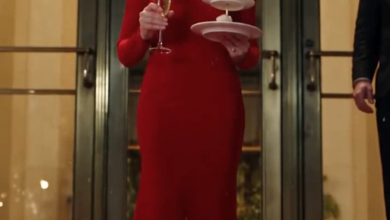
The bride walked slowly, hands folded, veil trembling slightly with each step. Her gown was elegant, fitted, but not the kind that left room for imagination. And yet imagination was exactly what filled the room.
Her future mother-in-law did not stand when she entered.
She stayed seated, lips pressed thin, eyes fixed on the bride’s midsection like it was evidence waiting to be confirmed. When the bride passed, the woman leaned toward a relative and whispered something sharp enough to draw a small, cruel smile.
The groom sensed it too. The shift. The tension. He glanced at his mother, confused, then back at the bride, who kept her gaze forward, chin lifted, breathing steady.
No one congratulated her with their eyes.
No warmth.
Only judgment.
By the time she reached the altar, the air felt tight. Heavy. As if the ceremony itself was holding its breath.
When the officiant asked if there were any objections, the silence that followed was not peaceful.
It was loaded.

The bride stood perfectly still.
Her hands were clasped low, fingers interlocked so tightly her knuckles paled. She did not look at the guests. She did not look at the groom’s mother. She stared at the ring pillow resting between them, her breathing shallow, controlled.
When the groom reached for her hand, she flinched—just slightly.
He noticed.
“You okay?” he whispered.
She nodded. Too quickly.
The officiant continued, his voice calm, practiced. Vows were spoken. Applause followed at the appropriate moments, polite but restrained. Eyes still watched her, scanning for confirmation of what they thought they already knew.
She shifted her weight once. A small movement. Enough to spark another ripple of whispers.
“She’s uncomfortable.”
“Morning sickness?”
“Poor boy… he didn’t even know.”
The bride’s mother sat two rows back, her hands folded over a small clutch. Her face was pale. Not embarrassed. Not ashamed. Afraid.
As the ceremony neared the exchange of rings, the bride’s breathing grew more uneven. The groom squeezed her hand, grounding her. She squeezed back, hard.
Then, just before the officiant spoke the words everyone had been waiting for, the bride quietly cleared her throat.
“I’m sorry,” she said.
The sound of her voice sliced through the room.
The officiant paused. The groom turned toward her fully now, concern etched across his face. Guests leaned forward. Phones stilled. The air went still, like the moment before a storm breaks.
“There’s something I need to say,” she continued, her voice steady but fragile at the edges.
The groom’s mother straightened in her seat.
This was it, she thought.
The confession.
The bride took a breath. Then another.
“I know there have been… assumptions,” she said softly. “About me. About my body. About why this dress fits the way it does.”
A murmur rippled through the room.
“I could ignore it,” she continued. “I’ve been doing that for months. But not today.”
She reached beneath the bouquet resting nearby and pulled out a folded envelope. Her hands shook as she opened it.
“This is a letter from my doctor,” she said. “I didn’t plan to bring it. I hoped I wouldn’t need to.”
She looked at the groom then, really looked at him. His eyes were wet, confused, searching her face for answers she hadn’t shared before.
“I’m not pregnant,” she said.
The words landed softly. Not relief. Not yet.
“I can’t be.”
A sharp inhale echoed somewhere in the room.
“I was diagnosed with a condition last year,” she continued. “One that affects my hormones. My weight. My body. It causes swelling. Pain. And yes—sometimes it makes me look like something I’m not.”
She paused, swallowing hard.
“I didn’t tell many people. Because I didn’t want pity. And I didn’t want to start my marriage with explanations.”
Her mother bowed her head.
“I knew there would be looks today,” the bride said. “I knew there would be whispers. And I accepted them. Because I’ve lived with them for a long time.”
She turned slightly, her gaze landing on her future mother-in-law. Not accusing. Not angry. Just open.
“But what hurts,” she said quietly, “is being judged for something that already hurts me every day.”
Silence fell.
The groom stepped closer, his voice trembling as he spoke. “Why didn’t you tell me?”
“I wanted you to love me without feeling like you had to protect me,” she replied. “I wanted you to choose me without fear.”
He reached for her face, cradling it gently, and rested his forehead against hers.
“I choose you,” he said. “Every version.”
The bride’s mother-in-law stood then.
Slowly. Heavily.
Her face was tight, her eyes glassy. “I was wrong,” she said, her voice barely carrying. “I saw what I wanted to see.”
She took a step forward. Then another.
“I’m sorry,” she said. Not to the room. To the bride.
The bride nodded once. A single tear slipped down her cheek.
The rings were exchanged with shaking hands.
Applause this time was not polite. It was real. Messy. Emotional. Guests wiped their eyes. Some looked at the floor, ashamed. Others reached for hands beside them.
As the ceremony ended, the bride smoothed her dress, the same dress that had been judged so harshly minutes before. Now it looked different. Not because the fabric had changed—but because the room had.
Later, as the crowd thinned and the lights dimmed, the bride stood alone near the altar, holding the bouquet loosely at her side.
Her mother approached and kissed her forehead. “You were brave,” she whispered.
The bride shook her head. “I was tired of being quiet.”
Across the room, her mother-in-law watched her for a long moment. Then she walked over and placed a hand over the bride’s.
No speech.
No explanation.
Just a small, careful gesture.
Sometimes truth doesn’t arrive with thunder.
Sometimes it arrives with trembling hands and a voice that refuses to hide any longer.
What would you have done in that room—and how often do we judge without knowing the weight someone is carrying? Share your thoughts in the comments.