“The Woman Mocked for Picking Up Trash Outside the School” — Until She Walked into the Parent Meeting
The laughter started before the bell rang.
Not loud. Not cruel enough to be called out. Just soft chuckles, side glances, whispers tucked behind hands as parents gathered near the school gate.
Every morning, she was there.
Bent at the waist. Gloves on. A faded jacket zipped up to her chin. Picking up trash—candy wrappers, crushed cups, scraps of paper—right in front of the school entrance.
“She’s always here,” someone said.
“Does she even have a kid here?”
“Looks desperate.”
“Or unstable.”
The woman didn’t look up.
She dropped another piece of trash into a black bag already half full, tied it carefully, and reached for another.
Too slow. Too quiet. Too invisible.
Parents stepped around her as if she were part of the sidewalk. Some pulled their children closer. Others checked their phones, pretending not to notice.
A man in a pressed shirt smirked. “There are bins for that,” he said loudly, as if offering advice.
She nodded once. Didn’t answer.
When the bell rang, the crowd thinned. Cars pulled away. The gate closed.
She stayed.
Still cleaning. Still silent. Still the object of judgment no one felt responsible for.
By the time the announcement for the parent meeting echoed through the hallway, most people had already decided who she was.
And who she wasn’t.

That afternoon, the meeting room filled quickly.
Plastic chairs scraped. Papers rustled. Parents greeted one another with polite smiles and easy confidence. They belonged here. They knew it.
Then the door opened.
The woman from the gate stepped inside.
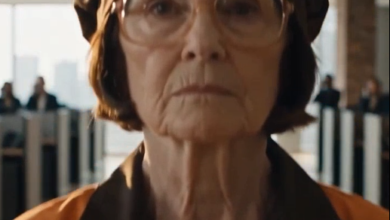
Same jacket. Same gloves—now folded and tucked into her bag. Her hair pulled back neatly, though a few strands had escaped. She paused, scanning the room, as if making sure she was in the right place.
The room shifted.
Brows lifted. Murmurs started. Smiles tightened.
“Is she lost?”
“Maybe she’s staff?”
“No… that’s the trash woman.”
She took a seat in the back. Alone.
The principal began the meeting, welcoming everyone. Announcements followed—fundraisers, schedules, safety updates. The usual.
The woman listened. Eyes forward. Hands folded. Shoulders squared.
When questions were invited, hands shot up. Complaints about parking. Concerns about homework. Suggestions delivered with confidence.
She didn’t raise her hand.
At one point, a teacher asked if anyone had noticed the litter problem at the gate.
A few parents laughed softly.
“Someone’s already taking care of it,” a man said, glancing back. “Every day.”
More chuckles.
The woman’s fingers tightened around her bag.
Then the principal said, “Before we close, we have one more item.”
He looked toward the back.
“Would Ms. Carter like to speak?”
The room went still.
She stood slowly.
No rush. No drama. Just quiet resolve.
“Yes,” she said. Her voice was steady, though her hands trembled slightly as she gripped the back of the chair. “Thank you.”
She walked to the front.
Each step felt heavier than the last. Eyes followed her—curious now, uncertain.
“I know most of you don’t know me,” she began. “And that’s okay.”
She paused, taking a breath.
“My son attended this school,” she said. “For three years.”
A ripple moved through the room.
“He loved it here. Loved his teachers. Loved standing at that gate in the mornings, pretending he was brave.”
She smiled faintly, then let it fade.
“Last spring,” she continued, “he was hit by a car right outside this school.”
The air dropped out of the room.
No one laughed.
“He survived,” she said quickly. “But he didn’t come back. Not here. Not anywhere.”
Silence pressed in.
“I started picking up trash at the gate because I couldn’t stop coming here,” she said. “Because every wrapper felt like a reason someone might look down instead of up.”
Her voice wavered.
“I didn’t want recognition. I didn’t want pity. I wanted to protect a place that once protected my child.”
She looked around the room.
“I stayed quiet because grief doesn’t need an audience. And love doesn’t always explain itself.”
She reached into her bag and pulled out a folder.
“I’m here today,” she said, “because I’m donating the remainder of my son’s medical fund to improve safety at the gate. Cameras. Signs. Barriers.”
Gasps. Hands flew to mouths.
“I didn’t clean because I was lost,” she finished. “I cleaned because I remembered.”
Her voice broke.
She bowed her head.
The room did the same.
After the meeting, no one rushed out.
Parents lingered. Some approached her quietly. Apologies came in whispers. Others simply nodded, eyes wet, words failing.
Outside, the gate stood clean.
The woman returned her gloves to her bag and took one last look at the sidewalk. No trash today.
A teacher joined her. “You don’t have to do this anymore,” she said gently.
The woman smiled. Small. Peaceful.
“I know,” she said. “But I might.”
She turned and walked away.
Some people are loud when they love.
Some are visible.
And some carry their devotion in silence—until the world finally listens.
💬 What do you think—have you ever judged someone before knowing their story? Share your thoughts in the comments.



I liked it very much, my English is not very well but I understand what you will tell to the people.
It,s not the title that covered the book but what’s inside is so much important.
It give me a very warm feeling.
Thank you for these.