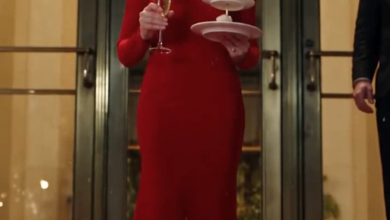
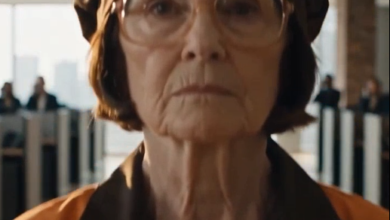
Part 2: An Elderly Woman Threw Her Granddaughter’s Birthday Cake to the Floor — What She Said Next Silenced the Entire Room
Part 2
Nobody moved toward the cake.
A few seconds earlier, children had been laughing beneath yellow balloons while adults balanced paper plates and prepared to sing. Now the only sound came from frosting sliding slowly off the broken cake board onto the hardwood floor.
Lily stared at her grandmother.
Her crying had stopped, not because she felt better, but because Margaret’s words had frightened every question out of her.
“My mother had an allergy?”
Margaret looked at Daniel.
He stood near the dining table with both hands clenched around the cake knife.
“You promised,” he said.
Margaret’s expression tightened.
“I promised when she was four.”
“You promised we would tell her together.”
“She was about to eat it.”
“I checked with the bakery.”
“You checked the order sheet. I checked the cake.”
That was the first detail the guests had missed.
Margaret had not destroyed the cake because it resembled something painful, nor because she resented Daniel for recreating a memory that belonged to her dead daughter.
She had smelled almonds.
The bakery had coated the sponge with apricot glaze and wrapped it in marzipan before adding white fondant. A narrow golden strip remained visible where one tier had shifted during delivery.
Most guests saw decoration.
Margaret saw danger.
Daniel reached for the bakery receipt.
The printed description said “classic celebration cake.” The allergy section listed eggs, milk, wheat, and possible traces of nuts, but no one had read the final line carefully because Lily had never been formally diagnosed with a nut allergy.
At least, that was what Daniel believed.
Margaret crossed the room, opened her purse, and removed a small medical pouch.
Inside was an epinephrine injector bearing Lily’s name.
Daniel stared at it.
“You had her tested?”
“Six months ago.”
“You took my daughter for medical testing without telling me?”
Margaret looked toward Lily.
“I took her to urgent care after she ate half a cookie at my house and said her tongue felt strange.”
Lily remembered.
She had developed an itchy mouth, red patches along her neck, and a cough that disappeared after an antihistamine. Margaret told Daniel it was probably a seasonal reaction.
That had been another lie.
The urgent-care physician recommended allergy testing. Margaret arranged it through a clinic and signed the consent form as Lily’s emergency guardian, a status Daniel had given her years earlier so she could manage school pickups and medical care while he traveled for construction work.
The results showed a severe allergy to almonds and several other tree nuts.
“Why didn’t you tell me?” Daniel asked.
Margaret’s hands began shaking.
“Because every time I tried, I saw Anna on your kitchen floor.”
The name changed the room.
Anna Carter had died eight years earlier, during Lily’s fourth birthday celebration.
The family story was familiar.
Anna felt dizzy after eating cake.
She collapsed.
Paramedics arrived.
At the hospital, doctors discovered an undiagnosed heart condition.
That was the explanation Daniel gave Lily whenever she asked why her mother had died during a happy day.
A weak heart.
A tragic coincidence.
Nobody blamed the birthday.
Nobody blamed the cake.
Nobody blamed the little girl who carried the first slice to her mother and said, “This one has the biggest flower.”
But the official story was incomplete.
Anna had experienced mild reactions to almonds since adolescence. Her lips tingled after certain cookies, and she sometimes developed hives after holiday desserts. She never considered the symptoms serious.
Margaret urged her to see an allergist.
Anna kept postponing it.
She had no health insurance during college, then became busy with work, marriage, and motherhood. Because she had eaten almonds before without a life-threatening reaction, she assumed the risk could not suddenly increase.
It could.
Allergic reactions are not always predictable.
On Lily’s fourth birthday, the cake came from Bellamy’s Bakery, a family business Anna had loved since childhood. The cake was supposed to contain vanilla sponge, strawberry filling, and buttercream.
The bakery used the wrong internal recipe card.
A new employee covered the cake with almond marzipan before decorating it.
The golden layer was hidden beneath white fondant.
Anna ate three bites.
At first, she said the cake tasted different.
Then she rubbed her throat.
Margaret noticed her voice becoming hoarse.
Daniel thought she was choking and struck her between the shoulder blades. Someone called emergency services. No one had an epinephrine injector.
By the time paramedics recognized anaphylaxis, Anna’s heart had stopped.
The hospital restored a rhythm twice.
She died shortly after midnight.
That was the first reveal.
Anna’s heart did fail, but it failed because her airway closed during a severe allergic reaction—not because of an inherited heart defect.
Lily looked at the ruined cake.
“I gave it to her.”
Daniel crossed the room immediately.
“You were four.”
“I gave her the piece.”
“You gave your mother birthday cake because you loved her.”
“But if I didn’t—”
“No.”
His answer came too quickly and too loudly.
Lily flinched.
Daniel lowered himself in front of her.
“No, sweetheart. The bakery made a mistake. The adults didn’t know enough about her allergy. You did exactly what a four-year-old child was supposed to do at her birthday.”
Lily’s green eyes filled.
“Then why did everybody lie?”
No adult answered immediately.
The silence itself became another confession.
After Anna died, Lily began repeating the final ordinary moments she remembered.
She chose the cake.
She picked the largest sugar rose for her mother.
She carried the plate.
She insisted Anna take the first bite.
For weeks, Lily asked whether her mother would still be alive if someone else had eaten first.
Daniel and Margaret panicked.
A grief counselor advised them not to overwhelm a four-year-old with medical details. She suggested using simple language and repeating that the death was not Lily’s fault.
Daniel interpreted that advice as permission to remove the cake entirely from the story.
He told Lily her mother’s heart had stopped because it was sick.
Margaret agreed.
At first, the lie was supposed to last until Lily became old enough to understand allergies and responsibility.
Then her fifth birthday arrived.
Daniel refused to serve cake.
Lily cried and asked whether birthdays made mothers die.
The following year, Daniel bought cupcakes and told her Anna would have wanted her to enjoy them.
Each year that passed made the original story harder to correct.
The lie stopped being temporary.
It became the foundation beneath their grief.
That was the second reveal.
The adults had hidden the truth to protect Lily from guilt, but their silence never removed the guilt. It merely left the child blaming herself without the facts needed to understand why she was innocent.
Lily remembered apologizing to Anna’s photograph before every birthday.
Nobody knew.
At night, after Daniel turned off the lights, Lily sometimes whispered, “I’m sorry I gave you the flower.”
The adults thought she had forgotten the details.
Children rarely forget the moment before a family changes forever.
They simply learn which memories make adults leave the room.
Daniel looked at Margaret.
“You should have told me about the test.”
“Yes.”
“You should have told me before bringing an injector into my house.”
“Yes.”
“You had no right.”
“No.”
Margaret did not defend herself.
Her action with the cake may have prevented Lily from eating it, but her secrecy had created another danger.
Daniel’s anger was justified.
Margaret had watched him raise Lily alone while working long hours. She had seen his panic around medical appointments and his refusal to enter Bellamy’s Bakery. She knew the mention of allergies returned him to the hospital hallway where Anna died.
Instead of forcing the conversation, Margaret took control privately.
It was another version of what the family had done for eight years.
Someone afraid of the truth decided everyone else should remain protected from it.
Lily looked down at her yellow dress.
“Did Mom know she was dying?”
Margaret covered her mouth.
Daniel closed his eyes.
The answer belonged to a small envelope in Margaret’s purse.
She had carried it to every one of Lily’s birthdays and never found the courage to open it.
Part 3
Margaret placed the envelope on the dining table.
The paper had softened at the corners from years of being handled. Across the front, in Daniel’s handwriting, were two words:
For Lily.
Daniel stared at it.
“I thought that was in the safe.”
“I took it after the funeral.”
“You told me it was lost.”
“Yes.”
The guests had become silent witnesses to another secret.
Lily looked from one adult to the other.
“What is it?”
Daniel’s face changed.
He sat in the nearest chair.
During Anna’s final hours, she briefly regained consciousness. A breathing tube made speech impossible, so a nurse gave her a small whiteboard.
Anna wrote several short messages.
Tell Lily I love her.
Not her fault.
Check her for allergy.
The nurse copied those words into the medical record, then helped Anna write a longer note on hospital stationery.
Daniel never read it fully.
He saw the first sentence, broke down, and gave the envelope to Margaret for safekeeping.
Margaret believed the letter would confirm the cake caused Anna’s death. She feared Daniel would reveal it while he was still shattered, and Lily would hear the words before anyone could explain them.
She placed the envelope inside a safe.
Later, when Daniel requested it, she lied.
She said it must have been lost during the move.
“You stole Mom’s last letter?” Lily asked.
Margaret’s shoulders collapsed.
“Yes.”
The single word carried no excuse.
Daniel stood and walked toward the window. His grief had spent eight years without anger because the family had blamed fate. Now the room contained a bakery error, ignored symptoms, medical fear, hidden test results, and a last letter withheld by the woman he trusted most.
He wanted one person to carry everything.
Margaret was available.
But Anna had delayed testing.
Daniel had minimized her hoarse voice.
The bakery had used the wrong recipe.
The adults had no injector.
The hospital took time to identify the reaction.
Margaret concealed information.
None of those facts made Lily responsible.
That was the truth the family had failed to place at the center.
Daniel returned to the table.
“Lily decides whether we open it.”
Margaret nodded.
Every face turned toward the twelve-year-old girl.
For eight years, adults had decided what she was old enough to know. Now they finally gave her a choice in the room where the secrecy had broken open.
Lily picked up the envelope.
“Will it say I killed her?”
Daniel moved beside her.
“No.”
“You haven’t read it.”
“I knew your mother.”
Margaret added, “And I read enough to know she spent her final strength protecting you from that thought.”
Lily slid one finger beneath the flap.
The letter was written in unsteady blue ink.
My sweet Lily,
You brought me the prettiest piece because you always give away the part you want most. I need you to know that the cake was an adult mistake. It was never yours.
Lily stopped reading.
Her shoulders began shaking.
Daniel took her hand but did not pull the letter away.
She continued.
You did not hurt me by loving me. Please never make that memory ugly just because something terrible happened after it.
Several relatives looked down.
The letter explained that Anna had known about the mild reactions but never believed they could become fatal. She asked Daniel to test Lily because allergies sometimes ran in families. She asked Margaret not to spend the rest of her life punishing herself for failing to force a grown daughter into a doctor’s office.
Then Anna wrote:
One day, Lily will remember that she chose the largest rose for me. Tell her I was happy when she handed it over. Tell her that is the part she is allowed to keep.
Lily pressed the paper against her chest.
For the first time since the cake struck the floor, Margaret moved closer.
She stopped several feet away.
“May I come near you?”
Lily looked at her grandmother’s trembling hands.
“Why did you throw it?”
“Because I saw the marzipan.”
“Why didn’t you just say something?”
“I did not believe anyone would move quickly enough.”
“You could have pulled me away.”
“Yes.”
“You ruined the whole cake.”
“Yes.”
Lily’s mouth tightened.
“I hate what you did.”
Margaret nodded.
“You are allowed to.”
“But you saved me from eating it.”
“I may have.”
Both truths remained in the room.
Margaret’s fear had been grounded in a real danger, but urgency did not transform every action into the best possible one. She could have swept the cake away, blocked Lily, or called for the injector while explaining.
Instead, she repeated the family’s oldest pattern.
Fear became control before anyone else was allowed to understand.
That was the third reveal.
The cake was not the first object Margaret had destroyed to manage grief.
After Anna’s death, she threw away the remaining birthday plates, the child-sized apron Lily wore while helping decorate, and every photograph showing the cake.
She believed removing those objects would prevent Lily from attaching herself to the fatal memory.
Years later, Lily searched through family albums and noticed an empty sleeve where birthday photographs should have been.
She assumed nobody had taken any.
In fact, Margaret had hidden one.
She retrieved it from her purse.
The photograph showed four-year-old Lily carrying a plate with both hands. The slice was too large, and the pink sugar rose leaned against one side. Anna sat at the table, laughing with both arms reaching toward her daughter.
The picture had been taken perhaps two minutes before the first symptoms.
Lily held the photograph beside the letter.
“She looked happy.”
“She was,” Margaret said.
“You kept this?”
“I could not throw away the way she looked at you.”
The grandmother who tried to erase the cake had preserved the one image proving Anna received it with joy.
That contradiction broke something open in Daniel.
He sat beside Margaret.
“I hated you for about five minutes.”
“You may need longer.”
“I might.”
Margaret nodded.
No quick forgiveness followed.
The family’s pain had lasted too long to resolve through one emotional letter.
Then the front door opened.
A middle-aged White American man in a dark bakery jacket entered carrying a replacement box.
His name was Samuel Bellamy, the current owner of Bellamy’s Bakery.
Daniel had called that morning after the first cake arrived with a damaged sugar rose. Samuel offered to bring extra decorations personally.
He stepped into the room and saw the ruined cake.
The golden marzipan was visible across the floor.
His face drained of color.
“Where did that come from?”
Daniel held up the receipt.
“Your bakery.”
Samuel knelt near the cake without touching it.
“This was not your order.”
He recognized the decoration pattern.
The cake was intended for another family hosting a fiftieth wedding anniversary. Their order used almond sponge and marzipan.
Lily’s birthday cake was supposed to be vanilla with strawberry buttercream, prepared in an allergen-controlled section after Daniel specifically requested no nuts because Margaret had recently become “overly cautious.”
The delivery driver switched two boxes.
That was the fourth reveal.
The bakery had not deliberately repeated the mistake from eight years earlier, but its labeling system allowed two visually similar cakes to leave in identical white boxes.
The coincidence felt impossible.
Yet the danger did not come from destiny.
It came from preventable systems failing in familiar ways.
Samuel looked at Margaret.
“My father owned the bakery when your daughter died.”
“Yes.”
“He never recovered from it.”
“Neither did we.”
Samuel admitted that after Anna’s death, Bellamy’s implemented allergy labels and separate preparation areas. Over time, staff stopped using colored boxes because a new manager considered them expensive. Allergy orders received small stickers instead.
The sticker had been placed on the base of Lily’s correct cake.
When the boxes were switched, nobody checked the internal label against the delivery receipt.
Samuel turned toward Daniel.
“I will report this immediately. Both cakes need to be recalled, and the bakery will close until we understand how the switch happened.”
Daniel’s jaw tightened.
“A refund is not enough.”
“I know.”
“I’m not interested in a public apology using my dead wife’s name.”
“I understand.”
“Do you?”
Samuel looked toward Lily.
“No. But I can begin by not asking your family to make my company feel better.”
The answer did not repair anything.
It prevented the apology from becoming another performance.
Lily studied the frosting on the floor.
“Was the other cake mine?”
“Yes,” Samuel said.
“Is it safe?”
“We cannot assume that anymore.”
“Then don’t bring it.”
Samuel nodded.
The family had no birthday cake.
Children stood near deflated party games. Food remained untouched. The floor smelled of sugar and almonds.
Lily folded her mother’s letter.
“I still want a birthday.”
Daniel looked at her.
“Today?”
“Yes.”
“With what cake?”
Lily thought for a moment.
“Something we make ourselves.”
Part 4
The guests moved into the kitchen.
Not all of them stayed.
Some relatives left quietly because the emotional weight felt too intimate. Others remained because Lily asked them to.
Daniel cleaned the ruined cake while wearing gloves. Samuel provided disposal bags and removed every surface the cake had touched. Margaret called the allergy clinic and confirmed that Lily should avoid the room until cleaning was complete.
The birthday girl sat on the back porch with her cousins, her mother’s letter resting inside a clear plastic sleeve.
An hour later, Daniel carried out ingredients from sealed packages.
Flour.
Sugar.
Eggs.
Butter.
Vanilla.
Strawberries.
Every label was read aloud.
Not because Lily needed a frightening ceremony around food, but because the family was learning that safety did not have to hide inside one adult’s private panic.
Margaret washed the bowls.
Daniel measured ingredients.
Lily cracked the eggs.
The first shell fell into the batter.
Nobody cared.
The cake baked unevenly because Daniel opened the oven twice. The center sank. One edge browned more than the other.
Margaret made frosting by hand and added too much milk.
It slid down the sides in slow white streaks.
There were no perfect sugar roses.
Lily sliced fresh strawberries and arranged them in a circle. Then she placed one strawberry in the center.
“The biggest one is for Mom,” she said.
The room became quiet.
Daniel looked at Anna’s photograph beside the window.
Margaret gripped the counter.
Lily noticed.
“I’m not giving it to her because I think she can eat it.”
“I know,” Margaret whispered.
“I’m keeping the good part.”
The sentence came directly from Anna’s letter.
Daniel turned away to wipe his eyes.
When the cake cooled, they carried it to the dining table. The yellow balloons still hung from the ceiling. A smear of pink frosting remained near the baseboard where the first cake had struck the floor.
Daniel planned to clean it later.
For now, it stayed.
Twelve candles leaned across the homemade cake.
Before lighting them, Daniel placed the epinephrine injector on a nearby shelf.
Not hidden in Margaret’s purse.
Not treated as a symbol of disaster.
Simply available.
He also explained Lily’s allergy to every adult and child in the room. They washed their hands, checked the remaining snacks, and removed anything that could contain nuts.
Lily listened.
“This is going to happen every birthday now, isn’t it?”
Daniel smiled faintly.
“We’ll get faster.”
“Can I still eat at restaurants?”
“Yes, but we ask questions.”
“Can I go to sleepovers?”
“Yes, with planning.”
“Can I eat food without being scared?”
Margaret answered.
“That is what the planning is for.”
Safety would become part of Lily’s life, but the family refused to make fear the center of it.
They sang.
The voices were uneven because half the adults were crying.
Lily closed her eyes before blowing out the candles.
She did not wish for Anna to return. She had done that on too many birthdays.
Instead, she wished nobody would hide something from her simply because the truth might hurt.
The homemade cake tasted slightly dry.
Lily loved it.
Over the following weeks, Daniel attended allergy appointments with her. He learned how to recognize symptoms, use an injector, read labels, and speak clearly with restaurants and schools.
Margaret attended too.
At the first appointment, the allergist asked why the family waited six months after the positive test to inform Lily’s father.
Margaret answered honestly.
“I confused carrying the fear alone with protecting them.”
Daniel did not rescue her from the discomfort.
She needed to say it.
Lily began carrying two injectors in a small yellow pouch. She decorated the case with a green sticker that read only her initials.
She did not want a photograph of Anna on it.
Her mother’s death belonged to her family history, not to every person who needed to know about the allergy.
Bellamy’s Bakery closed for eleven days.
The investigation identified failures in labeling, delivery confirmation, and employee training. Samuel changed the system so allergy-sensitive cakes used distinct sealed containers, color-coded paperwork, and two-person verification before delivery.
He invited Daniel and Margaret to review the process.
Margaret refused initially.
“I am not a safety consultant.”
Samuel replied, “No, but you know what our mistakes cost.”
She agreed only after Daniel and Lily approved.
Lily did not attend.
Adults sometimes assume children harmed by a system should help repair it. Daniel decided his daughter did not owe the bakery her presence.
Samuel sent no publicity release mentioning Anna or Lily.
He made the changes without turning the family’s pain into a marketing campaign.
That restraint mattered more than a public tribute.
The original bakery order from eight years earlier was reopened through the company’s insurance records. Margaret learned that Anna’s death had resulted in a confidential settlement negotiated while the family was still grieving.
Daniel stared at the paperwork.
“You knew about this?”
Margaret nodded.
The settlement paid medical expenses, funeral costs, and part of the mortgage. A confidentiality clause restricted public statements about the bakery error.
Daniel had signed it.
He barely remembered.
During the week after Anna’s funeral, lawyers placed documents before him while he struggled to care for Lily and plan a burial. Margaret advised him to accept so the family would not face debt.
The agreement did not legally require them to lie to Lily.
But secrecy around the settlement strengthened the silence around the cake.
Another adult decision made in crisis had shaped years afterward.
Daniel asked Samuel whether the bakery would release the family from the confidentiality clause.
Samuel agreed.
Daniel did not call reporters.
He simply wanted the truth to belong to them again.
Margaret began seeing a counselor.
At seventy-six, she expected therapy to involve explaining her childhood. Instead, the counselor asked why she reacted to fear by controlling objects.
The cake.
The medical results.
The letter.
The birthday photographs.
Margaret realized she trusted things more than conversations. Objects could be hidden, thrown away, locked up, or carried in a purse.
People could disagree.
People could choose differently.
Her silence had often been less about protecting Lily than avoiding the risk of losing control over what happened after truth entered the room.
During one session, she said, “I saved her from the cake.”
The counselor nodded.
“What else happened?”
“I frightened her.”
“Both can be true.”
Margaret looked toward the window.
That sentence became the hardest form of grace she had received.
Lily remained angry for months.
She loved Margaret but refused to visit her house alone at first. She worried her grandmother might remove food, belongings, or information without asking.
Margaret accepted the distance.
She began requesting permission in small ways.
“May I check that label?”
“May I put an extra injector in the car?”
“May I tell your teacher what happened?”
Sometimes Lily said yes.
Sometimes no.
Margaret practiced surviving both answers.
On Anna’s birthday, Lily asked to see the hospital records.
Daniel hesitated.
Then he remembered the promise they had made.
No more deciding around her.
They reviewed the documents with an allergy specialist who translated the medical language. Lily learned that Anna’s reaction progressed quickly and that the family’s lack of knowledge—not her choice of cake slice—allowed the emergency to become fatal.
She asked whether an injector would definitely have saved her mother.
The doctor answered carefully.
“It would have improved her chances. Nobody can promise the outcome.”
Lily nodded.
She preferred an honest uncertainty to another comforting invention.
Later, she asked Margaret why Anna never got tested.
“Your mother thought there would always be more time.”
“Was that stupid?”
“It was human.”
“Humans can be stupid.”
Margaret smiled sadly.
“Yes.”
They placed a copy of Anna’s letter inside the family album beside the photograph of Lily carrying the cake.
They did not remove the painful image.
They added context around it.
At thirteen, Lily gave a short presentation in health class about food allergies. She did not mention her mother’s death. She demonstrated how to use a training injector and explained why people should never hide ingredients to make a child “try” something.
A classmate asked whether allergy-safe food tasted worse.
Lily said, “Only when my dad bakes it.”
Daniel pretended to be offended when she told him.
Their next cake was better.
Not beautiful.
Better.
On Lily’s sixteenth birthday, Bellamy’s Bakery offered to make her a complimentary cake under its updated safety system.
She declined.
Instead, she and Daniel baked one at home. Margaret arrived with strawberries and waited at the table until Lily asked her to help.
The cake leaned slightly to one side.
They placed a single pink sugar rose in the center, purchased from a certified nut-free bakery.
Lily stared at it before cutting the first slice.
Daniel noticed.
“You don’t have to use the rose.”
“I know.”
She placed the slice on an empty dessert plate beside Anna’s photograph.
Then she served herself.
The gesture was not an apology.
It was not an invitation to guilt.
It was the child from the old photograph, now nearly grown, reclaiming the part of the memory her mother told her she was allowed to keep.
Margaret watched without interfering.
That was her work now.
Years later, Lily became a pediatric dietitian specializing in food allergies. People assumed she chose the career because her mother died.
That was only partly true.
She chose it because she remembered what it felt like to learn that food could hold danger, love, memory, adult mistakes, and family silence all at once.
She wanted children to receive information without inheriting terror.
During consultations, Lily spoke to the child before the parent whenever possible.
“What questions do you have?”
“What foods matter to you?”
“What makes you afraid?”
She never told families that vigilance would solve everything.
She taught them to prepare without making the child feel responsible for every room they entered.
Margaret lived long enough to attend Lily’s college graduation.
At the celebration afterward, Daniel brought out a small homemade cake.
Before setting it down, he showed Lily the ingredient list.
She laughed.
“Dad, I trust you.”
“I know.”
He still showed her.
Trust did not make verification unnecessary.
It made verification safe to request.
Margaret sat near the window, older now, her silver hair almost white.
Lily carried the first slice toward her.
For a moment, both women remembered the cake hitting the floor, the scream, and the sentence that silenced the room.
Margaret looked at the plate.
“Is this for me?”
“It has the biggest strawberry.”
Her eyes filled.
“You don’t have to do that.”
“I know.”
Margaret accepted the plate with both hands.
She did not eat immediately.
“I am sorry I made your birthday frightening.”
Lily sat beside her.
“You also noticed the almonds.”
“Yes.”
“I spent years trying to decide which part mattered more.”
Margaret looked at her.
“What did you decide?”
“They both happened.”
The answer did not absolve the grandmother.
It allowed their relationship to remain honest.
Margaret took one bite.
The cake was soft, vanilla, and slightly too sweet.
“It’s good.”
“Dad didn’t make this one.”
“I knew there was an explanation.”
Across the room, Daniel laughed.
The family photograph taken that afternoon showed Lily in her graduation dress, Daniel holding a cake knife, and Margaret seated beside the untouched second slice.
No one stood in the center.
No single person owned the story.
After Margaret died three years later, Lily inherited the faded envelope containing Anna’s letter.
She placed it inside a kitchen drawer beside her allergy medication, not inside a locked chest or a bank box.
The letter belonged near ordinary life.
One afternoon, Lily’s young niece found the old birthday photograph.
“Why is that little girl giving her mom such a huge piece of cake?”
Lily looked at the four-year-old version of herself.
“Because she loved the pink rose.”
“Did her mom like it?”
Lily remembered Anna’s final words.
“She was happy when she got it.”
The child accepted the answer and ran outside.
Lily remained beside the photograph.
For years, the memory had ended with a hospital.
Then it ended with the ruined replacement cake.
Now, slowly, it ended where Anna had asked it to.
With a little girl carrying the most beautiful piece across a room because she wanted her mother to have what she herself loved best.
The dangerous cake had been thrown away.
The family’s silence had finally broken.
What remained was not a perfect birthday memory, but something more durable: the truth, held carefully enough that no child had to carry the blame alone.
Follow this page for more heartfelt stories about family, hidden truths, and the misunderstood actions that reveal what love has been trying to protect. 🌷