Part 2: The Stepmother Everyone Hated for Being Too Strict — Ten Years Later, His College Tuition Revealed the Truth
Part 2
Ryan did not open the note right away.
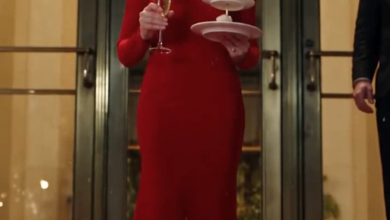
He stood in the middle of the backyard with the old backpack against his graduation gown, aware of every face watching him. His cousins had stopped laughing near the cooler. His grandmother held a paper plate without touching the cake on it.
Claire stood three feet away, hands folded in front of her navy dress.
She did not explain.
That was the thing everyone hated most about her.
Claire never explained enough to make herself likable.
When Ryan was eight, she married David Peterson two years after Ryan’s mother died from ovarian cancer. The family had expected softness from her, the careful tenderness people assign to women who enter wounded homes.
Instead, Claire arrived with rules.
Homework before television.
No yelling down hallways.
Laundry folded before Sunday night.
Thank-you notes after birthdays.
If Ryan slammed a door, he reopened it and closed it properly.
If he lied, even about something small, he lost the privilege attached to the lie.
His grandmother called it harsh.
His aunt called it overcompensating.
David often said, “Claire means well,” which somehow made her sound worse.
Ryan learned to resent her in small, daily pieces.
He resented how she checked his math and circled careless mistakes in red pen.
He resented how she packed leftovers for lunch instead of giving him cafeteria money every day.
He resented how she told him, “Wanting something is not the same as needing it,” whenever he pointed to a cousin’s new phone.
He resented how she never tried to replace his mother, yet still occupied the chair across from him at dinner.
The first crack in that resentment came when he was twelve, though he did not understand it then.
He had failed a history test because he forgot to study. His grandmother heard about it and arrived that weekend with a video game console, saying he needed cheering up.
Claire returned it.
The argument happened in the kitchen.
Aunt Marlene called her controlling. Grandma Peterson said Claire was punishing a child who had already lost enough. David stood near the sink, silent in that helpless way he had when grief and conflict entered the same room.
Ryan listened from the stairs, furious.
Then Claire said something he never forgot.
“Grief does not make him fragile glass. It makes him a boy who needs strong hands around him, not fewer expectations.”
At the time, Ryan thought she meant herself.
Now, holding the backpack years later, he wondered if she had meant the whole family.
The second crack came during freshman year.
Ryan wanted to quit honors biology after the first quarter. The class was hard, and half his friends had chosen easier electives. Claire refused to sign the drop form.
“You said you wanted engineering,” she told him.
“I was thirteen.”
“You are allowed to change your mind. You are not allowed to quit because difficulty surprised you.”
He did not speak to her for three days.
That Friday, he found a used microscope on his desk.
No note.
No speech.
Just a microscope with a cracked plastic case and new slides beside it.
He assumed his father bought it.
David later said, “Ask Claire.”
Ryan never did.
In the backyard, the old backpack felt heavier than it looked.
Claire had given it to him in front of everyone, which still felt unfair. But the acceptance letter inside was not for the local college he had told relatives about.
It was from Northwestern.
Ryan stared at the letter.
He had been accepted months earlier.
Then he had hidden it.
Tuition was impossible. Housing was impossible. Everything about it felt like wanting too much from a father who still worked overtime and a stepmother who clipped coupons like a sport.
So Ryan told everyone he chose the state school near home.
His father believed him.
His grandmother praised the practical choice.
Claire said nothing.
Now, somehow, the Northwestern letter sat inside the backpack.
Aunt Marlene stepped closer.
“What is it, sweetheart?”
Ryan did not answer.
He opened the bank receipt.
The printed line showed an education savings account in his name.
Balance: $186,420.17.
The backyard tilted around him.
His father saw the number over his shoulder and went still.
“Claire,” David whispered.
Claire looked down.
That was the first time anyone realized David did not know either.
Ryan unfolded the note.
His heart was beating so hard he could hear it.
On the outside, Claire had written only four words.
For the place you earned.
He looked up at her.
She finally spoke, quiet enough that only the nearest people heard.
“I thought you should know before you settled for smaller because we failed to tell you what was possible.”
The whole backyard fell silent.
And for the first time in ten years, Ryan looked at his stepmother and did not know what story he was standing inside.
Part 3
The note was not long.
Claire had never been a long-note person. She wrote grocery lists, appointment reminders, and instructions on sticky notes with sharp little checkboxes beside them.
But this letter looked different.
The writing was still neat, but some letters bent downward, as if her hand had hesitated over the page.
Ryan read it silently first.
Then his grandmother asked, “What did she do?”
Claire’s mouth tightened.
Ryan looked at her.
“Can I read it?”
Claire’s eyes widened slightly.
“You do not have to.”
“I want to.”
That was the first mercy he ever gave her in public.
He read the note aloud with a voice that broke in the middle.
Ryan, when I married your father, everyone told me to be gentle because you had already lost too much. They were right about the loss, but wrong about what gentleness had to look like.
Your mother loved you before I knew you existed. I never wanted her place. I only wanted to help protect the life she did not get to finish raising.
The backyard changed.
Not dramatically.
But people shifted differently, the way a room shifts when a familiar villain says something nobody prepared for.
Ryan kept reading.
When you were eight, you hid crackers under your pillow because you were afraid adults could disappear overnight. I started packing extra lunch because I wanted food to feel reliable.
When you were ten, you tore up your spelling test and said school did not matter. I made you tape it back together because I did not want shame to teach you to throw away proof.
When you were twelve, I returned the game console because everyone wanted to soothe you and no one wanted to steady you.
Aunt Marlene looked down.
Grandma Peterson’s face flushed.
Ryan’s hands trembled around the paper.
The fourth paragraph was where everything began to unravel.
I started the education account the month I sold my mother’s ring. I told myself it was temporary. Then temporary became every tax refund, every Christmas bonus, every sewing job after work, every vacation we did not take, every pair of shoes I repaired instead of replacing.
Ryan stopped reading.
He looked at Claire’s hands.
He had never noticed them properly.
They were not soft hands. They were narrow, practical hands, with a burn mark near one thumb from the bakery where she worked part-time during summers. Her nails were plain and trimmed short.
He remembered now.
The sewing machine in the den.
The way she would say she was “finishing something” after he and David went to bed.
The envelope of cash she kept in the flour canister.
The vacations she always dismissed as unnecessary.
“We are not amusement park people,” she used to say.
Ryan had thought she was cheap.
The truth landed slowly.
She had been saving his future in pieces so small no one could see the shape.
David sat down on the porch step.
“You sold your mother’s ring?”
Claire looked at him.
“It was sitting in a drawer.”
“It was hers.”
“She would have liked Ryan better than a drawer.”
David covered his face.
He had not known.
That hurt him, too, though in a different way.
Claire had not hidden it because she thought him weak. She had hidden it because David carried guilt like an old injury. He already believed he had failed Ryan by grieving badly, by remarrying, by missing signs because work and sadness pulled him in opposite directions.
Claire had decided, quietly and maybe unfairly, to carry one burden without adding it to his.
Ryan read again.
I know you think I was harder on you than on the cousins. I was. They had whole rooms full of adults excusing and cushioning them. You had a mother’s absence and a father’s tired heart. I was afraid if I became another soft place without edges, life would swallow you.
Grandma Peterson made a small sound.
Ryan did not look at her.
He remembered every time she had called Claire cold in the laundry room or on the porch, thinking he was not listening.
He had been listening.
Children always hear the sentences adults hope will float away.
Then came the line that changed Aunt Marlene’s face.
Please understand this account is not payment for obedience. You owe me nothing for it. Not a thank-you speech, not a changed last name, not a role I did not earn in your heart. It was money saved for your chance, not for my recognition.
Ryan lowered the paper.
Aunt Marlene wiped under one eye.
Claire looked at the grass.
She had spent ten years being disliked for not demanding affection.
That was the twist nobody had imagined.
The family thought Claire wanted control.
But Claire had refused the easiest kind of control. She never made Ryan call her Mom. She never asked to be in Mother’s Day photos. She attended school events but stood behind David when teachers spoke about family.
When Ryan wrote essays about his late mother, Claire proofread them without changing the grief.
When he asked to visit his mother’s grave, she packed flowers and waited in the car unless invited.
She had been strict about behavior and silent about love.
That silence had cost her nearly everyone’s approval.
Ryan folded the note carefully.
“How long?” he asked.
Claire understood the question.
“Ten years.”
“All of it?”
“Most of it. Your father’s old college fund helped at first. He used half for your braces before I could stop him.”
David looked up, stunned.
“You knew?”
Claire gave him a tired glance.
“I handle the statements.”
Ryan almost laughed, but it came out broken.
The family had blamed Claire for being controlling with money, but she had been guarding a fund everyone else would have spent for emergencies if they knew.
The fifth twist arrived in the smallest envelope inside the backpack.
Ryan opened it last.
Inside was a photograph of his mother, younger and laughing, holding a baby Ryan against her shoulder. On the back was handwriting he recognized from birthday cards his father kept in a shoebox.
His mother’s handwriting.
For college, if he dreams that big.
Ryan looked at his father.
David’s face crumpled.
“I forgot that existed,” he whispered.
Claire spoke softly.
“She left it in an envelope with two hundred dollars. I found it when we cleaned the closet after the roof leak.”
Ryan stared at the photo.
His mother had started the dream.
Claire had carried it.
The two women who never met had somehow built a bridge across his whole childhood.
Claire looked at him then.
“I added her two hundred first.”
Ryan pressed the photo to his chest.
No one spoke.
Then Grandma Peterson stood.
She walked toward Claire with the stiff dignity of an older woman not used to being wrong where everyone could see.
“I said cruel things about you,” she whispered.
Claire’s jaw tightened.
“Yes.”
Grandma blinked, surprised by the honesty.
Claire did not soften it.
Then she added, “You loved him. We both did that badly around each other.”
Grandma began crying.
Aunt Marlene turned away, shoulders shaking.
Ryan looked at Claire and saw, perhaps for the first time, not a replacement mother, not a rule-maker, not a woman blocking him from easy comfort.
He saw a person who had chosen to be misunderstood because his future mattered more than her image.
He stepped toward her.
Then stopped.
Old habits still stood between them.
Claire saw that too.
She gave him space.
She always had.
Ryan held up the backpack.
“Why this?”
Claire’s face softened.
“That was the backpack you carried when I first took you school shopping.”
“I hated this thing.”
“I know. You said it looked like a retired turtle.”
Despite everything, Ryan smiled through tears.
Claire smiled too, barely.
“You also kept it under your bed for three years after I bought you a new one,” she said. “I figured it had earned the job.”
Ryan looked at the faded fabric, the patched strap, the pocket holding his acceptance letter, the bank receipt, the note, and the photograph.
For years, he thought Claire gave him less.
Now he understood she had hidden more.
He walked the final steps and wrapped his arms around her.
Claire froze.
Just like Samuel in another kind of story.
Then, slowly, carefully, she hugged him back.
Ryan whispered, “Thank you.”
Claire closed her eyes.
“For which part?”
He thought of the red pen, the returned sneakers, the taped spelling test, the used microscope, the money, the mother’s photo.
“All of it,” he said.
That was when David stood, walked over, and held them both.
The backyard did not clap.
No one wanted to break the moment by turning it into performance.
They simply watched, ashamed and grateful, while the woman they had spent ten years judging finally stopped standing alone.
Part 4
Ryan went to Northwestern that fall.
Claire did not cry at the dorm.
That annoyed everyone.
David cried in the parking lot. Grandma Peterson cried while folding towels she had brought without being asked. Aunt Marlene cried over the tiny dorm closet because she said no one could live with so little space.
Claire checked the mattress protector, tightened a loose desk screw with a coin, and handed Ryan a small emergency sewing kit.
“Buttons do not care that you are in college,” she said.
Ryan laughed.
Then he hugged her before she could step back.
That time, she did not freeze as long.
The semester was harder than he expected.
For the first time, he was not automatically the smartest person in the room. He called David often, mostly about homesickness disguised as sports updates.
He called Claire for practical things.
How long chicken could stay in the fridge.
Whether a scholarship email was real.
How to tell a professor he needed help without sounding unprepared.
She answered every time, even if she was at work, even if she could only text one sentence from the break room.
Ask clearly. Shame wastes time.
He wrote that on a sticky note and kept it above his desk.
In October, Ryan failed his first engineering mechanics quiz.
Not badly.
Badly enough to scare him.
He walked around campus for forty minutes before calling Claire.
“I think maybe Northwestern made a mistake,” he said.
There was a pause.
Then Claire asked, “Did you study?”
“Yes.”
“Did you study well?”
He hated the question.
“No.”
“Then the school did not make the mistake. Your method did.”
He sat on a bench under yellow leaves and laughed despite himself.
“You could say something comforting first.”
“I packed comfort in the backpack.”
He looked down at the old brown backpack resting beside his shoes.
He still used it.
Not because he had to.
Because he wanted to.
When Thanksgiving came, Ryan returned home and found the family different in small, awkward ways. Grandma Peterson brought Claire a pie and said, “I made your favorite,” then realized she did not know Claire’s favorite.
Claire said pumpkin was fine.
It was not.
David bought her a pecan pie the next day.
Aunt Marlene asked Claire to teach her how she kept the education account hidden so long, then quickly clarified she meant disciplined, not sneaky.
Claire raised one eyebrow.
Marlene apologized again.
Slowly, the family learned the uncomfortable work of seeing someone after years of using the wrong outline.
On Christmas Eve, Ryan gave Claire a gift.
It was a framed copy of the old photograph of his mother holding him, placed beside a new photo from Northwestern. In the new one, Ryan stood on campus wearing a winter coat and the brown backpack over one shoulder.
Between the two photos, he had written one sentence.
She dreamed it. You guarded it.
Claire stared at the frame for so long that David touched her shoulder.
“You okay?”
“No,” she said.
Then she hugged the frame against her chest and finally cried where everyone could see.
It was not dramatic.
It was quiet and startling, like rain beginning after years of dry weather.
Ryan moved toward her.
Claire shook her head once, trying to regain control.
He ignored that and hugged her anyway.
By sophomore year, Ryan had started introducing her differently.
Not “my dad’s wife.”
Not always “my stepmom.”
Sometimes, when the moment allowed it, “my Claire.”
The phrase made her roll her eyes.
It also made her keep every postcard he sent.
Years later, when Ryan graduated college, he carried the brown backpack across campus even though the zipper stuck and one strap had been repaired twice. David teased him about looking like he was smuggling history.
Ryan said, “I am.”
At the graduation dinner, Ryan stood before dessert and pulled the old backpack onto the table.
Claire immediately said, “Absolutely not.”
Everyone laughed.
He unzipped the smallest pocket and removed three things.
His mother’s note.
Claire’s note.
A new envelope.
Inside was the first paycheck from his engineering internship, copied and framed behind glass.
He handed it to Claire.
“I know the account paid for school,” he said. “But the account was not the only tuition.”
Claire looked at the frame.
Ryan continued.
“The tuition was every hard conversation you had when everyone wanted you to be easy. It was every time you let me be angry without letting me become careless. It was every dream you paid toward without asking my grief to make room for your name.”
Claire looked at him with wet eyes.
“I told you not to make a speech.”
“I learned from someone strict.”
David laughed through tears.
Grandma Peterson dabbed her eyes with a napkin.
Claire accepted the frame, then tapped the glass.
“This is not repayment.”
“No,” Ryan said. “It is evidence.”
She smiled at that.
Small.
Enough.
That night, after everyone left, Claire sat alone at the kitchen table with the framed paycheck, the two notes, and the old backpack. David found her there, running one finger over the frayed strap.
“I should have known,” he said.
She did not ask what.
The savings.
The work.
The loneliness of being the necessary villain.
She looked toward the dark window above the sink.
“I should have let you.”
He sat beside her.
They were quiet for a while.
Then David reached for her hand.
This time, she let someone carry part of the weight.
Years later, when Ryan’s first child was born, he brought the baby to Claire before anyone else except David. Grandma Peterson pretended not to notice the order and cried anyway.
Claire held the baby stiffly at first.
“I am out of practice.”
Ryan smiled.
“You were never out of practice.”
The baby opened one tiny hand against Claire’s sweater.
Ryan looked at her and said, “Her middle name is Claire.”
The room went still.
Claire did not cry immediately.
She looked down at the baby, then at Ryan.
“You did not have to do that.”
“I know.”
That made all the difference.
On the shelf in Ryan’s home office, the brown backpack still sat upright, too worn for use and too important for storage. Inside the smallest pocket were two notes, one faded photograph, and a copy of the receipt from the education account.
Not because love needs proof forever.
But because sometimes proof helps a family remember how wrong they were when a woman’s care looked too strict to be called tender.
Follow this page for more heartfelt stories about the quiet people whose love is often understood too late.