The Mother Was Suspected of Not Caring Because She Missed Parent-Teacher Meetings — The Real Reason Left the Teacher Speechless
Part 2
Mrs. Palmer did not understand what the sticker meant.
Not at first.
It was pale yellow, bent at the corners, with a date printed across the top and the name of St. Mercy Hospital underneath. Angela held it carefully, as if it were evidence and apology at the same time.
The front office smelled of copier toner, wet coats, and the faint lemon cleaner used on the floors after dismissal.
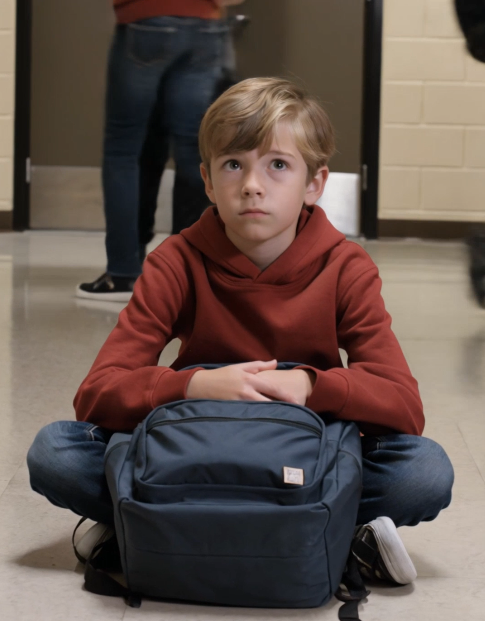
Noah stood behind the glass window, watching his mother with the anxious stillness of a child who had learned not to interrupt adults when they misunderstood her.
Mrs. Palmer looked at the sticker.
“This is from today?”
Angela nodded.
“I tried to call.”
The office secretary, Mrs. Dunn, turned toward the phone log.
“There was a message at 4:58,” she said softly. “It came in during bus dismissal.”
Mrs. Palmer’s face tightened.
Conference times had been sent home twice. Families had been offered phone meetings. Translators were available. Evening slots were limited, but possible.
In her mind, Angela Bennett had already become a certain kind of parent.
Absent.
Careless.
Hard to reach.
The kind who sent a child to school carrying too much silence.
Angela’s uniform did not help her case. It was gray, plain, and damp at the shoulders. Her shoes were the kind hospital cleaning crews wore, thick-soled and exhausted. The bandage on her right hand had a small red mark near the thumb.
Mrs. Palmer noticed it.
Then tried not to.
“Mrs. Bennett,” she said, lowering her voice, “Noah needs support. His reading is excellent, but his math work is inconsistent. He forgets assignments. He falls asleep after lunch.”
Angela looked down.
“I know.”
That answer irritated Mrs. Palmer more than she expected.
If she knew, why had nothing changed?
Noah stepped into the office.
“Mom, it is okay.”
Angela turned toward him immediately.
Her whole face softened.
Not dramatically.
Just enough to make Mrs. Palmer pause.
Angela touched the top of his head with her unbandaged hand.
“Did you eat?”
Noah nodded too quickly.
Angela saw the lie.
She always saw that one.
“I put a granola bar in the side pocket,” she said.
“I saved it.”
“For what?”
Noah shrugged.
“For later.”
Angela closed her eyes for half a second.
That was the first crack in Mrs. Palmer’s certainty.
Most neglect did not sound like that.
Angela turned back to the teacher.
“I clean rooms at St. Mercy,” she said. “Mostly nights. Sometimes I pick up afternoons when another shift opens.”
Mrs. Palmer nodded, still guarded.
“I understand work conflicts.”
“No,” Angela said quietly. “It is not just work.”
She looked at Noah again.
He shook his head.
Not here.
His mother understood.
She put the visitor sticker back into her pocket and straightened, as if folding the truth away.
“We can reschedule,” she said.
Mrs. Palmer should have accepted that.
Instead, tiredness and judgment moved faster than compassion.
“Mrs. Bennett, we have rescheduled three times.”
Angela’s face went still.
Behind her, the school counselor shifted uncomfortably.
Noah reached into his backpack.
“Mrs. Palmer,” he said, voice small, “I brought the folder.”
“What folder?”
He pulled out a blue plastic folder, cracked at one corner and stuffed so full the pockets bowed outward.
Angela turned sharply.
“Noah.”
He hugged the folder to his chest.
“She thinks you do not care.”
The office became quiet.
Noah’s face flushed, but he did not stop.
He opened the folder and took out a stack of papers.
Math worksheets.
Reading logs.
Conference notices.
Half sheets from school events.
Each one had writing on the back.
Not Noah’s handwriting.
Angela’s.
Mrs. Palmer took the first paper.
On the back of a spelling list, Angela had written:
Noah missed #7 and #12. Practice after dinner if he is not too tired. Ask teacher if regrouping can be shown another way.
Another note:
Field trip due Friday. Pay after paycheck clears. Do not let him worry.
Another:
Noah says lunch table got loud today. Pack crackers. He eats better when not rushed.
Mrs. Palmer looked up slowly.
Angela’s face had changed from embarrassment to something closer to fear.
Not fear of being exposed as careless.
Fear of being exposed as struggling.
Noah pulled out another paper, this one folded smaller.
“My mom writes during breaks,” he said. “On whatever paper I bring home.”
Angela whispered, “Honey, enough.”
But Noah kept going.
“She cannot always come here because she goes somewhere else first.”
Mrs. Palmer looked at the hospital sticker in Angela’s pocket.
The second crack opened wider.
“Somewhere else?” she asked.
Angela sat down in the office chair as if her legs had finally given up pretending.
Her bandaged hand rested on her lap.
“Noah’s grandfather is in St. Mercy,” she said.
Noah looked at the floor.
“My father,” Angela continued. “He had a stroke in August. He cannot speak much. The nursing staff calls when he gets scared.”
Mrs. Palmer did not answer.
August.
The first missed conference had been in September.
Angela’s voice stayed level, but barely.
“I clean the hospital at night. On conference days, I usually finish shift, check on my father, come here, then go back for evening cleaning.”
She gave a small, tired laugh with no humor in it.
“Except emergencies do not care about conference schedules.”
Mrs. Palmer looked at the grade book on her desk.
Beside Noah’s name, she had written parent unreachable.
The phrase suddenly looked cruel in its neat blue ink.
Part 3
Angela did not tell the whole story in the office.
She was too used to dividing truth into pieces people could tolerate.
She told Mrs. Palmer about the stroke, but not about the nights her father grabbed her sleeve with his working hand and cried without words.
She mentioned cleaning rooms, but not the isolation rooms that left her skin raw from disinfectant.
She said she picked up extra shifts, but not that Noah’s asthma inhaler cost more after insurance changed.
She said, “It has been a hard year,” as if the year were a heavy bag instead of a room without air.
Mrs. Palmer asked if they could meet properly the next morning before school.
Angela hesitated.
“I have to get Noah on the bus.”
“Bring him early,” Mrs. Palmer said. “I will be here.”
Angela nodded.
Noah looked relieved and terrified at once.
That night, Mrs. Palmer took the blue folder home.
Angela had allowed it only after Noah insisted, and only after Mrs. Palmer promised not to share it in the teacher lounge.
At her kitchen table, with a cup of tea cooling beside her, Mrs. Palmer read every note.
There were dozens.
Some were practical.
Ask about multiplication blocks.
Noah confuses 6 and 9 when tired.
Library book due Thursday, find before laundry.
Some were heartbreaking in their restraint.
He says he is fine when kids ask about his shoes. Check size next paycheck.
Do not cry in front of him before school.
Dad recognized Noah today. Good day.
One note stopped her completely.
Conference today. If hospital calls, choose Dad. If school calls, call back. Either way, someone will think I failed.
Mrs. Palmer sat back.
The sentence did not accuse her.
That made it worse.
She thought of Angela standing in the office, wet from rain, smelling faintly of bleach and hospital soap, while being told she was thirty-seven minutes late to caring.
The next morning, Angela arrived at 7:12 with Noah.
Her hair was still damp from a shower taken too quickly. She wore jeans, a black sweater, and the same hospital shoes. Noah carried two paper cups of gas station coffee, one for his mother and one for Mrs. Palmer.
Angela looked embarrassed.
“He insisted.”
Noah placed the coffee on the teacher’s desk.
“It has cream. Mom said teachers drink it plain, but I said nobody should.”
Mrs. Palmer smiled despite herself.
“Thank you, Noah.”
They sat at the small reading table.
For the first ten minutes, they discussed math.
Mrs. Palmer showed Angela how the class was learning multi-step problems. Angela took notes on the back of an envelope from the hospital billing office.
Mrs. Palmer noticed.
This time, she said nothing.
Noah watched them both carefully, as if monitoring weather.
Then Mrs. Palmer asked about his sleep.
Angela’s pencil stopped.
Noah looked down.
“He waits up for me,” Angela said.
Noah protested. “No, I don’t.”
Angela gave him a look only mothers have.
He sank into his chair.
“When my mom works nights,” he said, “I set an alarm for when she gets home.”
Angela closed her eyes.
“I told him not to.”
“I just want to know she got back.”
Mrs. Palmer’s throat tightened.
The child who fell asleep after lunch was not lazy. He was standing guard in a house where love returned after midnight and worry had learned to use an alarm clock.
Angela reached for his hand.
“I always come back.”
Noah nodded.
“I know. I just like hearing the door.”
That was the main twist, though no one named it.
The boy’s tiredness was not neglect.
It was devotion.
He had been protecting his mother quietly while she protected everyone else.
Mrs. Palmer looked at them sitting side by side, both exhausted, both trying to appear easier than they were.
“I owe you an apology,” she said.
Angela looked up quickly.
Noah did too.
“I made assumptions,” Mrs. Palmer continued. “I saw missed meetings and late papers. I did not ask enough about what those things were attached to.”
Angela’s face tightened with the reflex of someone unused to being apologized to by institutions.
“You were doing your job.”
“That does not make every conclusion fair.”
Angela looked down at the envelope.
Her fingers moved across the hospital logo.
“My mother used to come to every school thing,” she said. “Perfect hair, cookies, folders, all of it.”
Noah looked surprised.
Angela smiled faintly.
“She was that kind of mom.”
“What kind are you?” Noah asked.
It came out innocent.
Angela flinched anyway.
Mrs. Palmer did not interrupt.
Angela took a breath.
“The kind trying not to drop too many plates.”
Noah leaned against her shoulder.
“You dropped zero.”
Angela laughed once, and it broke halfway into tears.
Mrs. Palmer gave them a moment.
Then she opened a drawer and pulled out a new planner, one the school gave teachers at the beginning of the year.
“I have too many of these,” she said.
She slid it toward Angela.
“Not because I think you are disorganized. Because the system keeps asking you to hold everything in your head.”
Angela stared at the planner.
Then at Mrs. Palmer.
That distinction mattered.
Help can feel like judgment when it arrives with the wrong face.
This time, it arrived carefully.
They made a plan.
Noah would have a homework checklist small enough to finish before dinner. Mrs. Palmer would send math examples by email and paper, because Angela’s phone data sometimes ran out. The school counselor would help apply for meal support without making Noah stand in the lunch office.
And conferences would no longer be scheduled only during hours that punished hospital workers.
Mrs. Palmer asked permission to speak with Principal Howard about creating flexible conference options for other families.
Angela hesitated.
“I do not want people knowing my business.”
“I will not use your name.”
Angela nodded.
Then Noah reached into the blue folder and pulled out one final paper.
It was a drawing.
Not polished. Not framed. Just crayon on the back of a school lunch menu.
It showed three figures.
Noah.
Angela.
An old man in a hospital bed.
In the corner was a school building with a clock.
Underneath, Noah had written:
Mom was late because she was loving two people.
Angela covered her mouth.
Mrs. Palmer looked at the drawing until the lines blurred.
She had spent months asking why Angela did not show up.
The child had answered with a picture.
She had been showing up everywhere she was needed, just never in one place long enough to be seen.
That morning, when the bell rang, Noah lingered by the door.
Mrs. Palmer expected him to leave.
Instead, he turned to Angela.
“You can go now,” he said.
Angela blinked.
“What?”
“I mean, you do not have to worry about me here.”
His voice was small but serious.
“Mrs. Palmer knows now.”
Angela looked at the teacher.
Then at her son.
The relief in her face was so fragile it almost hurt to witness.
She bent and kissed the top of Noah’s head.
“I will see you after school.”
He nodded.
“And Grandpa?”
“I will tell him you said hi.”
Noah smiled.
Mrs. Palmer watched Angela walk down the hallway, shoulders still tired, shoes still worn, but no longer carrying quite the same invisible accusation.
Then she opened her grade book.
Beside Noah’s name, she crossed out parent unreachable.
After a long moment, she wrote:
Mother carrying more than we knew.
Part 4
Things did not become easy after that.
Stories like Angela’s rarely turn because one teacher understands.
Bills still arrived.
Hospital calls still came at inconvenient times.
Noah still worried when rain delayed the bus or his mother’s shift ran late. Angela still fell asleep some nights at the kitchen table with her hand wrapped around a pen.
But Room 14 changed.
Not loudly.
Quietly.
Mrs. Palmer began sending weekly notes home that did not only list missing assignments. Sometimes they said, Noah explained a hard problem today. Sometimes, He helped another student find the library shelf. Once, after he made the class laugh with a dry joke, she wrote, Your boy has excellent timing.
Angela taped that one to the refrigerator.
Noah pretended not to care.
He stood in front of it twice that evening.
The school changed too, though more slowly.
Principal Howard agreed to pilot flexible conferences. Parents could meet before school, by phone, over video, or through written forms returned in sealed envelopes.
Some teachers resisted.
Mrs. Palmer had once been one of them.
Now she stood in the staff meeting and said, “Attendance at a conference is not the only proof of care.”
No one argued directly.
Some people looked uncomfortable, which was often the first stage of learning.
One Friday in May, Cedar Grove hosted Family Reading Morning.
Noah did not invite Angela.
He wanted to.
He also knew she had worked a double shift and spent the night at St. Mercy after his grandfather developed a fever.
So he told himself it was fine.
At 9:05, families began arriving with picture books and travel mugs. Students pulled chairs into circles. Cameras flashed. Mrs. Palmer watched Noah sit alone at his desk, pretending to organize pencils.
She walked over.
“Would you like to read with me until your guest arrives?”
“He is not coming.”
“She.”
He looked up.
Mrs. Palmer smiled toward the door.
Angela stood there.
Not in a hospital uniform.
Not in jeans.
In a simple blue dress under her winter coat, hair brushed back, eyes shadowed with exhaustion and determination.
Noah stared.
“You came.”
Angela held up a visitor badge.
“I traded shifts.”
“But Grandpa?”
“Mrs. Leona from church is with him until ten-thirty.”
Noah ran to her.
He stopped short at the last second, suddenly aware of classmates watching.
Angela opened her arms anyway.
He stepped in.
The hug was brief.
Enough.
They read a book about a boy building a treehouse. Angela stumbled over one word because tiredness made letters slippery. Noah corrected her gently, the way she had corrected his lunchbox notes.
Across the room, Mrs. Palmer looked away.
Some moments deserved privacy even in public.
That afternoon, Angela received a call from St. Mercy during pickup.
Her father was asking for Noah.
Not speaking clearly.
But saying his name.
Angela drove straight from school to the hospital. Noah sat in the back seat holding his reading book and a paper cup of cafeteria applesauce he saved for his grandfather.
In Room 318, the old man lay against white pillows, one side of his face still slack from the stroke. His eyes brightened when he saw Noah.
Noah climbed into the chair beside him.
“Hi, Grandpa.”
The old man lifted one shaking finger toward the book.
Noah understood.
He began reading.
Angela stood by the window in the late afternoon light, watching her son read slowly to the man who once read Angela bedtime stories after working factory shifts.
Love, she thought, rarely moves in a straight line.
It circles back.
It carries lunch money, hospital stickers, school folders, and gas station coffee. It misses meetings. It arrives late. It writes notes on whatever paper survives the day.
Two weeks later, Angela’s father died quietly before sunrise.
Noah missed three days of school.
When he returned, Mrs. Palmer had placed a small envelope on his desk. Inside was a card from the class and a bookmark made from blue construction paper.
On it, Mrs. Palmer had written:
For the stories you read to him.
Noah kept it in his chapter book.
At the end of the school year, Cedar Grove held a small awards assembly in the gym.
Noah received the “Quiet Leadership” award, which embarrassed him deeply. Angela sat in the second row, still wearing her hospital uniform because she had come between shifts.
This time, she did not stand near the back.
Mrs. Palmer found her before the assembly began.
“I saved you a seat.”
Angela looked at the metal folding chair.
Second row.
Center.
“I might have to leave if the hospital calls.”
“I know,” Mrs. Palmer said. “That is why it is near the aisle.”
Angela smiled.
A small thing.
A huge thing.
When Noah’s name was called, he walked across the gym with red ears and careful steps. He shook Principal Howard’s hand, then looked toward his mother first.
Angela clapped with both hands above her head.
People looked.
She did not stop.
After the assembly, Noah handed Mrs. Palmer an envelope.
“My mom said I should give this to you.”
Mrs. Palmer opened it later in her classroom.
Inside was the drawing Noah had made, the one with the school, the hospital bed, and Angela between them.
Underneath, Angela had added a sentence in blue pen.
Thank you for seeing the road between the places I could not always reach on time.
Mrs. Palmer sat at her desk until the hallway emptied.
Then she pinned a copy of the district conference policy above her computer. Beside it, she taped a blank note card with one question written across the top.
What might I not know yet?
Years later, Noah would remember fourth grade less for the missed meetings than for the morning his teacher finally asked the right question.
Angela would remember the second-row chair.
And Mrs. Palmer would remember the hospital sticker, folded soft in a mother’s pocket, proof that absence is sometimes only the shadow cast by love standing somewhere else.
Follow this page for more heartfelt stories about the quiet people whose love is often seen only after someone looks closer.