Part 2: His Wife Left Him Disabled and Took Their 5-Year-Old Daughter — 15 Years Later, the First Thing She Said Made Him Break Down
Daniel had imagined that day so many times that reality felt smaller when it arrived.
No music.
No perfect sunlight.
No child running into his arms the way memory had punished him for years.
Just a cold wind moving dead leaves across the driveway and a young woman standing at the bottom of the ramp, holding a worn backpack against her chest.
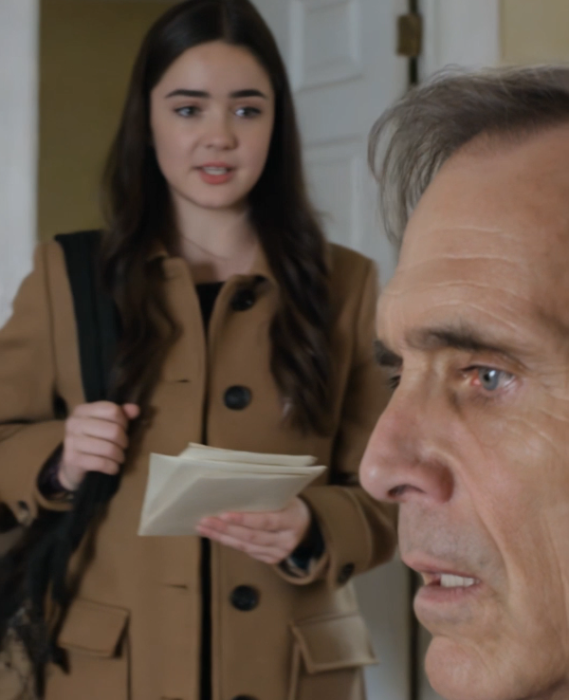
Emily Mercer did not look like the five-year-old in the framed photo.
Of course she did not.
That little girl had round cheeks, missing front teeth, and strawberry jam on her shirt.
This young woman had tired eyes, cracked lips, and a cautious way of standing, as if she expected every door to close before she reached it.
Daniel gripped the wheels of his chair.
“Emily?”
Her eyes filled instantly.
But she did not step forward.
She looked behind him again, toward the open garage where the pink bicycle leaned against the wall beneath a dusty tarp.
Then she whispered, “You kept it?”
Daniel turned his head just slightly.
The bicycle.
Of all the first words he had prayed for, feared, and rehearsed, he had not prepared for those.
His mouth moved.
Nothing came out.
Emily walked slowly up the ramp, each step careful, like the porch might reject her weight.
“I thought she threw it away,” she said.
Daniel’s hands tightened on the rims.
“She?”
“My mother.”
The word was thin and sharp.
Daniel heard fifteen years inside it.
He moved back to let her in, but Emily stayed at the threshold, staring around the small living room.
Nothing expensive.
Nothing new.
A knitted blanket over the couch.
A pill organizer on the side table.
A row of framed school photos that stopped after kindergarten.
On the mantel sat the last picture he had of her, taken at a county fair, with Emily sitting on his shoulders before the accident.
Beside it was a small wooden box.
Emily noticed it.
“What’s in there?”
Daniel looked at the box, then at her.
“Birthday cards.”
She blinked.
“For who?”
“For you.”
Her fingers dug into the strap of her backpack.
Every year, Daniel had bought a card.
Sometimes from the grocery store.
Sometimes from the pharmacy near the rehab clinic.
He wrote them slowly because his hands cramped after the accident.
At first, the messages were full of hope.
“Daddy loves you.”
“Maybe next year we’ll ride your bike again.”
“I hope you still like pancakes with blueberries.”
Later, the messages became quieter.
“I saw a girl at the park with your laugh today.”
“The maple tree turned red early.”
“I don’t know where to send this, but I’m still here.”
Emily stepped inside at last.
The floor creaked beneath her shoes.
Daniel wanted to ask a hundred questions.
Where had she been?
Was she safe?
Did she hate him?
Did she remember the song he used to sing when storms scared her?
Instead, he said, “You look cold.”
Emily almost laughed.
It came out broken.
“That’s what you say?”
“I don’t know what I’m allowed to say.”
That stopped her.
She looked at him fully for the first time.
His hair had gone gray at the temples.
His face was thinner.
His wheelchair looked worn at the hand rims, polished by years of movement through the same rooms.
She had imagined him differently.
Angrier.
Bigger somehow.
A man who had chosen silence.
Her mother had always told her Daniel stopped trying.
“He didn’t want the burden,” Marissa said whenever Emily asked why they never visited.
“He was angry after the accident.”
“He said he couldn’t be a real father from a chair.”
Emily had believed it because children often believe the parent who remains in the room.
But then, two months before she turned twenty, Marissa got sick.
Not dramatically.
Not enough to soften her.
Just enough to make her careless with old storage boxes.
Emily had found a shoebox beneath a stack of winter coats.
Inside were letters.
Dozens of them.
Returned.
Unopened.
All addressed to Emily in Daniel’s careful handwriting.
Some envelopes had stickers.
Some had birthday stamps.
Some had “wrong address” marked across them, though the address had been right for years.
Emily took out one envelope and saw her mother’s handwriting on the back.
“Refused.”
That was the first crack.
The second came when she found court papers.
Daniel had filed for visitation.
More than once.
He had paid what he could.
He had sent letters through attorneys.
He had even requested supervised visits when Marissa claimed Emily was “too emotionally fragile” to see him.
Emily read until her hands shook.
Then she found the final piece.
A folded drawing she had made at five years old, just before leaving.
It showed three stick figures beside a pink bicycle.
Across the top, in crooked purple crayon, she had written, “Daddy teach me again.”
Daniel had kept the bicycle because Emily had begged him to hold it safe until he could run beside her again.
But he never got the chance.
Now she stood in his living room, twenty years old, holding half the truth and afraid of the rest.
“Did you stop writing?” she asked.
Daniel looked at the wooden box.
“No.”
“Did you ever stop looking for me?”
His eyes dropped.
“Only where looking started hurting other people.”
Emily frowned.
“What does that mean?”
Daniel rolled toward the mantel and touched the lid of the box.
“It means your mother made it clear every fight would land on you.”
The room went quiet.
Outside, a car passed slowly.
Emily wiped her cheek with the sleeve of her jacket.
“She said you never came.”
Daniel closed his eyes.
“I know.”
That answer hurt more than a denial would have.
Because it meant he had known what story she was being told.
And he had lived inside it without breaking it open.
Emily did not sit right away.
She walked to the garage instead.
Daniel followed more slowly, rolling through the doorway that had been widened after the accident.
The garage smelled like oil, cardboard, cold concrete, and old summers.
Against the wall, beneath the tarp, the bicycle waited.
Daniel watched Emily lift the cover.
Dust floated in the strip of afternoon light.
The bike was smaller than she remembered.
That made her cry.
Not loudly.
Just one hand over her mouth, one hand on the handlebar, while fifteen years collapsed into a thing with flat tires and faded streamers.
“I asked about it,” she said.
“When?”
“When I was eight. And ten. And maybe twelve.”
Daniel did not speak.
“She told me you sold it.”
He looked at the ladybug bell.
“I thought you might come back wanting proof.”
Emily turned toward him.
“Proof of what?”
“That I expected you.”
The words entered her slowly.
Not as a grand declaration.
As evidence.
The bike.
The cards.
The widened doorway.
The ramp he had built himself, though every neighbor told him to hire someone.
The bedroom down the hall that still had pale yellow walls because Emily had once said yellow felt like morning.
She walked back into the house without asking permission.
Daniel followed.
At the hallway door, she stopped.
“Is this…”
“Yes.”
Her old room had changed less than it should have.
Not frozen exactly.
There were no dolls arranged like a shrine.
No untouched bed made for a child who never returned.
But the room had been kept open.
A clean quilt.
A bookshelf with picture books on the lower shelf and newer young adult novels above them, as if Daniel had guessed at the years he missed.
A small desk stood near the window.
On it were two things.
A lamp.
And a stack of unopened journals.
Emily touched one.
“What are these?”
Daniel stayed in the doorway.
“I wrote down things I wanted to tell you, but not in cards.”
“You wrote journals?”
“Some years more than others.”
Emily opened the first page.
“Today the physical therapist asked what my goal was. I said I wanted to stand beside your bicycle without falling.”
Her throat tightened.
Another page.
“Your seventh birthday. I made pancakes. Burned three. Ate two. Saved none, because hope should not grow mold.”
She let out a small sound, half laugh and half sob.
Daniel looked embarrassed.
“I didn’t expect anyone to read them.”
“Then why write them?”
He looked toward the window.
“So there would be somewhere for the father in me to go.”
That sentence broke her more than the cards.
Emily sat on the edge of the bed.
Her backpack slid to the floor.
For a while, she read silently.
The entries were not perfect.
Some were angry.
Some were lonely.
Some were painfully ordinary.
He wrote about learning to transfer from his chair to the bed.
About the first time he dropped a pan and sat on the kitchen floor for forty minutes because pride would not let him call Mrs. Donnelly next door.
About seeing a girl at the grocery store with Emily’s old pigtails and leaving without buying milk.
About sending child support through court because Marissa refused direct contact.
About the day his disability check arrived late, and he fixed neighbors’ appliances from his garage to afford Emily’s birthday gift.
“You sent gifts?” Emily asked.
Daniel nodded.
“Most came back.”
“Most?”
He looked at the closet.
Emily stood and opened it.
Inside, on the top shelf, were wrapped packages.
Not many.
A stuffed fox.
A science kit.
A paperback set.
A silver necklace with a tiny bicycle charm.
Each had a sticky note with a year.
“Returned.”
“Address rejected.”
“No forwarding information.”
Emily touched the necklace box.
“I never got any of these.”
“I know.”
“Why didn’t you fight harder?”
The question came out sharper than she meant.
Daniel took it without flinching.
“I did at first.”
He rolled closer, but stopped before crossing into the room too far.
“Then your mother’s attorney said you were having nightmares after every court notice. She said you asked if you were the reason we fought.”
Emily stared at him.
“I don’t remember that.”
“You were six.”
“She used me.”
Daniel’s face tightened.
“She was scared, angry, and selfish. But she was still the person feeding you dinner.”
Emily looked up.
“Don’t defend her.”
“I’m not.”
“You are.”
“I’m trying not to turn you into the battlefield again.”
The room stilled.
That was the reason Daniel had accepted being misunderstood.
Not because he was weak.
Not because he stopped loving her.
Because he believed the only thing worse than losing his daughter was making her childhood a courtroom.
He had let Marissa keep the easier story.
The one where Daniel was bitter, distant, and broken.
The one where he did not come because he could not.
The one that spared Emily from feeling torn every morning between two adults who once loved each other badly.
Emily’s face crumpled.
“You let me hate you.”
Daniel looked down at his hands.
“I hoped hate was lighter than guilt.”
She stood too fast.
“That wasn’t your choice to make.”
“No,” he said quietly. “It wasn’t.”
That honesty emptied her anger faster than excuses would have.
She turned away, breathing hard.
On the wall was a framed photo she had not noticed.
Daniel in a hospital bed after the accident, thinner and bruised, with a tiny Emily asleep against his chest.
His hand rested on her back.
Not posing.
Protecting.
Emily stepped closer.
“I remember this blanket,” she whispered.
Daniel followed her gaze.
“Blue whales.”
“I thought I made that up.”
“No. You dragged it everywhere.”
Emily pressed her fingers to the glass.
The memory came as a smell first.
Laundry soap.
Hospital plastic.
Her father’s voice humming low because his ribs hurt too much to sing.
Then another memory.
Her mother saying, “Don’t upset Daddy. He can’t handle things now.”
And another.
A car door closing.
Her own hand against the back window.
Daniel in the house window, not chasing because he physically could not.
She turned.
“Why did you let me leave that day?”
His face changed.
That question had lived in him for fifteen years.
“Because your mother had legal custody until the hearing,” he said. “Because the doctor had told me not to move from the chair alone. Because by the time Mrs. Donnelly came, the car was gone.”
He swallowed.
“And because I thought she was taking you to her sister’s for a week, not taking your whole life away.”
Emily covered her mouth.
Daniel continued, voice rougher now.
“I called that night. Number disconnected. Next morning, I called everyone. By Friday, I had a lawyer. By Monday, she had filed in another county.”
Emily sat back down because her legs had stopped trusting her.
The villain she had been given was fading.
The father beneath it was not heroic in a shiny way.
He was tired.
Limited.
Wounded.
And still, impossibly, present.
She opened the wooden box of cards that evening.
Daniel made tea he did not drink.
Emily read one birthday card at a time, sometimes laughing at his awkward jokes, sometimes stopping for long minutes when the words became too much.
The fifteenth card said, “If you never come back, I hope someone tells you I waited without asking you to carry the waiting.”
She held that card against her chest.
Then she looked at him across the kitchen table.
“I came because I was angry,” she said.
“I figured.”
“I wanted to ask why I wasn’t enough.”
Daniel’s face broke then.
Not loudly.
He pressed the heel of his hand to his eyes.
“You were always enough.”
Emily stood and moved around the table.
For a second, she looked five again, unsure whether she was allowed to climb into his lap.
Then she lowered herself carefully beside his wheelchair and wrapped her arms around him.
Daniel froze.
Then his arms closed around her shoulders with a kind of fear, as if joy itself might punish him for holding too tight.
The first thing she had said was about the bicycle.
But the sentence that finally undid him came later, muffled against his shirt.
“Daddy, I’m sorry I believed you left me.”
Daniel bent over her hair, crying in a way that made no sound.
“You were a child,” he whispered. “You were supposed to believe the person driving the car.”
Emily stayed that night.
Not in a dramatic way.
Not with a promise to fix fifteen years before morning.
She simply stood in the hallway holding a borrowed toothbrush and asked if the yellow room was still okay.
Daniel nodded because speech would have failed him.
The next morning, he woke before sunrise out of habit.
For years, mornings had been the hardest because they arrived too faithfully, asking him to live another day in a house built for three.
He rolled into the kitchen and found Emily already there.
She was sitting at the table in one of his old sweatshirts, reading another journal with a cup of coffee she had clearly ruined with too much sugar.
“You still drink it like your mom,” he said.
Emily looked up.
“My mother drinks black coffee.”
Daniel smiled faintly.
“I meant when you were little. You called milk and sugar ‘snow and sand.’”
She looked at the cup.
Then she smiled too.
It was small.
But it stayed.
They did not talk about Marissa much that morning.
There would be time.
There would be anger, confusion, questions, maybe even meetings nobody was ready for.
But that first day belonged to smaller things.
Daniel showed her the ramp he built.
Emily showed him the scar on her knee from a softball slide he never saw.
He made pancakes.
Burned two.
She ate them anyway.
In the afternoon, they took the pink bicycle out of the garage.
Daniel had bought new tires years ago and never installed them.
A neighbor named Mrs. Donnelly came over when she saw them in the driveway, one hand pressed to her mouth.
She had watched Daniel lose his family.
Now she watched Emily kneel beside the bike with a wrench and a determined expression that looked painfully familiar.
“You have his eyes,” Mrs. Donnelly said.
Emily glanced at Daniel.
“I’m starting to know that.”
They fixed the tires together slowly.
Daniel held the wheel steady.
Emily tightened the bolts.
At one point, the ladybug bell rang by accident.
All three of them stopped.
The sound was tiny, bright, and absurdly alive.
Daniel looked away first.
That evening, Emily did not ride the bike.
She was twenty years old, and the frame was made for a child.
Instead, she walked it down the sidewalk beside her father’s wheelchair.
The streamers moved in the cold air.
Neighbors came to windows.
Nobody clapped.
Nobody needed to.
At the end of the block, Emily stopped beside a maple tree and rested one hand on the handlebar.
“I don’t know how to make up for all that time,” she said.
Daniel looked at the street ahead.
“You don’t.”
She turned to him.
He continued gently.
“You don’t owe me fifteen years. Just don’t disappear from the next one.”
Emily nodded, tears shining again.
“I can do that.”
Over the next months, she came back often.
Sometimes for dinner.
Sometimes for quiet.
Sometimes just to sit in the garage while Daniel repaired lamps for neighbors and told stories badly because he kept forgetting the endings.
She enrolled at a community college nearby the following fall.
Not because guilt told her to stay.
Because, for the first time in years, she wanted a life that did not begin with someone else’s version of the truth.
Marissa called eventually.
That conversation was not clean enough for a storybook.
There were accusations.
Silences.
A few apologies that arrived bent and incomplete.
Emily listened, cried afterward, and still went to Daniel’s for Sunday dinner.
Healing did not require pretending damage had been gentle.
One spring afternoon, Daniel placed the bicycle charm necklace on the kitchen table.
“I bought this for your twelfth birthday,” he said.
Emily opened the box.
The silver bicycle was smaller than a dime.
She fastened it around her neck without looking in a mirror.
Then she leaned down and kissed his cheek.
“Thank you, Daddy.”
The word came easier now.
Not because the past had vanished.
Because the present had made room.
Later, Daniel rolled to the front window as Emily walked to her car.
For fifteen years, that window had been where he watched loss leave.
Now it was where he watched his daughter turn back, lift her hand, and smile before driving away for work, school, groceries, ordinary things.
On the mantel, the last kindergarten photo still stood beside the newest one.
In the new picture, Emily knelt beside the little pink bicycle, one hand on Daniel’s wheelchair, both of them laughing at something the camera could not explain.
The ladybug bell sat between them, faded but still working.
Sometimes, when the house was quiet, Daniel tapped it once with his finger.
Not to call back the child who was taken.
Just to hear that something small could survive waiting.
Follow this page for more heartfelt stories about family, forgiveness, and the quiet moments that bring people home. 🌿