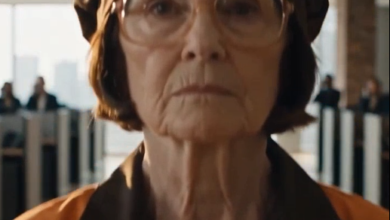
He Kept Coming to the Hospital With Nothing Wrong — Until a Doctor Realized He Just Needed to Hear a Human Voice
The nurses were already rolling their eyes when Mr. Harold Whitman appeared at the emergency desk again.
Same coat.
Same slow steps.
Same apologetic half-smile.
And, as usual—nothing medically wrong.
“Blood pressure’s fine.”
“Heart rate normal.”
“No chest pain.”
“No dizziness.”
A younger nurse sighed, louder than she meant to.
“He was here two days ago,” she muttered. “This is the fourth time this month.”
People in the waiting room stared. A tired mother clutched her child closer. A man with his arm in a sling shook his head. To them, Harold looked like exactly what the system didn’t need: an old man wasting time, clogging beds, stealing attention from real emergencies.
Dr. Emily Carter watched from across the room as Harold was escorted to an exam bay.
He sat quietly on the edge of the bed, hands folded on his knees, eyes lowered like a scolded child.
“I’m sorry, Doctor,” he said before she could speak. “I’ll be quick.”
Emily felt irritation rise in her chest before she could stop it.
She was on her tenth hour. Two patients were waiting for scans. One nurse had called in sick.
“Mr. Whitman,” she said, sharper than intended, “you can’t keep coming in if there’s nothing wrong.”
He nodded immediately. Too quickly.
“Yes, ma’am. I understand.”
But when she turned to leave, she noticed something that didn’t fit.
His hands were trembling.
Not from illness.
From something else.
Still, Emily pushed the thought aside.
Hospitals weren’t built for loneliness.

Over the next few weeks, Harold kept coming back.
Always polite. Always apologetic. Always medically fine.
Some staff started calling him “the ghost”—because he appeared, took up space, and left without leaving a trace.
One afternoon, Emily overheard a resident whisper,
“If he’s that lonely, he should join a club. This isn’t a social center.”
Emily didn’t disagree. Not out loud.
But something kept nagging at her.
During one visit, while checking Harold’s vitals, she noticed the way his eyes followed the nurses’ voices down the hallway. How his shoulders relaxed when someone laughed nearby. How he lingered, as if leaving too soon might snap something fragile inside him.
“Do you live alone, Mr. Whitman?” she asked casually.
He hesitated. Just a second too long.
“Yes,” he said. “Have for a while.”
Another visit. Another small detail.
He always arrived early in the morning. Never late at night. Never during visiting hours.
“Any family nearby?” Emily asked one day, pretending to type.
“No,” he said softly. “Not anymore.”
The way he said it wasn’t bitter.
It was resigned.
The truth didn’t come all at once.
It came in fragments.
A worn wedding ring he still wore, though his wife had passed years ago.
A folded bus schedule in his pocket, marked carefully in pen.
A thermos of soup he never drank—but always offered to the staff.
And once, when Emily gently suggested a primary care clinic instead of the ER, Harold’s voice cracked.
“I like it here,” he said. “It’s… loud.”
That night, Emily couldn’t sleep.
The breakthrough came on a rainy Tuesday.
Harold arrived soaked, his coat dripping onto the tile floor. A nurse started to scold him—until Emily raised a hand.
“Give us a minute,” she said.
She pulled up a chair and sat in front of him. Not as a doctor. As a person.
“Mr. Whitman,” she said gently, “why do you keep coming here?”
For a long moment, he said nothing.
Then his shoulders sagged.
“My apartment,” he began, staring at the floor, “is very quiet.”
Emily didn’t interrupt.
“My wife used to hum while she cooked,” he continued. “Even when she was tired. And my son—he talked too much as a kid. Drove me crazy.”
He smiled faintly.
“Now… I can go days without saying a word.”
His voice dropped lower.
“I tried the radio. The TV. It’s not the same.”
He looked up at her then, eyes glassy.
“Here, people talk. Argue. Laugh. Call names down the hall. It reminds me I’m still… around.”
Silence filled the room.
“I don’t need medicine,” Harold said quickly. “I know that. I just… didn’t know where else to go.”
Emily felt something break open in her chest.
This man wasn’t abusing the system.
He was surviving it.
She didn’t write a report.
She didn’t scold him.
Instead, she stood up and did something no one expected.
She walked out to the nurses’ station—and told them the truth.
What happened next wasn’t written into any hospital protocol.
But it happened anyway.
A nurse started sitting with Harold during breaks.
A resident brought him coffee in the mornings.
Someone placed a chair near the nurses’ station “by accident.”
Soon, other patients noticed.
“Who’s that gentleman?” someone asked.
“That’s Harold,” a nurse replied. “He keeps us company.”
The staff arranged a small table near the window. They let him help fold gauze. Answer phones. Nothing critical—just enough to feel included.
Once a week, they invited other elderly patients to join him.
They talked. About weather. About old movies. About life.
Harold stopped coming to the ER for “nothing.”
But he still came.
Just not as a patient.
On his last day before winter, Emily found him standing by the door.
“I won’t be in tomorrow,” he said. “My neighbor invited me for dinner.”
She smiled.
“That’s wonderful.”
He hesitated, then said quietly,
“Thank you… for hearing me.”
Emily watched him walk into the rain, a little straighter than before.
Hospitals treat bodies every day.
But sometimes—quietly, without charts or codes—they heal something else.
And no one in that ward ever forgot the old man who came in sick…
Only because the world had grown too silent.