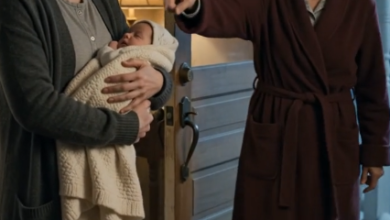
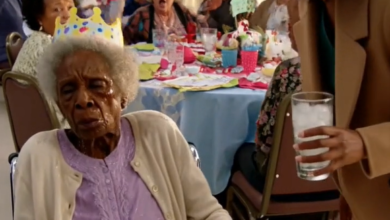
Part 2: A Young Woman Was Refused Service at a Luxury Store Because She Dressed Too Simply — Minutes Later, the Manager Turned Pale
Part 2
Grace Bennett had stood outside Maison Vale for nearly seven minutes before walking in.
Not because she was nervous about the price tags.
She already knew the prices.
She had looked them up at midnight in her small apartment while sitting on the kitchen floor beside a laundry basket full of scrubs, hospital socks, and one folded blue cardigan that no longer belonged to anyone living. She had studied the boutique’s website until the screen blurred, zooming in on the same pearl bracelet again and again, comparing it to an old photograph she kept inside a paperback book because she feared losing it in an ordinary drawer.
The bracelet was called the Eleanor Pearl Cuff.
Limited collection.
Hand-set freshwater pearls.
Discontinued for years, then quietly reissued in honor of the brand’s anniversary.
To everyone else, it was jewelry.
To Grace, it was a promise she had made while holding her grandmother’s hand under a thin hospital blanket.
Her grandmother, Eleanor Bennett, had been seventy-nine when she told the story for the last time.
“I wore a bracelet just like that on the day I met your grandfather,” she said, voice weak but amused, as if memory had brushed powder on her cheeks. “Not real pearls. Mine was a little department-store copy, bought on layaway, but I thought I looked like Audrey Hepburn walking into that dance hall.”
Grace had laughed through tears.
“You always looked better than Audrey.”
“Now you’re lying to a dying woman.”
“You started it.”
Eleanor smiled, then coughed into a tissue Grace folded quickly and pretended not to see.
The bracelet in the photograph had been lost decades earlier during a move after Grace’s grandfather died. Eleanor never complained about losing it, not directly. But Grace saw the way her grandmother touched her bare wrist every time she told that story, as if the young woman from the dance hall still lived somewhere under the loose skin and blue veins.
Three nights before Eleanor died, Grace promised she would find one like it.
“Don’t you dare spend money on old sadness,” Eleanor whispered.
Grace had said, “It’s not sadness if I bring it back.”
That was the first truth no one at Maison Vale knew.
Grace was not shopping for status.
She was carrying grief into a room that sold beauty and mistook itself for worth.
The second truth was harder.
Grace had not inherited money. She had inherited bills, recipes written on index cards, an old sewing tin, two framed photographs, and a cedar hope chest that smelled like lavender sachets and a life lived carefully. She worked twelve-hour shifts as a nursing assistant at St. Luke’s Rehabilitation Center, where she changed sheets, answered call lights, fed people who apologized for needing help, and learned that dignity often lived in the smallest details: a comb through thin hair, a warm blanket tucked around cold feet, a hand held during a medication round because the room felt too quiet.
She saved for fourteen months.
Not dramatically.
Not with a grand plan anyone would make a movie about.
She saved by skipping coffee she wanted, taking extra weekend shifts, selling the little gold locket she never wore, and putting cash into an envelope labeled “E” because writing the full name made her miss her grandmother too sharply. Some months she added only twenty dollars. One month she added nothing because her car needed tires. Another month she took money out because her younger brother, Caleb, needed help with community college books and lied badly when he said he could wait.
Finally, after a holiday bonus and two exhausting double shifts, Grace had enough for the deposit Maison Vale required to hold the bracelet.
She called the boutique Monday evening from the nurses’ break room, standing beside a vending machine that hummed louder than necessary.
A man named Daniel confirmed her appointment for 11:15.
“Ask for Vivian Cole,” he said. “She handles heritage pieces.”
Grace wrote the name on the back of a medication schedule she later folded into her tote bag.
Vivian Cole.
By Tuesday morning, Grace had planned to dress better.
She owned a navy dress and low black heels, both from a clearance rack, both respectable enough. But at 8:04, St. Luke’s called. One of her patients, Mrs. Whitman, had fallen trying to get to the bathroom because she did not want to bother the overnight nurse.
Grace went in on her day off.
She stayed until Mrs. Whitman stopped shaking.
Then another patient asked if Grace could braid her hair before her daughter visited.
Then a family member cried in the hallway because discharge paperwork confused her and everyone else seemed too busy.
By the time Grace looked at the clock, it was 10:46.
The boutique was twenty minutes away.
Her navy dress was at home.
Her hoodie was clean, but plain. Her sneakers were scuffed, but comfortable. Her hair had loosened from the bun she wore at work. There was a faint crease on her cheek from where she had rested her face against her forearm during a ten-minute break she never finished.
She almost canceled.
Then she thought of Eleanor’s hand on her wrist and went straight to Westbridge Plaza.
Maison Vale stood between a designer shoe store and a salon where even the chairs looked expensive. The boutique’s front windows displayed handbags on stone pedestals, scarves arranged like art, and jewelry cases glowing beneath careful light. Grace saw her reflection in the glass: hoodie, tote bag, tired eyes, a woman who looked like she had come to return something, not buy something.
She almost turned away.
But the old photograph in her tote seemed to warm against her side.
Inside, the air changed.
It was cooler, quieter, scented with something floral and clean. A soft instrumental song played from hidden speakers. Two women in tailored coats stood near a display case, one turning her wrist so diamonds caught the light. A man in loafers leaned over a leather tray while a sales associate explained watch straps in a voice polished smooth.
Grace walked to the bracelet case.
There it was.
Pearls like little moons.
Gold delicate enough to seem almost private.
For one second, the boutique disappeared, and Grace saw Eleanor at nineteen, standing in a dance hall in a borrowed blue dress, laughing before life taught her what could be lost.
Then the associate approached.
Her name tag said Claire, though Grace only noticed later.
Claire was thirty, White American, with sharp blond hair, red lipstick, and the kind of posture that made politeness feel like a locked door.
“That piece starts at eight thousand dollars,” Claire said.
Grace nodded.
“I know. I called yesterday.”
Claire’s eyes flicked to the hoodie.
“Appointments are usually for serious buyers.”
Grace felt heat rise in her neck.
“I have an appointment with Vivian Cole.”
Claire smiled again.
The smile did not reach any honest part of her face.
“May I ask who referred you?”
“No one. I called.”
A woman at the next display lowered her sunglasses.
Grace reached into her tote for the folded appointment note.
Claire stepped forward quickly.
“Please don’t touch the display.”
Grace stopped with one hand still in the bag.
“I wasn’t going to.”
The small humiliation might have ended there if Vivian had entered kindly.
But Vivian Cole had built her career on first impressions and had mistaken that skill for wisdom.
She was fifty-eight, White American, elegant, silver hair, cream blazer, pearl earrings, and the calm authority of someone used to being believed. She looked at Grace, then at Claire, then at the bracelet case.
“What seems to be the issue?”
Claire lowered her voice.
“She says she has an appointment.”
Vivian looked back at Grace’s shoes.
Grace noticed.
It was quick.
But not quick enough.
“We are fully booked today,” Vivian said. “Perhaps another store would be more comfortable.”
Grace’s fingers curled around the photograph inside her tote.
She could have left.
That would have been easier.
She had spent most of her life learning when to leave rooms that did not want her. Leave before they had to ask twice. Leave before your voice shook. Leave before someone turned your need into entertainment.
But Eleanor had not raised her to disappear from honest places.
And this was an honest reason.
Grace slowly pulled out the old photograph and placed it on the glass counter.
It showed a young woman in a blue dress, laughing beside a young man in a brown suit outside a dance hall in 1964. On the woman’s wrist was a pearl bracelet, small and bright in the camera flash.
Vivian glanced down.
At first, her expression carried the polite boredom of someone expecting a sentimental explanation.
Then she saw the man in the photograph.
Her face changed.
Not softened.
Drained.
She put one hand on the counter.
“Where did you get this?” Vivian whispered.
Grace looked at her.
“My grandmother.”
Vivian’s lips parted, but no sound came out.
Because the man in the photograph was not a stranger.
It was her father.
Part 3
For a moment, no one moved.
The boutique continued its soft, expensive breathing around them. Music played. A handbag display gleamed. Someone near the front laughed too loudly at something unrelated, then sensed the shift and quieted.
Vivian picked up the photograph with both hands.
Carefully.
Too carefully for a manager inspecting a customer’s proof of appointment.
Grace watched the woman’s face, confused by the sudden loss of color and the way her mouth trembled at the corner.
“You said this was your grandmother,” Vivian said.
“Yes.”
“What was her name?”
“Eleanor Bennett.”
Vivian closed her eyes.
The name had found an old room inside her and opened the door without asking.
Claire, the sales associate, looked between them.
“Vivian?”
Vivian did not answer.
She stared at the photograph again, this time not at Eleanor’s bracelet, but at the young man beside her. He was handsome in an ordinary way, with dark hair combed too neatly, nervous shoulders, and eyes that looked straight at Eleanor as if the photographer had not mattered.
“Thomas Cole,” Vivian whispered.
Grace frowned.
“My grandmother said his name was Tommy.”
Vivian pressed a hand to her chest.
“My father.”
The words were quiet, but they struck the glass counter hard enough to change the air.
Grace had known the story, or thought she had. Eleanor met a young man named Tommy at a church dance in Milwaukee when she was nineteen. They dated for one summer. He gave her flowers stolen from his aunt’s garden and once spent an entire paycheck taking her to a lakefront restaurant where both of them pretended to understand the menu. Then Tommy disappeared.
No phone call.
No letter.
No explanation.
Eleanor married Grace’s grandfather, Robert Bennett, three years later and loved him faithfully for forty-six years. She never spoke of Tommy with bitterness, only with a strange tenderness reserved for people who leave before becoming villains.
“He was kind before he was gone,” Eleanor once said.
Grace had been too young then to understand that a person could remain kind in memory and still be the source of an unanswered wound.
Vivian set the photograph down.
“My father kept a picture just like this in his desk,” she said. “My mother found it after he died. She never told me who the woman was.”
Grace’s anger loosened slightly, replaced by caution.
“He kept it?”
Vivian nodded.
“He wrote one word on the back. Sorry.”
That was the first major turn.
The boutique manager had not turned pale because Grace had exposed her.
She had turned pale because the photograph carried an apology her family had never decoded.
Grace’s fingers touched the edge of the glass case.
“My grandmother didn’t know he was sorry.”
Vivian looked at her then, really looked, and shame entered her face slowly, not just for the last two minutes, but for every assumption she had made before the photograph spoke.
“I need to sit down,” she said.
Claire stepped forward.
“Vivian, should I—”
“No,” Vivian said, sharper than intended. Then, softer, “No. I’ll handle this.”
She looked at Grace.
“Would you come with me?”
Grace hesitated.
The back room of a luxury store did not feel like neutral ground.
Vivian noticed.
“Or we can stay here.”
Grace shook her head.
“No. I’ll come.”
The office behind the boutique was smaller than Grace expected. Not glamorous. A desk, two chairs, filing cabinets, a small framed print of Paris, and a coffee mug with lipstick on the rim. Vivian closed the door halfway, not fully, perhaps understanding that privacy should not feel like a trap.
Grace sat with her tote in her lap.
Vivian remained standing for a moment, still holding the photograph.
“I owe you an apology,” she said.
Grace looked at the cream blazer, the pearls, the perfect hair.
“For today?”
“For today first.”
Grace did not rescue her from the discomfort.
Good.
Vivian sat.
“I judged you the moment you walked in.”
“Yes.”
The plain answer landed harder than politeness would have.
Vivian nodded.
“I’m sorry.”
Grace looked down at her hands.
Her nails were short, clean, and unpainted. There was a small scratch near one knuckle from catching Mrs. Whitman’s wheelchair brake that morning.
“My grandmother used to say people who work with their hands can tell when someone is afraid to touch anything real.”
Vivian absorbed that.
“She sounds formidable.”
“She was gentle. People confuse those sometimes.”
Vivian smiled sadly.
Then she pulled open the lower drawer of her desk and took out a worn leather folder. From inside, she removed another photograph.
Same night.
Same dance hall.
Same young couple.
Different angle.
In this one, Tommy was pinning a cheap white flower to Eleanor’s dress while she laughed at him for doing it wrong. The bracelet was visible again, loose around her wrist.
Grace reached for it, then stopped.
Vivian noticed the restraint and slid the photograph across.
“My father was drafted two weeks after that summer ended,” Vivian said. “He served overseas. When he came home, he was not the same. My mother said there was someone he never wrote to because he thought silence was kinder than bringing his damage into her life.”
Grace looked at the photograph.
“Was it kinder?”
“No.”
The answer came immediately.
Vivian’s eyes filled.
“He regretted it. I think he regretted many things.”
That was the second major turn.
Tommy had not vanished because Eleanor was forgettable.
He had vanished because broken people sometimes mistake disappearance for mercy.
Grace sat still with the photograph in her lap.
“My grandmother thought maybe he just found someone richer.”
Vivian laughed once, painfully.
“My father? He had seventeen dollars when he proposed to my mother, and she said yes because he looked like he’d faint if she didn’t.”
Despite herself, Grace smiled.
The room changed by one degree.
Vivian looked toward the boutique floor.
“That bracelet,” she said. “You came for the Eleanor Pearl Cuff.”
Grace nodded.
“My grandmother saw it in a magazine years ago. She joked that the real version finally caught up with her fake one.”
Vivian’s brow furrowed.
“The collection was named Eleanor because of that photograph.”
Grace stared at her.
“What?”
“My father founded the small jewelry workshop that eventually became part of Maison Vale’s American line. Not the whole company, not the big French history they put in brochures, but the pearl cuff was his design. He sketched it from the bracelet in this photograph. He never said who she was. When the company archived his early pieces, they named the reissue Eleanor because he had written that name under the sketch.”
Grace could not speak.
That was the third major turn, the one that made the floor feel uncertain.
Her grandmother had spent decades touching her bare wrist, remembering a lost bracelet from a dance hall, never knowing that the young man who vanished had carried the memory of it into his life’s work.
The bracelet behind the glass was not just similar.
It was, in a strange and aching way, born from Eleanor.
Grace looked at the office door.
The boutique seemed far away now.
So did the associate’s cold smile, though not far enough to forget.
“My grandmother died last year,” Grace said.
Vivian closed her eyes.
“I’m sorry.”
“She asked me not to spend money on old sadness.”
Vivian looked at her.
“And you came anyway.”
“I saved for it.”
“How long?”
Grace hesitated.
“Fourteen months.”
Vivian’s face tightened.
“Fourteen months?”
Grace shrugged, embarrassed now.
“I work at St. Luke’s. I put away what I could.”
Vivian leaned back as if another piece had struck her.
“My father spent his last months at St. Luke’s.”
Grace looked up.
“When?”
“Seven years ago. Rehabilitation after a stroke.”
“What was his full name?”
“Thomas Cole.”
Grace searched her memory. St. Luke’s had many patients, but some names stayed, not because of paperwork, but because of the way people held your hand.
Thomas Cole.
An elderly man in room 309.
Couldn’t speak clearly at first.
Liked orange sherbet.
Held a folded photo under his pillow.
Grace had been nineteen then, newly hired, terrified of doing everything wrong. She remembered an old man tapping a photograph with one finger and trying to say a name. The nurse told her he got confused. Grace remembered sitting beside him one night after her shift, because he was agitated and calling for someone nobody could identify.
“Ellie,” he kept trying to say.
Ellie.
Grace’s breath stopped.
“I knew him.”
Vivian froze.
Grace covered her mouth.
“I didn’t know he was your father. I was a CNA trainee. He used to keep a photograph under his pillow. He would say Ellie.”
Vivian’s hand went to her lips.
“My mother’s name was Margaret.”
Grace’s eyes filled.
“I thought he was confused.”
Vivian whispered, “Maybe he finally wasn’t.”
That was the fourth major turn.
Grace had unknowingly cared for the man who had once loved her grandmother, and in his final years, he had still been calling for the girl from the dance hall.
Vivian stood abruptly and turned toward the wall, one hand gripping the back of her chair.
“I wasn’t there enough,” she said.
Grace recognized that sentence. Families said versions of it in hospital hallways all the time.
“You were probably there as much as you could be.”
“No. I was building this.” Vivian gestured toward the boutique, the brand, the life. “I kept telling myself he didn’t know the difference.”
Grace’s voice softened.
“People know presence even when they can’t name it.”
Vivian wiped under one eye carefully, preserving nothing now.
“My father kept asking for a photo. I thought he meant my mother. I brought the wrong one.”
Grace looked down.
It hurt in an old, helpless way, the way missed chances hurt even when they are not yours.
“Did he suffer?”
Vivian asked the question like a daughter, not a manager.
Grace answered like someone who knew the difference.
“He was frightened sometimes. But he liked music. If someone played old jazz, his hand would relax.”
Vivian laughed through tears.
“He loved jazz.”
“He liked sherbet too.”
“He hated sherbet when I was growing up.”
“Maybe he changed.”
“Or maybe he liked that someone brought it.”
Grace’s throat tightened.
The fifth major turn arrived quietly then.
Vivian and Grace had not been strangers at all. They had both served the same memory from opposite ends of a life neither fully understood.
Vivian returned to the glass case with Grace beside her.
The boutique floor had grown tense in their absence. Claire stood near the register, pale with uncertainty. The woman with sunglasses pretended to examine a scarf while clearly watching.
Vivian unlocked the bracelet case.
Claire stepped forward.
“Vivian, the appointment ledger—”
Vivian looked at her.
“Grace had an appointment.”
Claire swallowed.
“Yes, but—”
“But we decided her clothing answered a question no one had the right to ask.”
Claire’s face flushed.
Grace looked away, uncomfortable with public correction even when deserved.
Vivian lifted the Eleanor Pearl Cuff from its velvet stand and placed it on a tray.
Then she turned to Grace.
“I cannot sell this to you.”
Grace’s face fell.
Of all the things Vivian could have said, that one hurt before it made sense.
“I have the deposit,” Grace said quietly. “I can pay the rest. It might take a few minutes to transfer—”
Vivian shook her head.
“No. I mean I cannot take your fourteen months of savings for something that should have belonged to your grandmother before it ever belonged to this store.”
The boutique went completely still.
Grace stared at her.
Vivian took the bracelet from the tray and held it out.
“This is yours.”
Grace stepped back.
“No. I didn’t come here for charity.”
“I know.”
“I can pay.”
“I know.”
Vivian’s eyes filled again.
“That is why I’m not giving it as charity. I’m returning it.”
Grace could feel every person in the boutique listening.
Her pride rose like a wall.
Vivian saw it and lowered the bracelet slightly.
“Then pay one dollar,” she said. “So it is a sale, and I can sleep tonight.”
Grace laughed once despite tears.
“That’s ridiculous.”
“Yes.”
“My grandmother would call it theatrical.”
“She would be right.”
Grace looked at the pearls.
She thought of Eleanor’s bare wrist. Thomas’s old photograph. St. Luke’s room 309. Fourteen months of envelopes and skipped coffees. Claire’s cold smile. Vivian’s pale face. All the ways people carry stories without knowing they are standing next to someone else’s missing chapter.
Finally, Grace opened her wallet and placed one dollar on the glass counter.
Her hand shook.
Vivian wrote the receipt herself.
No ceremony.
No announcement.
Just a woman in a cream blazer, a young woman in a faded hoodie, and a pearl bracelet changing hands under the same lights that had judged too quickly only minutes before.
Claire whispered, “I’m sorry.”
Grace looked at her.
She could have said it was fine.
It was not.
Instead, she said, “Please don’t do it to the next person.”
Claire nodded, eyes wet.
Grace placed the bracelet carefully in its box.
Then Vivian said, “May I ask one more thing?”
Grace braced herself.
“Did your grandmother ever marry happily?”
Grace’s face softened.
“Yes. My grandfather Robert adored her. They danced in the kitchen every Sunday until his knees got bad.”
Vivian smiled through tears.
“Good.”
Grace tilted her head.
“Did your father?”
Vivian looked at the old photograph still in her hand.
“He was loved,” she said slowly. “Maybe not always understood. But loved.”
Grace nodded.
Sometimes that was the most anyone could ask of a life that had left unfinished rooms behind.
Part 4
Grace did not put the bracelet on right away.
She carried the small box out of Maison Vale inside her tote bag, past the glass doors, past the salon, past the shoppers who had no idea the air had shifted inside that boutique. The plaza was bright with afternoon light now, sunlight pouring through the high skylights and turning the polished floor into pale gold.
She found a bench near the indoor fountain and sat down.
For several minutes, she did nothing.
People walked around her holding shopping bags, coffees, strollers, phones, pieces of ordinary Tuesday. A little boy tossed a penny into the fountain and closed his eyes with such seriousness that Grace almost smiled. Somewhere above, an escalator hummed. Somewhere behind her, a woman laughed into a phone.
Grace opened the box.
The bracelet rested inside, quiet and impossible.
She imagined Eleanor seeing it.
Not the price.
Not the boutique.
The shape.
The pearls.
The memory returned not as sadness only, but as proof that her grandmother’s young laughter had not vanished when her body aged, when her hands wrinkled, when her hospital bed replaced the dance hall. Somewhere, a boy named Tommy had remembered it too. Somewhere, he had drawn it into gold.
Grace clasped the bracelet around her own wrist.
It fit loosely, just as Eleanor had described.
Then she cried, not loudly, not dramatically, just enough that an older woman passing by slowed and asked, “Honey, are you all right?”
Grace wiped her face.
“Yes,” she said. “I think I am.”
Back inside Maison Vale, Vivian stood in her office holding the second photograph. Claire had gone to the stockroom and not returned for several minutes. When she finally did, her eyes were red, and she carried a bottle of water she did not open.
“I really am sorry,” Claire said.
Vivian looked at her.
“So am I.”
Claire seemed surprised.
Vivian set the photograph on the desk.
“I trained you to read customers quickly.”
Claire lowered her eyes.
“Yes.”
“I called it service.”
The word sat between them.
Claire whispered, “It wasn’t.”
Vivian did not soften the truth.
“No.”
That afternoon, Vivian made three changes, none of them large enough to impress anyone from corporate, but each one real. She canceled the private-client-only language on appointment confirmations. She told staff no customer would be quoted a price as a warning before asking what they were looking for. She removed the phrase “fit assessment” from the training binder because she finally heard it with honest ears.
Then she sat at her desk and wrote a letter to Grace.
She did not send it that day.
She rewrote it six times over the next week.
The first version sounded too polished. The second sounded like guilt asking to be comforted. The third explained too much. By the sixth, she kept it simple.
Dear Grace,
My father kept your grandmother’s photograph all his life. I used to think the unfinished parts of people should be left alone because they could not be repaired. I was wrong. Thank you for bringing Eleanor back into a room where she had always been present but unnamed.
I hope the bracelet carries joy, not debt.
Vivian Cole
She enclosed a copy of Thomas’s photograph, the one Grace had never seen.
When Grace received the envelope, she sat at her kitchen table after a long shift, still in her scrubs, shoes kicked off, bracelet resting against her wrist. Her brother Caleb was doing homework nearby, earbuds in, pretending not to watch her cry.
“Good mail or bad mail?” he asked.
Grace laughed softly.
“Both.”
“Those are the weird ones.”
She handed him the photograph.
Caleb studied it.
“That’s Grandma?”
“Yes.”
“She looks like trouble.”
“She was.”
He smiled.
Then he noticed the young man.
“Is that Grandpa?”
“No.”
Grace expected more questions, but Caleb only nodded in the thoughtful way young people sometimes accept complexity more gracefully than adults.
“Grandma had chapters.”
Grace looked at him.
“Yes,” she said. “She did.”
A month later, Grace visited Eleanor’s grave.
The cemetery sat beneath maple trees beginning to turn red at the edges. Grace brought daisies because Eleanor disliked roses and said they acted like they knew they were pretty. She knelt in the grass, placed the flowers beside the stone, and touched the bracelet.
“I found it,” she said.
The wind moved through the trees.
Grace took out both photographs: Eleanor with Tommy outside the dance hall, Eleanor laughing while he pinned the flower wrong. She placed them on the grass for a moment, protected from the damp by a plastic sleeve.
“You were remembered,” Grace whispered. “By more people than you knew.”
She stayed until the sun dropped low enough to turn the cemetery gold.
Before leaving, she kissed her fingers and touched the name on the stone.
On the way home, she stopped at St. Luke’s for the evening shift. Mrs. Whitman, the patient who had fallen that morning, was sitting up in bed complaining that the soup tasted like “warm apology.”
Grace laughed and adjusted her blanket.
Mrs. Whitman noticed the bracelet.
“My, my,” she said. “Look at you.”
Grace almost tucked it under her sleeve, an old reflex.
Then she didn’t.
“It was my grandmother’s, in a way.”
“In a way?”
“It’s a long story.”
“I’m eighty-six. I collect long stories.”
So Grace told her some of it while checking the water pitcher, straightening the bedside table, and making sure the call button was within reach. She left out the boutique’s cruelty at first, but Mrs. Whitman was sharp.
“Someone looked at your clothes and thought they knew your wallet.”
Grace paused.
“Something like that.”
Mrs. Whitman huffed.
“People have been confusing packaging with value since the Garden of Eden, and I don’t even know if that’s the right reference.”
Grace smiled.
“Close enough.”
A week later, Vivian came to St. Luke’s.
Not as a manager.
As a daughter still late to a room she could no longer enter.
Grace found her standing near the front desk holding a bouquet of white daisies and looking uncertain. Without her boutique lights and cream blazer armor, Vivian seemed smaller, not weaker, just less arranged.
“I hope this is not inappropriate,” Vivian said.
Grace shook her head.
“It’s okay.”
Vivian looked down the hall.
“Could you show me where my father’s room was?”
Grace hesitated only a second.
Then she led her to room 309, which now belonged to another patient sleeping beneath a pale blue blanket. They stood outside the door, not entering, because grief does not need to trespass to be real.
“He was there,” Grace said softly.
Vivian nodded.
“Did he look out the window?”
“All the time.”
“What could he see?”
“Mostly the parking lot. But at sunset, the windows across the street turned orange.”
Vivian breathed in carefully.
“I wish I had known.”
Grace did not offer the easy comfort.
Instead, she said, “You’re here now.”
Vivian looked at her, grateful for the honesty.
Before leaving, Vivian stopped by the nurses’ station and placed the daisies in a vase for the staff break room. No announcement. No donation plaque. Just flowers where tired people might see them while eating vending machine crackers at midnight.
Claire changed too, though change did not make her instantly kind.
At first, she was only careful.
Careful not to judge sneakers, careful not to look too long at coats, careful not to use price as a fence. Then one rainy afternoon, a man in a delivery uniform came into Maison Vale asking about a watch repair for his late wife’s anniversary gift. Claire heard herself almost begin with, “That service can be expensive,” then stopped.
She asked instead, “Would you like to tell me about the watch?”
The man’s shoulders lowered.
It was a small thing.
Small things are where a person begins again.
Grace returned to Maison Vale only once.
Not to shop.
Vivian had invited her to see something from the archive. Grace almost refused, then went on a quiet Monday before her shift. This time, she wore scrubs under a long cardigan, hair tied back, sneakers still scuffed. Claire greeted her by name and offered water without looking at her shoes.
Vivian led Grace to a back table where a framed sketch waited beneath soft light.
Thomas Cole’s original design.
A pearl cuff drawn in pencil, dated 1965.
Under the sketch, in careful handwriting, was one word.
Eleanor.
Grace touched the frame lightly.
“He spelled it right,” she whispered.
Vivian smiled.
“He remembered.”
They stood side by side for a while, two women connected not by wealth, not by status, not even by family in the legal sense, but by the fragile line of a memory that had survived silence, illness, embarrassment, and time.
Later, Maison Vale added a small note to the internal archive, not public, not for marketing.
Design inspired by Eleanor Bennett, Milwaukee, 1964.
Grace approved the wording only after Vivian promised the company would not turn her grandmother into a sales story.
“She was a person,” Grace said.
Vivian nodded.
“Yes.”
Years later, Grace wore the bracelet on ordinary days, not special ones.
She wore it to work.
To the grocery store.
To Caleb’s community college graduation.
To the cemetery.
To nights when she sat on the kitchen floor tired enough to cry over nothing and everything. The pearls clicked softly against the edge of a coffee mug, a bed rail, a steering wheel, the life she could afford and the memories she could not buy back.
People sometimes complimented it.
Grace always said, “Thank you. It belonged to someone I loved.”
She never explained the whole story unless the person asking had the kind of eyes that knew objects could hold more than decoration.
On the anniversary of Eleanor’s passing, Grace visited the cemetery again with daisies and a small paper cup of diner coffee because Eleanor had loved terrible coffee if the company was good. She sat in the grass, bracelet loose on her wrist, and read aloud the letter Vivian had written.
When she finished, she folded it carefully and placed it back in her bag.
Then she looked at the stone.
“You were never just a woman in an old photograph,” she said.
The wind moved the maple leaves.
Grace stayed there until evening softened around the cemetery, until the pearls on her wrist cooled in the shade, until she felt ready to stand and return to the ordinary world where people still misread one another every day.
Before leaving, she touched the bracelet once and smiled.
It did not erase the insult in the boutique.
It did not fix every careless glance or every locked door disguised as politeness.
But it carried something truer than all of that.
A dance hall.
A young woman laughing.
An old man whispering the wrong name because his heart remembered the right one.
And a granddaughter who walked into a store in a faded hoodie, not knowing she was bringing two unfinished stories home.
Follow this page for more heartfelt stories about dignity, kindness, and the hidden lives we almost miss when we judge too quickly.