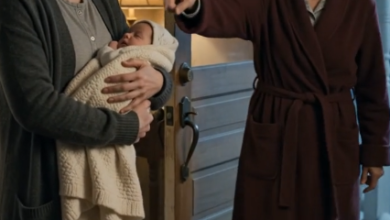
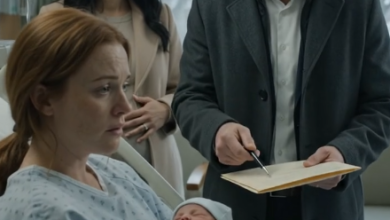
Part 2: A Woman Was Refused a Prom Dress Rental Because She Had No Credit Card — The Story Behind It Left the Shop Owner Red-Eyed
Part 2
Marlene Brooks had never been inside Bella Rose Formals before that Thursday.
She had passed it on the bus for years, usually before sunrise when the lights were still off and the front window looked like a dark aquarium filled with sleeping gowns. Sometimes, in spring, the displays changed overnight: sequins in March, satin in April, tulle by May. Dresses stood on mannequins with perfect waists and empty faces, waiting for girls whose families had appointments, cameras, opinions, and cards that worked when swiped.
Marlene did not hate places like that.
She simply lived around them.
Her life was made of earlier hours and smaller margins. She worked breakfast and lunch at Westbrook High School’s cafeteria, then cleaned two offices downtown three evenings a week when her knees allowed it. She kept cash in envelopes because she trusted what she could count in her hand. Rent. Bus pass. Groceries. Emergency. Church offering. The fifth envelope, hidden behind canned peaches in her kitchen cabinet, had no label because naming it made her cry.
That envelope had become the prom dress money.
Not all at once.
Five dollars from a neighbor who insisted on paying Marlene for hemming curtains. Twelve dollars left after a rare week when groceries cost less because chicken was on sale. Twenty from Mr. Baines, the history teacher, who did not ask questions after seeing Marlene study the prom flyer taped near the cafeteria register. Coins from the coffee can by her microwave. A folded fifty-dollar bill from her older sister in Dayton, who wrote on a sticky note, For the girl. Don’t argue.
The girl was Ava Collins.
Ava was not Marlene’s daughter by blood, though grief and need had rearranged that boundary over the past six months. Ava’s mother, Jennifer, had worked beside Marlene in the cafeteria for almost eight years, a White American woman with strawberry-blond hair, a laugh that carried over lunch trays, and a habit of saying “we’ll figure it out” before knowing if anything was figure-out-able.
Jennifer died in October.
Not suddenly enough to spare anyone dread, and not slowly enough to make goodbye feel finished.
Ovarian cancer moved through her life like a landlord changing locks. By the end, Jennifer was living in a hospital room with paper cups, lotion bottles, and Ava’s homework spread across the windowsill. Ava came after school, sat beside the bed, and read scholarship essays aloud because Jennifer said hearing her daughter plan a future made the machines sound less frightening.
Marlene visited after work when she could.
She brought soup in containers. She braided Ava’s hair once when the girl’s hands shook too badly before a college interview. She learned which parking garage level smelled least like disinfectant and which nurse would sneak an extra blanket if asked kindly.
Three nights before Jennifer died, Marlene arrived to find Ava asleep in the chair, head bent awkwardly, one hand still holding a prom magazine from the hospital gift shop. Jennifer was awake, her face thin, eyes bright with the cruel clarity some people get near the end.
“She won’t go if I’m gone,” Jennifer whispered.
Marlene set down the soup.
“Then you don’t know your daughter.”
“I know her too well. She’ll say it doesn’t matter.”
Marlene looked at the magazine. One page was folded down, showing a pale blue dress with a soft skirt and tiny silver beads around the waist.
Jennifer followed her eyes.
“She circled that one before she thought better of it.”
Marlene sat beside the bed.
Jennifer reached for her hand.
“Promise me something.”
People should be careful with promises made in hospital rooms. The air itself seems to witness them.
“If I can,” Marlene said.
“Make sure she gets one normal night.”
Marlene closed her eyes.
“Jenny.”
“Not perfect. Not expensive. Normal.” Jennifer’s fingers tightened weakly. “A dress. Pictures. A ride if you can find one. Somebody to tell her she looks beautiful without sounding sad.”
Marlene looked at Ava sleeping in the chair, too young to have learned how quietly life could take things.
“I’ll try.”
Jennifer’s eyes filled.
“No. Promise.”
So Marlene promised.
That was the first truth behind the cash in her hand at Bella Rose Formals.
The dress was not about vanity.
It was about one mother asking another woman to protect a daughter from losing every soft thing at once.
After Jennifer died, Ava moved between relatives who meant well but had limited space, complicated schedules, and their own quiet resentments about sudden responsibility. Her father had been gone since she was four, sending birthday cards for a while and then silence. By winter, Ava was staying in Marlene’s spare room “temporarily,” though nobody defined temporary because defining it would force decisions too heavy for a grieving teenager.
Ava stopped talking about prom.
Marlene did not.
She collected flyers, called rental shops, asked about discounts, and searched community groups online at the public library because her phone storage was too full for apps. Bella Rose Formals had the pale blue dress in a rental program. The price was high, but not impossible if Marlene put down the full amount plus deposit.
No one on the website said she needed a credit card.
That was why she came.
At the counter, the young sales associate, Madison, was not cruel. That made the refusal harder. She was twenty-three, White American, with smooth brown hair, a pink blouse, and the trained politeness of someone repeating policy while hoping the person in front of her would stop making it human.
“I can pay cash,” Marlene said again.
Madison glanced toward the office door.
“I understand, ma’am. But without a credit card, we can’t release rented formalwear. If the dress isn’t returned or comes back damaged—”
“I said I can pay the deposit.”
“It has to be attached to a card.”
Marlene looked down at the bills.
Ava stood near the mirror, arms folded tightly around herself. The pale blue dress hung beside her, protected in a garment bag, more delicate than the moment deserved.
A mother near the fitting rooms watched openly now. She was White American, early forties, wearing a cream coat and holding a designer purse over one arm. Her daughter, wearing a glittering green dress, whispered something and looked at Ava’s hoodie.
Ava noticed.
Of course she noticed.
Teenage girls notice comparison before adults finish arranging their faces.
“It’s okay,” Ava said softly. “I don’t need prom.”
Marlene felt something inside her rise too fast.
Not anger at Ava.
Anger at the sentence.
At how easily grief had taught a seventeen-year-old to give up before anyone else had to take.
“No,” Marlene said, sharper than she intended.
Ava flinched.
The mother in the cream coat lifted her eyebrows.
Madison stiffened.
That was the misunderstanding.
To them, Marlene looked like a woman making a scene because she could not get her way. A woman with cash but no card. A woman asking rules to bend. A woman embarrassing a girl who already looked ready to disappear into her hoodie.
Marlene opened her purse to find the envelope with the rental receipt printout and the cash breakdown.
Instead, her fingers brushed the small hospital envelope she had carried since Jennifer’s funeral.
She had meant to leave it at home.
Inside were three things: Jennifer’s last note to Ava, the hospital wristband Ava had cut from her mother’s wrist because she could not bear watching a nurse throw it away, and a folded page from the prom magazine with the pale blue dress circled in shaky pen.
Marlene pulled it out by accident.
At that exact moment, the owner stepped from the back office.
Evelyn Carter was fifty-eight, White American, with silver-blond hair cut just below her chin, black reading glasses on a chain, and a measuring tape draped around her neck like a second necklace. She had owned Bella Rose for twenty-four years and had refused many things in that time: last-minute alterations that defied physics, checks from fathers who joked too loudly, mothers trying to force daughters into dresses they hated, and once, a bride who wanted a refund because her groom “changed direction.”
She knew the difference between a demanding customer and a desperate one.
Marlene held the hospital envelope.
Ava looked like she might run.
Evelyn noticed the wristband inside before anyone spoke.
Not the details.
Just the shape.
White plastic. Hospital print. A blue heart drawn near the edge.
Evelyn’s face changed.
“Madison,” she said quietly, “bring them to the fitting room.”
Madison blinked.
“Mrs. Carter, the policy—”
“I know the policy.”
Evelyn looked at Marlene, then at Ava.
“And I know when a policy is standing in front of a person.”
For the first time since entering the shop, Ava lifted her eyes.
Part 3
The fitting room at Bella Rose Formals had soft lighting, three mirrors, and a velvet chair for mothers who came prepared to cry over their daughters in beautiful dresses.
Marlene sat in that chair as if she did not belong in it.
Ava stood near the pale blue dress, one hand hovering over the garment bag without touching it. She had barely spoken since Evelyn brought them back. Her face had gone pale in the specific way teenagers look when they are afraid adults are about to discuss their pain like paperwork.
Evelyn closed the door gently.
Not fully. Just enough to create privacy without trapping anyone inside.
“Tell me what you can,” she said.
Marlene looked at Ava.
Ava’s throat moved.
“It’s okay,” she whispered. “You can tell her.”
Those four words broke Marlene more than refusal had.
She unfolded the hospital envelope on her lap. The wristband came first, then the magazine page, then Jennifer’s note. Evelyn did not reach for any of it. She waited until Marlene offered.
“This was her mother’s,” Marlene said.
Evelyn looked at Ava.
“I’m sorry.”
Ava nodded once, as if apologies had become weather she could no longer react to.
Marlene continued slowly.
“Jennifer worked with me at Westbrook High. Cafeteria. She was my friend. More than that, really, because some people become family one packed lunch at a time.” She touched the magazine page. “Before she passed, she asked me to make sure Ava had one normal night. Prom. A dress. Pictures. Nothing fancy. Just normal.”
Evelyn’s eyes moved to the circled picture.
“The blue one.”
Ava looked away.
“I circled it before Mom got really sick.”
Marlene’s voice softened.
“She saw it.”
The first turn happened quietly.
Ava had believed the dress was her own childish wish, hidden and abandoned.
But her mother had seen it.
Ava covered her mouth.
Marlene unfolded Jennifer’s note with careful fingers. The handwriting was weak, uneven, but still bright with Jennifer’s personality in small loops and hurried strokes.
Marlene read only the first lines.
Ava, if Marlene gets you to try on the blue dress, don’t make that face. I know you. You’ll say it costs too much, you don’t care, it’s not important. Let one thing be beautiful without apologizing for it.
Ava turned toward the mirror, but there was nowhere in a fitting room to hide from yourself.
Evelyn removed her glasses.
“May I?” she asked.
Marlene handed her the note.
Evelyn read silently. Her mouth tightened once. Her eyes reddened.
At the bottom, Jennifer had written:
Take a picture for me. I’ll be wherever mothers go when they’re still trying to see.
Evelyn pressed the note gently to her chest before returning it.
That was the second turn.
The shop owner was no longer looking at a customer without a credit card.
She was looking at a mother’s unfinished wish.
Madison knocked softly and stepped in with a clipboard, still uncertain.
“Mrs. Carter, I checked again. The rental system won’t let me bypass the card field.”
Evelyn looked at the pale blue dress.
“Then we’re not renting it through the system.”
Madison stared.
“What?”
“We’re altering it as a community loan.”
Marlene shook her head immediately.
“No. I’m not asking for charity.”
“I didn’t say charity.”
Evelyn’s voice was calm, but something deep had entered it.
“You brought cash. You came prepared. You honored our price as best you could. The obstacle is a card, not your commitment.”
Marlene’s pride bristled, because pride is often the last shelter people have when money fails.
“I can’t take a dress for free.”
“You won’t.”
Evelyn walked to a small cabinet and took out a ledger book, old-fashioned, leather-bound, its pages filled with names and amounts written in pen.
“This shop has a fund,” she said. “Very small. Private. Most customers don’t know about it.”
Madison looked surprised too.
Evelyn ran her finger down a page.
“It started twelve years ago, after a girl came in with her grandmother and enough quarters to buy shoes from the clearance bin. I let the grandmother pay five dollars because that was what she could do without losing dignity. After that, a few customers began adding money anonymously. Sometimes I add more. Sometimes dresses come back with notes and checks in the pocket.”
Ava listened, still not touching the dress.
“What’s it called?” she asked.
Evelyn looked at her for a long moment.
“The Margaret Rack.”
Marlene saw the old pain behind the name before Evelyn explained.
“My daughter,” Evelyn said. “She died at nineteen. Car accident. She loved dresses, not because she was shallow, but because she believed people stood differently when they felt seen. After she died, I almost sold this place. Then one day a mother came in with a girl who had been through a house fire. She needed a dress for senior night. I heard Margaret’s voice in my head saying, Mom, don’t you dare make this about money.”
The room went completely still.
That was the third turn.
Evelyn’s red eyes were not simple sympathy.
They came from a wound that recognized another wound.
Ava looked at her.
“You had a daughter?”
“Yes.”
“Did she go to prom?”
Evelyn smiled sadly.
“Three of them. Hers and every friend’s who needed a ride, a safety pin, or emergency mascara.”
Ava almost smiled.
Then she looked at the blue dress again.
“My mom was supposed to come with me,” she said.
“I know,” Evelyn answered.
Ava’s eyes filled.
“No, I mean… she had this whole plan. She said she was going to pretend not to cry, then cry anyway, then complain the lighting was bad, then take forty pictures.”
Marlene laughed through tears.
“She absolutely said that.”
Ava pressed both hands to her face.
“I don’t want to do this without her.”
Marlene stood and stepped toward her, but stopped before touching.
That was part of loving a grieving teenager: knowing when comfort becomes pressure.
“You don’t have to,” Marlene said.
Ava lowered her hands.
“But she wanted me to.”
“Yes.”
“And you promised.”
“Yes.”
Ava looked at the hospital note in Marlene’s hand, then at Evelyn, then at the mirror.
“I hate that everyone keeps trying to make me okay.”
Marlene nodded slowly.
“I know.”
“I’m not okay.”
“I know that too.”
The honesty softened something.
Ava touched the garment bag at last.
Evelyn unzipped it.
The pale blue dress came out like breath held too long. Not extravagant. Not cheap. Soft tulle, a fitted bodice, a waist with tiny silver beading that caught the fitting room light in small, shy sparks.
Ava stepped into it with Madison’s help.
Marlene turned away politely until Madison said, “Okay.”
When Ava faced the mirror, the room changed.
Not because the dress fixed grief.
It did not.
Her face was still thin. Her eyes still carried too many hospital nights. Her hoodie lay on the floor like armor she had set down only because three women promised not to use the moment against her.
But she looked like a seventeen-year-old girl again.
For a few seconds, that was enough.
Marlene cried first.
She tried not to, which made it worse.
Ava looked at her reflection, then whispered, “Mom would’ve said the color makes me look like I’m about to forgive the sky.”
Marlene covered her mouth.
“That sounds exactly like her.”
Evelyn turned toward the alterations table and began looking through pins because work was easier than sobbing in front of strangers.
The fourth turn came when Madison, the young associate who had refused them at the counter, stepped forward.
“I’m sorry,” she said.
Marlene wiped her eyes.
“You were following policy.”
Madison shook her head.
“I was hiding behind it.”
No one rushed to reassure her.
That made the apology stronger.
Madison looked at Ava.
“You looked scared, and I treated you like a transaction.”
Ava’s voice was quiet.
“I’m kind of used to that lately.”
Madison flinched, then nodded.
“I don’t want to be part of that.”
Evelyn pinned the hem.
“Then remember this when the computer says no before your heart has finished looking.”
By then, the mother in the cream coat from outside the fitting room had stopped pretending not to listen. She appeared near the doorway, cheeks pink with embarrassment.
“I owe you an apology too,” she said to Marlene.
Marlene looked at her.
“For what?”
“For assuming I knew why you couldn’t give a credit card.”
Marlene held her gaze.
The woman continued, “My daughter lost her father when she was young. People made assumptions about us too. I should have known better.”
That was the fifth turn.
Judgment had not come only from cruelty.
Sometimes it came from people who had forgotten their own pain long enough to repeat what once hurt them.
The woman opened her purse and took out a small card.
“My name is Claire Whitman. I run a photography studio two blocks over. If Ava wants prom pictures, I’d like to take them. No charge.”
Ava immediately shook her head.
“No, I can’t—”
Claire smiled softly.
“Then pay me one dollar, and I’ll call it the most underpriced session of my career.”
Marlene looked at Evelyn.
Evelyn lifted one eyebrow as if saying, Your move.
Marlene sighed.
“One dollar is acceptable.”
Ava looked overwhelmed, but not trapped.
That mattered.
In the end, Marlene paid what she had planned to pay for the rental, minus the card requirement, into the Margaret Rack fund. Evelyn wrote Ava’s name in the ledger, not as a recipient but as part of the chain.
Ava noticed.
“What does that mean?”
“It means one day,” Evelyn said, closing the book, “if life gives you enough room, you can help the next girl stand in front of a mirror without apologizing.”
Ava looked down at the blue dress.
“I can’t promise I’ll be okay by prom.”
Marlene took her hand.
“Nobody asked you to be okay.”
Evelyn adjusted the hem one final time.
“Just present,” she said.
Ava looked at herself again.
This time, she did not turn away.
Part 4
Prom night arrived with rain.
Not dramatic rain, not movie rain, just a steady spring drizzle that turned sidewalks dark and made mothers worry about hems. Marlene stood in her small apartment living room holding an umbrella, a lint roller, two safety pins, and a packet of tissues she kept pretending were for Ava.
Ava came out of the bedroom in the pale blue dress.
For a second, nobody spoke.
The room was not grand. The couch sagged in the middle. The lamp near the window leaned slightly because one leg of the table was uneven. A framed photo of Jennifer rested on the bookshelf beside a grocery-store candle Marlene had lit because it smelled faintly like vanilla and hospitals had made Ava hate unscented rooms.
Ava’s hair was curled loosely at her shoulders. Madison from Bella Rose had come over after work to help, bringing bobby pins and the calm concentration of someone trying to become better in practical ways. Claire Whitman waited near the window with a camera hanging at her side, not raising it yet.
Marlene looked at Ava.
Jennifer’s note had given her instructions.
Tell her she looks beautiful without sounding sad.
So Marlene took a breath.
“You look beautiful,” she said, steady and warm.
Ava watched her carefully.
Marlene smiled.
“And your mother would have complained that I didn’t steam the skirt enough.”
Ava laughed.
It came out small, startled, almost rusty.
Everyone in the room let it exist without grabbing at it.
Claire took photos outside under the apartment awning, where the rain softened the streetlights and made the blue dress glow against the gray evening. Ava held Jennifer’s hospital bracelet wrapped around the stem of a small bouquet Evelyn had sent from Bella Rose, white roses tied with a blue ribbon. She did not wear the bracelet on her wrist. She wanted her mother close, not displayed.
Before leaving, Ava stood in front of Jennifer’s photo.
“I’m going,” she said.
Marlene looked away to give her privacy, but Ava reached back and found her hand.
“You too.”
So Marlene stood beside her.
They did not say much.
Some moments are too full for language to enter without knocking things over.
The prom was held in a hotel ballroom downtown, where chandeliers shone over rented linens and teenagers moved between awkwardness and joy with the same uncertain steps. Ava’s friends greeted her carefully at first, then normally when she rolled her eyes and said, “Please don’t treat me like a Victorian ghost.”
That sounded so much like Jennifer that Marlene had to step into the hallway.
Evelyn came too.
She had offered to help with last-minute dress emergencies at the check-in table, though everyone knew she came because letting Ava go alone felt impossible after everything. Madison stood beside her with a sewing kit, greeting students with a softness she had not known how to use at the counter weeks earlier.
“You okay?” Evelyn asked Marlene.
Marlene leaned against the wall.
“No.”
Evelyn nodded.
“Me neither.”
They stood together listening to music thump through the ballroom doors.
After a while, Evelyn said, “Margaret would have liked Ava.”
“Jennifer would have liked you.”
“She sounds like trouble.”
“The best kind.”
Evelyn smiled.
Inside the ballroom, Ava danced once with a boy from chemistry, twice with her friends, and once by herself when a song came on that Jennifer used to sing badly in the car. Halfway through, she closed her eyes. Her friends formed a loose circle around her, not protective in a pitying way, just near.
Marlene watched from the doorway.
She did not cry then.
She had expected to.
Instead, she felt a strange quiet open in her chest. A promise was not a cure. It did not bring Jennifer back, pay every bill, or make Ava’s grief easier to carry. But it had done what Jennifer asked. It had made room for one normal night, even if normal now included absence wearing a blue ribbon around a bouquet.
The following Monday, Ava returned the dress to Bella Rose.
Marlene brought it in freshly cleaned, wrapped in the garment bag, with the receipt tucked carefully inside. Ava carried a small envelope.
Evelyn met them at the counter.
“No stains?” she asked.
Ava gave her a look.
“I’m grieving, not careless.”
Evelyn laughed.
Madison covered her smile.
Ava handed Evelyn the envelope.
Inside was a photograph Claire had taken outside the apartment. Ava stood under the awning in the blue dress, rain behind her, one hand holding the bouquet with Jennifer’s bracelet tied around it. Marlene stood beside her, not trying to be a mother, not trying not to be one either. Just there.
On the back, Ava had written:
For the Margaret Rack. I was present.
Evelyn read it twice.
Then she took off her glasses and wiped her eyes.
“May I keep this in the ledger?”
Ava nodded.
“But not where everybody can see it.”
“Of course.”
Privacy had become part of the gift.
Weeks turned into months.
Ava graduated in June. She wore Jennifer’s bracelet tucked into her pocket and Marlene’s old pearl earrings, which were fake but looked good enough from the bleachers. Rebecca from the school office read Ava’s name clearly, and when Ava crossed the stage, Marlene clapped until her palms stung.
In August, Ava moved into a dorm twenty minutes away, close enough to come home for laundry, far enough to feel like the future had not fully closed. She did not call Marlene Mom. Marlene did not ask her to. They built their own language slowly: grocery lists, tuition forms, late-night texts, half-finished grief, and jokes about cafeteria chicken.
Bella Rose changed too.
Not publicly at first. Evelyn did not post about Ava. She did not turn the story into marketing. But she rewrote the rental policy with more than one path for deposits. Cash options. Community sponsorships. A private guarantee fund for girls without credit cards in their family. Staff training that began not with fraud prevention, but with the question Evelyn wrote on a card and taped beside the register:
What might you not know yet?
Madison became the best employee in the store at answering that question.
Claire donated one prom photo session each season.
The mother in the cream coat, whose daughter had once looked Ava up and down, sent a check to the Margaret Rack fund with a note that said, I remembered who I used to be.
Years later, Ava came back to Bella Rose on a Saturday afternoon in April. She was twenty-four then, studying social work, with her hair shorter and her grief no longer sharp at every edge but still present in certain light. Marlene came with her, older, slower, still carrying cash envelopes in her purse though she now had a debit card Ava made her use for groceries.
A girl stood at the counter with her grandmother, counting bills.
No credit card.
Madison, now assistant manager, did not freeze behind policy.
She smiled.
“We have a few ways to handle that.”
Ava looked at Marlene.
Marlene looked toward the ledger behind the counter.
Evelyn was in the back, older now, adjusting a hem with reading glasses perched low on her nose. When she saw Ava, she stood carefully and opened her arms.
“You came at the right time,” she said.
Ava reached into her bag and pulled out an envelope.
Inside was a check.
Not huge.
Enough.
“For the next girl,” Ava said.
Evelyn held the envelope, then looked at Marlene.
“You raised her well.”
Marlene shook her head.
“Her mother started it.”
Ava slipped her hand into Marlene’s.
“You helped finish some of it.”
Marlene could not speak.
In the fitting area, the girl with the grandmother tried on a lavender dress and stared at herself with the frightened wonder of someone realizing a mirror could be kind. Her grandmother covered her mouth. Madison stood nearby, giving them space.
Ava watched for a moment, then turned away before the moment became hers to own.
On the wall near the alterations table, the Margaret Rack ledger sat on a small shelf, closed, private, full of names written by women who had learned that dignity often needs paperwork, witnesses, and someone willing to see the person standing behind the policy.
Tucked inside the first page was Ava’s prom photo.
Not displayed.
Kept.
In the photo, rain fell behind her like silver thread, the blue dress held its shape, Marlene stood steady at her side, and Jennifer’s hospital bracelet rested quietly around the bouquet stem, close enough to be part of the night without having to explain itself.
Every spring after that, when prom season made the shop loud with sequins, nervous mothers, impatient daughters, and mirrors full of becoming, Evelyn sometimes opened the ledger after closing and looked at that picture.
Then she would turn off the lights, touch the pale blue ribbon tied around the shelf, and whisper the same words each time.
“Present is enough.”
Follow this page for more heartfelt stories about dignity, hidden kindness, and the quiet promises people keep when love asks them to stay.