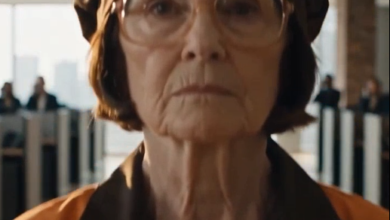
Part 2: A Woman Was Looked Down On for Living in a Mobile Home — What She Did During the Storm Changed the Whole Neighborhood
Part 2
Before the storm, Willow Creek Estates had a quiet way of making Nora Ellis feel like a temporary problem.
No one said it too directly. That was not the neighborhood’s style. The people on Willow Creek Drive had mastered the art of polite distance: a smile that stopped before warmth, a wave from behind a windshield, a pause before saying mobile home as if the words had to be wrapped in tissue.
Nora’s home sat on the narrow lot at the end of Sycamore Lane, where an old rental cottage had burned down years before and the land had been sold cheaply because most people considered it too close to the drainage canal. She bought the lot with the small insurance payout left after her father died and moved in a used single-wide mobile home she had renovated herself with secondhand cabinets, thrift-store curtains, and a little porch she built from reclaimed lumber.
To the neighborhood, it looked like failure parked at the end of a respectable street.
To Nora, it was the first place in her adult life that belonged to her.
She planted marigolds in paint buckets. She hung wind chimes under the porch roof. She kept a row of bottled water and flashlights in a metal cabinet by the back door, not because she was strange, but because she had learned that waiting until the sky turned ugly was a good way to run out of time.
That was the first thing her neighbors did not know.
Nora had not always lived small.
Fifteen years earlier, she had been a paramedic in East Texas, working nights, storms, wrecks, house fires, and the long quiet hours after emergencies when families looked at her as if she could make time step backward. She had once pulled a truck driver from rising floodwater with a rope tied around her waist. She had once kept an elderly man breathing for fourteen minutes until the ambulance reached a washed-out road. She had once carried a child wrapped in a pink blanket out of a mobile home after a tornado peeled open its roof like a tin can.
Then came the call that ended her career.
Her younger brother, Luke, had been caught in a flash flood after leaving work late. Nora was on shift that night, but not close enough. By the time they found his truck against the guardrail, the water had already done what water does. It took quietly. It left mud. It left questions no one could answer without hurting you worse.
After Luke’s death, Nora kept working for eight months.
Then one night, during a storm call, she froze at the sound of rushing water under a bridge. Not long. Only a few seconds. But in emergency work, a few seconds can feel like a betrayal. She resigned before anyone forced her to.
No one on Willow Creek Drive knew any of this.
They knew she drove an old blue pickup. They knew she wore work boots to the grocery store. They knew she did odd repair jobs, cleaned vacation rentals on weekends, and sometimes came home with mud on her jeans. They knew she lived alone except for an old yellow dog named Gus who slept on the porch and barked at squirrels with moral certainty.
They did not know she checked storm drains after heavy rain.
They did not know she had quietly cleared leaves from the curb outside Mrs. Whitaker’s house three times that spring because the woman’s husband used a cane and could not bend safely.
They did not know she had marked the low spots on the street in a notebook, written down which basements took water first, and called the county twice about the clogged drainage canal behind the Hendersons’ property.
The county had promised to send someone.
The county did not.
The second thing they did not know was that Nora paid attention when people dismissed her.
At the neighborhood association meeting two weeks before the storm, Mrs. Whitaker, a sixty-four-year-old White American woman with silver-blond hair, a pearl necklace, and the kind of sweater that looked expensive even when she called it casual, had raised the question carefully.
“I hate to bring this up,” she said, which meant she had been waiting all week to bring it up, “but are we certain that temporary housing unit meets the visual standards of Willow Creek Estates?”
Everyone knew what she meant.
Nora sat in the back row of the library meeting room, hands folded, boots crossed at the ankle, saying nothing.
Brad Coleman, forty-seven, White American, a financial advisor with a red face, polished shoes, and a laugh too loud for indoor spaces, tapped his pen against the agenda.
“It lowers property values,” he said. “People work hard to buy here.”
Nora looked at him then.
Only once.
Not angrily.
Just long enough that Brad looked away first.
The association president mumbled something about checking county rules. Nora’s home was legal. Her lot was hers. The meeting moved on to mailbox colors and dog waste reminders, but the damage had already found its place.
After that, the whispers sharpened.
Someone complained about Gus barking, though he barked less than the Whitakers’ sprinkler system squealed. Someone left a flyer for a storage facility tucked under Nora’s windshield. Someone joked that if a storm came, her trailer would end up in Kansas.
Nora heard that one while buying milk.
She did not respond.
That was the part people misunderstood most.
Silence is not always weakness.
Sometimes it is a person choosing where to spend the little strength they have left.
On the afternoon of the storm, Nora knew before the alerts started.
The air had changed. Heavy. Metallic. Birds had gone quiet near the canal. Clouds gathered low and green-gray beyond the tree line, and the wind began pushing warm gusts through the neighborhood as if testing doors.
At 4:30, her phone flashed a severe thunderstorm warning.
At 5:10, a flash flood watch.
At 6:02, a tornado watch.
Nora stood on her porch, one hand resting on Gus’s head, and watched children’s bikes lying in yards, trash bins near curbs, patio umbrellas still open, basement window wells full of last fall’s leaves.
She picked up her phone and posted in the neighborhood group.
Heavy rain and high wind coming. Please clear basement drains, move cars from low spots, charge phones, and keep shoes near beds tonight.
The first response came from Brad.
Thanks, weather channel.
Then Mrs. Whitaker wrote: Perhaps we should leave official safety advice to officials.
Nora stared at the screen for a moment, then slipped the phone into her pocket.
At 6:40, she walked house to house anyway.
She knocked on the Hendersons’ door first.
Amanda Henderson, thirty-six, White American, opened it with a baby on her hip and a tired smile. Behind her, six-year-old Emma sat on the living room rug building a block tower.
“Hey, Nora,” Amanda said. “Everything okay?”
“Your basement window wells are clogged,” Nora said. “And the canal behind you is high. If water comes fast, don’t go downstairs. Keep the kids’ shoes upstairs. If the power goes, call me.”
Amanda blinked.
“Oh. Okay. Thanks.”
Her husband, Mark, appeared behind her.
“We’re fine,” he said. “House has never flooded.”
Nora looked past him at the hallway.
“First time is always the first time.”
Mark gave a short laugh.
“We’ll keep that in mind.”
He closed the door too quickly.
Nora moved on.
At the Colemans’ house, Brad opened the door holding a glass of wine.
“You selling storm insurance now?” he asked.
Nora pointed toward his driveway.
“Your Tesla is parked over the storm drain. If that drain blocks, the water will push toward your garage.”
Brad looked at her old jacket, her work boots, the rain already spotting her hair.
“My garage is elevated.”
“Not enough if the creek jumps.”
He smiled without kindness.
“I’ll take my chances.”
At Mrs. Whitaker’s house, nobody answered, but Nora could see the older woman moving behind lace curtains.
Nora left a flashlight on her porch anyway.
That was the third thing no one knew.
She had six extra flashlights.
Not because she was paranoid.
Because after losing Luke, she could not bear the thought of someone calling from the dark and not being found.
By 7:45, the storm hit hard.
Rain came sideways. Wind bent the sycamores until their branches scraped windows. The drainage canal rose fast, brown water churning with leaves, plastic bottles, and broken sticks. Nora moved through her home quickly, securing Gus in the hallway, filling the bathtub with water, placing her emergency bag by the door, and checking the radio because cell towers sometimes gave up before people did.
At 8:03, the power went out.
At 8:07, Nora’s phone buzzed.
Not a call.
A message from Amanda Henderson.
Basement window cracked. Water coming in. Mark went downstairs. Door stuck. Emma asleep upstairs. I smell gas maybe. I don’t know what to do.
Nora grabbed her flashlight.
Then the phone signal dropped.
She looked at Gus.
“Stay.”
The old dog whined.
Nora took the crowbar from beside the tool cabinet and stepped into the storm.
Part 3
The rain hit Nora so hard it felt thrown.
Water ran over her feet before she reached the street. The low part of Sycamore Lane had already turned into a fast-moving sheet, dark and silver under lightning, carrying mulch, branches, a soccer ball, and someone’s flowerpot past the curb. The wind shoved against her left shoulder, and for one terrible second, the sound of rushing water under the storm drains became another night, another road, another name she still could not say without feeling the truck against the guardrail.
Luke.
She stopped in the middle of the street.
Only for a second.
Then she heard the Hendersons’ alarm begin to chirp weakly through the rain.
That was enough.
Nora moved.
Across the street, Mrs. Whitaker watched from her upstairs window, phone in hand, heart pounding not from concern but from the old satisfaction of being proven right.
“She has a crowbar,” she shouted.
Her husband, Harold, seventy, White American, retired pharmacist, narrow shoulders, kind eyes, and a right knee that had never recovered from surgery, leaned on his cane.
“Maybe she’s helping someone.”
“She’s breaking into the Hendersons’ house.”
Harold looked through the rain.
The Hendersons’ porch lights were off. Their side yard was already ankle-deep in water. The basement windows had gone black.
“Call them,” he said.
“I am calling the police.”
Nora reached the Hendersons’ side door and pounded.
No answer.
She shouted Amanda’s name.
The wind tore the sound apart.
She tried the handle. Locked.
Through the small glass panel beside the door, she saw water spreading across the kitchen floor and a child’s pink sneaker near the stairs.
She did not hesitate.
She wrapped her sleeve around the crowbar and struck the glass.
It cracked.
She struck again.
The panel gave.
At Brad Coleman’s house, the curtains snapped open.
Brad saw Nora break the glass and felt a strange thrill of vindication.
“I knew it,” he muttered, dialing 911 with one hand while filming through the window with the other.
But inside the Hendersons’ house, there was no theft, no madness, no shameful scene to confirm the neighborhood’s old story.
There was Amanda Henderson on the kitchen floor, coughing from panic, trying to keep the baby carrier above the water pooling around her knees. There was a gas odor faint but real, sharp enough to tighten Nora’s throat. There was Mark’s voice shouting from behind the basement door, muffled and terrified.
And upstairs, Emma was still asleep.
Nora’s mind went clear.
Not calm.
Clear.
Clear is what training gives you when fear is too large to handle whole.
“Amanda,” Nora said, crouching beside her. “Look at me. Where is Emma?”
“Upstairs,” Amanda gasped. “She took allergy medicine. She sleeps heavy. Mark went down to move boxes and the door jammed. I can’t get it open.”
“Baby first. Then Emma. Then Mark.”
“My husband—”
“I know.”
Nora turned the gas valve off behind the stove with a wrench from her jacket pocket, then grabbed the baby carrier.
“Amanda, go to the front porch. Do not step into deep water. Hold the railing. I’m bringing Emma.”
Amanda stared at her.
“Nora, I’m sorry.”
“Not now.”
That was the first turn.
The woman they thought was breaking in had already done the first thing emergency crews would have done.
Outside, Mrs. Whitaker watched Nora emerge carrying the baby carrier high against her chest. Amanda stumbled behind her, sobbing, hair plastered to her face.
Harold lowered himself onto the stair lift chair by the window.
“She has the baby,” he whispered.
Mrs. Whitaker’s phone slipped slightly in her hand.
Nora carried the baby across the porch and placed the carrier on the highest step, covered with her jacket.
“Stay here,” she told Amanda. “Do not go back inside.”
Then she went back in.
Brad stopped filming.
The 911 dispatcher was still on the line.
“Sir, what is happening now?”
Brad swallowed.
“She brought out a baby.”
“Is the house flooding?”
“Yes.”
“Is anyone still inside?”
Brad looked through the rain.
“She went back.”
Nora climbed the Hendersons’ stairs two at a time, flashlight beam shaking across family photos, laundry baskets, a stuffed unicorn dropped near a bedroom door. Emma lay curled under a purple blanket, blond hair stuck to her cheek, one hand wrapped around a small rabbit toy.
Nora scooped her up.
The child stirred.
“Mommy?”
“I’m Nora from down the street, sweetheart. Your mom’s outside. Hold my neck.”
Emma did.
Nora carried her down carefully, one foot testing each step because water and darkness make stairs lie. Near the bottom, the basement door slammed once from the other side.
“Mark!” Nora shouted.
“I can’t open it!” he yelled. “Water’s pushing something against it!”
Nora got Emma to the porch and handed her to Amanda, who made a sound that did not belong to words.
Second turn.
The “trailer woman” had just carried out the sleeping child while the neighbors who judged her watched from dry windows.
But Mark was still trapped.
The side door would not help. The basement door had jammed. The basement windows were taking water, and if the drainage canal overtopped completely, minutes would matter.
Nora ran back into the rain toward her mobile home.
Brad, seeing her go, opened his front door.
“Where are you going?” he shouted.
Nora did not slow.
“To get a rope.”
“A rope?”
“Move your car off the drain!”
“What?”
She turned then, soaked and furious.
“Your car is blocking the storm drain, Brad. Move it now or the whole street backs up.”
For the first time since Nora had moved in, Brad obeyed without arguing.
That was the third turn.
The man who had mocked her warnings suddenly understood she had not been guessing.
Nora reached her porch, grabbed a coil of rope, bolt cutters, and a life vest from the emergency cabinet. Gus barked wildly from inside. She could hear sirens far away, but far away in a storm is not close enough.
When she turned back, Harold Whitaker was standing on his porch in a raincoat, gripping his cane with one hand and the flashlight Nora had left earlier with the other.
“You need light?” he shouted.
Nora looked at him.
“Yes.”
Mrs. Whitaker stood behind him, pale.
Harold stepped carefully down to the sidewalk, trembling but determined.
“Marjorie,” he called to his wife, “bring towels.”
Mrs. Whitaker hesitated.
Then she moved.
Fourth turn.
The first neighbor to help Nora was the husband of the woman who had called her dangerous.
At the Hendersons’ house, Nora tied the rope around the porch column and handed the other end to Brad.
“Hold this. If I go down, you pull.”
Brad stared at her.
“Go down where?”
“Basement window.”
“That water’s moving too fast.”
“I know.”
“You can’t—”
“Then help me not make it worse.”
Nora crawled along the side of the house where water had risen past her knees. The basement window well was filling rapidly, but the glass had cracked inward, blocked by a plastic storage bin floating against it. Mark’s flashlight flickered on the other side.
“Back up!” Nora shouted.
She struck the frame with the crowbar.
Once.
Twice.
The metal bent.
Water pushed against her legs, trying to turn her sideways. Brad gripped the rope with both hands, eyes wide. Harold held the flashlight beam steady despite the shaking in his arm.
Finally, the window frame gave enough for Nora to reach in with the bolt cutters and pull the storage bin aside.
Mark’s face appeared behind the opening, pale and smeared with dirt.
“I can’t fit,” he said.
“You will if you listen.”
“I’m not leaving the boxes. Our papers—”
“Your wife and kids are outside.”
That ended the argument.
Nora guided him through the broken frame inch by inch. He cut his arm on the metal edge, cursed, apologized, and kept moving. When the water surged suddenly from behind the house, Brad pulled the rope so hard Nora nearly fell backward onto the lawn.
Mark collapsed beside her in the mud, coughing.
Amanda screamed his name from the porch.
Nora rolled onto her side, breathing hard, rain on her face, one hand still gripping the rope.
The sirens arrived then.
Red lights washed across the flooded street, turning every window into a witness.
Firefighters took over. Paramedics wrapped Amanda, Mark, Emma, and the baby in blankets. A police officer spoke to Brad and looked puzzled when Brad kept saying, “She told me to move the car. She told me before.”
Mrs. Whitaker came down her steps carrying towels in both arms.
She stopped in front of Nora.
For several seconds, she said nothing.
Nora stood there barefoot, soaked, muddy, shivering, with a cut on her wrist and her faded jacket around a baby who was now safe in his mother’s arms.
Mrs. Whitaker’s lips trembled.
“I called the police on you.”
Nora wiped rain from her eyes.
“I know.”
“I thought you were breaking in.”
“I was.”
Harold gave a soft laugh that sounded like a sob.
Mrs. Whitaker looked at the Henderson children, then at the crowbar on the ground.
“I’m sorry.”
Nora did not answer right away.
She was too tired for easy forgiveness and too relieved for anger.
Finally, she said, “Next time I post a storm warning, clear your drains.”
Mrs. Whitaker nodded, tears slipping down her face.
“I will.”
The final turn of that night came after the firefighters had checked the Hendersons’ house and the immediate danger had passed. A young firefighter walked toward Nora, shining a flashlight on her face.
“Nora Ellis?”
She stiffened.
He lifted his helmet slightly.
“Station 6. You trained my lieutenant.”
Nora blinked.
“What?”
“He said if a red-haired woman named Ellis was ever first on scene, we should listen before we spoke.”
The neighbors turned toward her.
Brad looked as if the ground had shifted under his polished shoes.
Mrs. Whitaker stared.
The woman they had treated like a problem at the edge of the neighborhood had once been the person first responders were trained to trust.
Nora looked away toward the drainage canal, where the water still moved dark and fast under flashing lights.
“I’m not that person anymore,” she said.
The firefighter glanced at the Henderson family, alive under blankets.
“Ma’am,” he said quietly, “tonight says different.”
Part 4
Morning came pale and damp over Willow Creek Estates.
The storm had moved east before dawn, leaving behind a neighborhood that looked as if it had been shaken awake and set down carelessly. Branches littered lawns. Garbage bins lay sideways in the street. The Hendersons’ side door was boarded with plywood. Brad Coleman’s driveway was streaked with mud where water had swirled around the storm drain he had finally uncovered.
Nora’s mobile home still stood at the end of Sycamore Lane.
One section of skirting had been torn loose by the wind. The marigold buckets had tipped over. A branch had punched a hole through the little porch roof she had built by hand.
But the wind chimes were still there.
They moved softly in the wet morning air, making a faint sound like glass remembering music.
Nora sat on her porch steps wrapped in an old blanket, holding a mug of coffee with both hands. Gus leaned against her knee, exhausted from a night of guarding the hallway and barking at thunder. Her wrist was bandaged. Her feet were scratched. Her whole body ached in the old familiar way that came after emergency work, when adrenaline left and pain returned to collect what it was owed.
At 7:12, Brad Coleman walked up her driveway.
He wore jeans, a rain jacket, and boots that looked too clean for the morning. In one hand, he carried a toolbox. In the other, a paper bag from the diner on Main Street.
Nora looked at him.
Brad stopped halfway, suddenly unsure.
“I brought breakfast,” he said. “And I can fix that porch roof. Or try to. I’m not great with tools, but I can hold things.”
Nora took a sip of coffee.
“You called 911 on me.”
“I did.”
“You filmed me.”
He looked down.
“I deleted it.”
“That doesn’t undo the filming.”
“No.”
Gus gave one low bark, as if agreeing.
Brad swallowed.
“I’m sorry.”
Nora watched him long enough for the apology to stop being convenient.
Then she nodded toward the porch roof.
“You can hold the ladder.”
Brad exhaled.
That was how repair began.
Not with a speech.
With a man who had mocked her home standing in mud beside it, holding a ladder steady while she patched a roof he once wished would disappear.
By 8:00, Harold Whitaker arrived with a thermos and a box of nails he found in his garage. Mrs. Whitaker came behind him carrying towels folded so neatly they looked embarrassed to be useful. She stood near Nora’s porch, silver-blond hair tucked under a rain hood, face bare of the powder and composure she usually wore to association meetings.
“I washed these,” she said. “For the Hendersons, if they need more.”
Nora nodded.
“They will.”
Mrs. Whitaker looked at the damage to the mobile home.
“I used to think this place made the street look…” She stopped.
Nora raised one eyebrow.
Mrs. Whitaker’s mouth tightened with shame.
“Smaller.”
Nora looked at her porch, her tipped marigolds, the patched skirting, the home she had fought for dollar by dollar.
“It did make the street smaller,” Nora said.
Mrs. Whitaker blinked.
Nora set down her mug.
“Small enough that I could see everyone’s houses from here. Small enough to know which drains clogged. Small enough to hear Amanda screaming when the wind changed.”
Mrs. Whitaker looked down at the towels.
“I don’t know how to apologize for the way I looked at you.”
“Start by not doing it again.”
The words were not harsh.
They were clean.
Mrs. Whitaker nodded.
“I can do that.”
Later that morning, the neighborhood gathered without being invited.
Amanda Henderson came first, wrapped in a borrowed sweatshirt, baby against her chest, Emma holding her free hand. Mark followed with his arm bandaged, face gray from shock and gratitude.
Amanda stopped in front of Nora and began to cry before saying anything.
Nora stood quickly.
“Hey. You don’t have to—”
Amanda hugged her.
Hard.
Not the polite hug people give after church or at school events, but the kind that collapses distance because distance no longer makes sense.
“You got my children out,” Amanda whispered.
Nora closed her eyes.
For one moment, the rain, the crowbar, the broken glass, Luke’s truck, every old sound of water, all of it rose together and then settled.
“I got there in time,” Nora said.
Amanda pulled back and looked at her.
“Yes.”
Those words landed in the place Nora had kept empty for years.
I got there in time.
Not with Luke.
But with Emma.
With the baby.
With Mark.
Sometimes life does not give back what it took. Sometimes it only gives you a different door and asks whether you can still walk through it.
By noon, the street looked like a work crew had arrived, though most of them were neighbors who had spent years paying others to handle mess. Brad cleared the storm drain by his driveway. Mrs. Whitaker and Amanda sorted dry towels and blankets. Harold sat in a folding chair directing people with a flashlight like a retired general. Mark helped board his own door, then insisted on fixing Nora’s damaged skirting before touching anything else at his house.
“You should fix your place first,” Nora told him.
He shook his head.
“My place is standing because of yours.”
That sentence traveled down the street.
By evening, someone brought a folding table. Someone else brought soup. Mrs. Patel from two streets over brought cornbread. Children who had once been told not to play too close to “that trailer” sat on Nora’s lawn, muddy and tired, eating from paper bowls while Gus accepted dropped crumbs like tribute.
The next neighborhood association meeting was held one week later in the library.
Nora almost did not go.
Her wrist still hurt. Her porch roof was patched but ugly. Her body wanted rest more than conversation. But at 6:20, Harold Whitaker knocked on her door wearing his good cardigan and leaning on his cane.
“Meeting starts at seven,” he said.
“I remember.”
“You need a ride?”
“I have a truck.”
“I know.”
He stood there.
Nora sighed.
“You’re not leaving, are you?”
“No.”
So she went.
This time, when Nora entered the library meeting room, the conversation did not soften into that old awkward pause. People turned, yes, but differently. Mrs. Whitaker stood from her chair. Brad stood too. Amanda smiled from the second row, eyes still tired.
The association president cleared his throat.
“Before we discuss repairs and drainage, I believe we owe Nora the floor.”
Nora remained near the back.
“I don’t want the floor.”
Mrs. Whitaker stood anyway.
“Then I’ll use it briefly.”
Nora folded her arms.
Mrs. Whitaker’s hands shook around her printed agenda.
“I was wrong about Nora Ellis,” she said. “I was wrong about her home. I was wrong about what I thought it meant. And I was wrong in a way that could have cost people more than pride.”
The room was quiet.
“I treated her like she did not belong here,” Mrs. Whitaker continued. “But last Friday, she knew this neighborhood better than any of us, and she acted before most of us understood what was happening.”
Brad looked down.
“I did too,” he said. “I mocked her warning. I blocked the storm drain she told me to move from. I called 911 because I thought the worst of her, and she was saving children while I was proving my own stupidity.”
A few people shifted, uncomfortable with honesty that direct.
Nora looked at him.
Brad gave a small helpless shrug.
“It was stupidity.”
The association president looked at Nora.
“We’d like your help forming a storm preparedness plan.”
Nora almost laughed.
Two weeks earlier, they wanted rules to hide her home.
Now they wanted her rules to protect theirs.
She thought of saying no.
She had earned no.
But then she thought of Emma asleep upstairs, Amanda on the kitchen floor, Mark behind the basement door, Harold holding the flashlight with trembling hands.
No was satisfying.
Useful mattered more.
“I’ll help,” Nora said. “But we do it right. Not just a pretty binder nobody opens.”
The president nodded quickly.
“What do you need?”
Nora walked to the front table.
For the next hour, she drew a map of Willow Creek Estates from memory. Low spots. Storm drains. Elderly residents. Houses with basement bedrooms. Families with small children. Backup generators. Medical needs. Pets. Tools. Who owned chainsaws. Who knew CPR. Who had trucks. Who had flashlights. Who had shame and would rather sit in the dark than ask for help.
That last line made the room quiet again.
Nora did not apologize for it.
By the end of the month, Willow Creek Estates had a storm phone tree, a shared tool shed, cleared drainage grates, and emergency supply bins at three houses, including Nora’s mobile home. The county finally came to inspect the drainage canal after Mrs. Whitaker called every morning for nine days with the relentless politeness of a woman redirecting her sharpness toward something useful.
The mobile home at the end of Sycamore Lane did not become beautiful by neighborhood standards.
It remained small. Beige. Weathered. Practical.
But people stopped saying it like an apology.
Children waved to Nora from bikes. Brad asked before trimming the branches near her lot. Amanda brought Emma over to help replant marigolds in new buckets, each one painted by the neighborhood kids with crooked suns, rainbows, and one dramatic lightning bolt that Gus seemed personally suspicious of.
One afternoon, Mrs. Whitaker came by carrying a small wind chime made of blue glass.
“I saw it at the garden center,” she said. “It reminded me of yours.”
Nora looked at it.
“You buying décor for my trailer now?”
Mrs. Whitaker winced, then saw Nora’s mouth curve slightly.
“My apologies,” she said. “For your home.”
Nora accepted the wind chime.
They hung it together on the repaired porch roof.
For a moment, both women stood there listening as the new chime touched the old one, glass against metal, two different sounds learning the same wind.
A year later, another storm came through Willow Creek.
Not as fierce.
Not as dangerous.
But enough to darken the sky and make people look toward the canal.
This time, Nora’s phone buzzed before she could post anything.
Brad: Moved the car. Drain clear.
Amanda: Shoes upstairs. Flashlights charged.
Mrs. Whitaker: Harold has the list. I have towels. Gus may come over if nervous.
Nora smiled at that one.
Gus, lying under the kitchen table, thumped his tail as if he knew his reputation had improved.
Rain began tapping the roof of the mobile home, soft at first, then steadier. Nora stood at the window and looked down the street at brick houses, porch lights, wet trees, and neighbors who finally understood that safety did not always come from the biggest house or the prettiest yard.
Sometimes it came from the person everyone overlooked at the edge of the street.
She took her flashlight from the cabinet, checked the batteries, and set it by the door.
Then she sat on the porch with Gus as the storm rolled in, listening to the wind chimes speak above her, old and new notes mingling in the dark.
Follow this page for more heartfelt stories about dignity, kindness, and the quiet courage people carry where others forget to look. 🌷