A Six-Year-Old Gave Away the Only Doll She Had Left in the Children’s Ward — Then a Biker Learned Why the Doll Looked Familiar
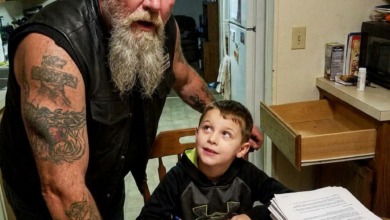
Our president’s name was Walter Price, though everybody in the club called him Walt. He arrived at the hospital an hour after my call, still wearing the work shirt from his garage under his leather vest. He was a large man, older than me, with a gray beard that had gone almost white. Families moved aside to let him pass. Walt noticed and stopped outside the ward to ask a nurse whether he should leave the vest in his truck.
She told him he was fine. She also asked him to wash his hands before visiting June.
He did it carefully, twice.
I had called him because he knew Michael longer than I did. Michael had joined the club after moving to Dayton with Elena. He repaired school buses for the county during the day and took small engine jobs on weekends. If one of our bikes broke down, he could usually tell what was wrong just by listening as it pulled into the lot. He was patient with machines and less patient with our excuses for leaving a job unfinished.
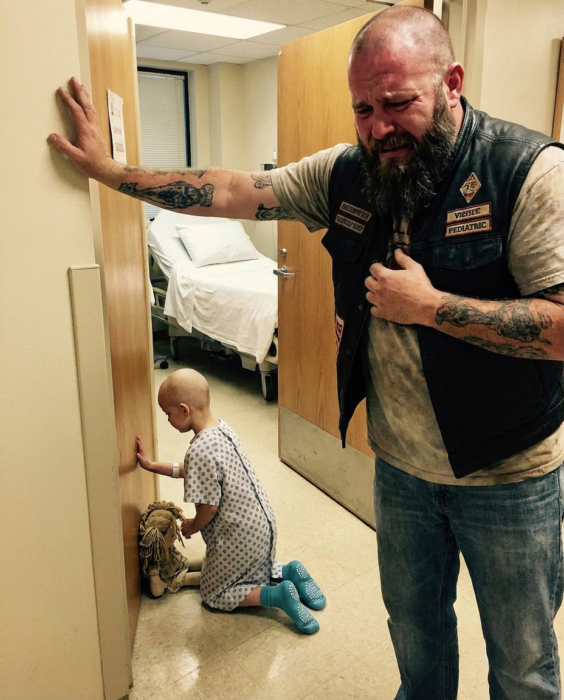
Michael loved Christmas. At least, that was how I remembered it. Every November he brought a handwritten list to the clubhouse: toys the hospital could accept, age ranges that had been missed the year before, batteries needed, boxes to collect from shops. He never let us arrive unannounced. He called the hospital first and worked out when staff could receive everything without disrupting the ward.
I used to think he enjoyed directing us. When I said so once, he handed me the list and let me try. By noon, I had called two stores that didn’t have what we needed and misplaced a nurse’s number. He took the list back without making fun of me.
At the hospital, Walt and I waited while Elena finished speaking with June’s doctor. My niece Sophie had gone for an afternoon test, so her mother told me she was fine with me staying nearby. I bought two coffees downstairs. Walt held his cup between both hands until it cooled and watched the elevator doors open and close.
He asked what June had said when she gave the doll away. I repeated her words as closely as I could: the other girl was new, she cried a lot, and June was used to the hospital. Walt stared at the lid of his cup.
“She shouldn’t have had to get used to it,” he said.
I agreed. Neither of us had anything useful to add.
When Elena joined us, I introduced Walt as a friend of Michael’s. She recognized him from a photograph at the clubhouse. We had met briefly at the funeral, in a crowded room where she had shaken more hands than anyone should have to. I apologized for asking questions on a day when she already had enough to manage.
“You knew her dad,” Elena said. “June likes hearing about him.”
We sat in the family room. June remained in bed with her coloring pencils, her door within Elena’s sight. Elena told us that Michael had chosen the doll from the toy collection during his final Christmas drive. He had first put it in a box for the ward, then checked the list and found that the hospital needed toys for older children more urgently that year. He bought another gift for that box and asked whether he could take the doll home for June.
June had been small then. She carried it by its hair for weeks, tucked it beside her at dinner, and insisted it sit where it could see the front door when Michael came home from work. After he died, she slept with it every night. Elena had sewn one arm back on at least twice.
The eye had come loose at the hospital. June refused to replace the doll when a volunteer offered her a new one. She said her father had known this doll.
Walt turned his coffee cup slowly. I could tell he wanted to ask Elena whether she needed help with bills, meals, travel, anything. He had a habit of trying to repair grief by finding a task he could do. Elena was still telling us about her husband. For once, Walt let her finish.
She described the Christmas deliveries Michael made before June was born. He stored boxes in their garage, labeled them by age, and kept checking his phone for messages from the ward. After June was born, he sometimes held her on one hip while he counted gifts with the other hand. Elena knew the club helped. She thought we knew how much Michael did himself.
Walt glanced at me. I had never seen the list before Michael brought it to a meeting. I had never asked who made it.
“What did he tell you about the program?” Elena asked.
Walt said Michael called it a club tradition.
Elena looked down at her hands. “That’s what he wanted people to think.”
Elena went back to June before she explained. The new child across the hall had begun crying again when staff came to check on her, and June had asked whether the doll was still with her. Elena looked through the window. The doll was on the other girl’s bed, tucked against her side.
June watched long enough to be sure. Then she returned to her drawing.
Walt and I walked to the far end of the corridor, where our voices would not carry into the rooms. He called two members who had been with the club when Michael first joined. One remembered delivering toys that first Christmas. The other remembered arriving at the clubhouse to find the boxes already packed.
Both had assumed the same thing I had: Michael helped with a program the club ran.
Walt said he would check our old records before we drew conclusions. It was the practical answer. It also gave him something to do with his hands. He took a small notebook from his pocket and wrote down dates, names, and the hospital office Elena had mentioned.
A nurse came to ask Elena about June’s next appointment. I stayed by the family room and watched June through her doorway. She looked tired. When the nurse finished, Elena helped her change position and brought her a cup of water. June asked if the other girl had a name. Elena said her name was Ava, and that she had arrived with her mother that morning.
“Does she like the doll?” June asked.
“I think she does.”
June considered that. “Tell her the blue coat comes off if she wants to wash it.”
Elena promised to tell her.
Later, Ava’s mother, Grace, came looking for the child who had sent the doll. She held it carefully in both hands, thinking June might want it back. Grace said Ava had stopped crying long enough to speak to the nurse and drink some water. She was grateful. She also understood that a six-year-old might give away something and then regret it.
Elena invited her into June’s room. Grace knelt by the bed and asked June directly.
“You can have her back whenever you want,” she said.
June looked at the doll. Her fingers tightened around the edge of her blanket. For a second I thought she would reach for it, and nobody in that room would have blamed her. Grace waited.
“Can Ava keep her tonight?” June asked.
“Of course.”
“And tomorrow, if she’s still scared.”
Grace nodded. June smiled a little, though she kept looking at the doll until Grace had gone across the hall. I had watched adults make generous promises they could afford. This one cost June something. I could see it.
That evening, I visited Sophie. She was back from her test, cross with me for being late, and pleased with the drawing I had brought. I told her another girl on the floor had shared her doll. Sophie asked why she would do that. I gave the answer June had given me. Sophie was quiet, then asked if she could lend Ava one of her books too.
We chose one together. I took it to Grace, who promised she would bring it back after Ava read it. Sophie watched from her doorway to make sure it reached the right room.
At home, Walt called again. He had opened the filing cabinet at the clubhouse and found nine folders, one for each year Michael organized the Christmas delivery. They held receipts, requests from the ward, and thank-you notes sent to the club. Michael had saved every note. Walt was going through them with the two older members.
Then he said something that changed how I remembered those December mornings.
“The first folder starts before he joined us.”
Michael had come to the club after the toy program was already underway. Or so we thought. Walt told me the date on the first hospital letter and the date on Michael’s membership form. I wrote both on the back of a fuel receipt because I wanted to see them side by side.
The hospital letter came first.
The next morning, I went to the clubhouse before returning to the hospital. Walt had spread the folders across a long table. The oldest was worn at the edges, with Michael’s handwriting on a paper label. I knew the handwriting: compact letters, numbers underlined twice when he wanted us to notice a deadline.
Inside was a letter from the children’s ward. It thanked the club for providing gifts at Christmas. It was dated almost a year before Michael became a member.
Walt showed me the sheet underneath. Michael had asked the club whether he could make deliveries in its name. He had been organizing the collection himself, using his garage and asking neighbors for help, but he wanted enough riders to move the boxes in one trip. A group arriving together would also make the hospital’s loading work easier. The club said yes. Soon after, Michael joined.
For nine years, he arranged the program. He checked the ward’s needs each autumn, found shops willing to contribute, bought the toys nobody else had chosen, and sorted gifts late at night after June was asleep. The club rode the boxes to the hospital every December. We carried them inside, smiled for an occasional photograph, and thanked Michael for keeping us on schedule.
The hospital knew he was the contact. Elena knew he did most of the work. Michael had never asked either of them to tell us. On his yearly lists, he wrote “club collection” at the top.
I found a note he had left in the third folder. A store owner had offered to put Michael’s name on a sign beside the donated toys. Michael had written back asking her to list the club instead, because more people would feel welcome bringing gifts if the project belonged to all of us. He had kept a copy of that reply among the receipts.
Walt sat across from me and read it too. He looked older than he had the day before.
“We did help,” I said.
“I know.”
He closed the folder gently. Neither of us needed to explain what we had missed.
In the final folder, there was a photograph of Michael’s truck loaded for the hospital. We recognized the parking lot from the photo Elena had shown me. The cargo bed was full of taped boxes. Michael stood beside the open driver’s door, smiling at someone outside the frame. It was the morning of his heart attack.
He had been on his way to deliver that year’s toys when he felt ill. A neighbor found him after he pulled over and called for help. The boxes reached the hospital later. Walt and two other riders had collected them from the truck. At the time, we were trying to get through a terrible day and make sure Elena was not left alone. No one opened the folder afterward.
I found June’s doll in a photograph taken a week earlier at Michael and Elena’s kitchen table. The little blue coat was clean. Both eyes were straight. Michael had placed it beside a row of gifts waiting to be wrapped. On the back, Elena had written that he was saving it for June.
There was more in the folder: an inventory sheet with the doll crossed off the hospital list and a receipt for a replacement gift. Michael had not taken a toy away from a child in the ward. He had made sure that box was filled and brought the doll home to his own daughter.
When June began treatment, Elena let her choose what to pack. June picked the doll first. It had spent eleven months on her pillow, through tests, long afternoons, and nights when Elena slept in a chair beside her. Then Ava arrived, and June heard her cry.
I called Elena to ask whether I could bring the photographs. She said June would like them, but she wanted to tell her about the club’s records herself. That was fair. Michael was her husband and June’s father before he was our friend.
Walt gathered the folders into one box. He said he wanted to show June what her dad had done, if Elena agreed. He also wanted to ask the hospital whether the collection could continue that Christmas.
He picked up the final photograph again before we left. Michael’s smile was slightly blurred. Behind him, the boxes filled nearly the whole truck.
“He knew where every one went,” Walt said.
Elena chose a quiet afternoon to show June the photographs. I was visiting Sophie again, so I waited outside until June asked me to come in. Walt had brought only a few pictures, tucked inside a clean envelope. He let Elena take them out.
In the first, Michael held baby June while standing in a garage crowded with boxes. June touched her father’s face with one finger. In another, he knelt beside a stack of gifts at the hospital, listening to a nurse point out where they should go. The third showed the one-eyed doll years before it had lost its eye, resting in its blue coat on their kitchen table.
“That’s her,” June said.
Elena told her Michael had chosen the doll for her from a Christmas collection he organized. She explained that he and his friends had taken presents to children in this same hospital for years. June studied the picture of him beside the boxes.
“Did he meet Ava?” she asked.
“No, sweetheart. Ava came here much later.”
June thought about that. “But he gave toys to other kids?”
“He did.”
June looked toward the room across the hall. Ava was sitting up in bed with the doll beside her. The two girls had spoken through their doorways that morning. Ava had asked whether the doll had a name. June said her father used to call it Blue Coat, though she sometimes called it Bee.
Ava had chosen Bee.
Walt told June we had brought some of her father’s gifts to the hospital. He didn’t tell her he had only just learned how the whole program began. She was six. She wanted to know whether Michael had carried heavy boxes and whether his motorcycle was as loud as ours. We answered those questions. Walt showed her a photograph of Michael wearing an oversized Santa hat over his helmet after the bikes were parked. June laughed at that one.
When she grew tired, Elena put the pictures away. Walt and I left with more to do than we had when we arrived.
We met the hospital’s volunteer coordinator the following week. She remembered Michael clearly. He was the person who called before buying anything and listened when staff said they already had enough of a certain toy. One year, he had found washable cloth toys for children who could not bring ordinary ones into their rooms. Another year, he had remembered that siblings waiting in the family area needed something to do too.
Walt asked whether the club could restart the Christmas collection in Michael’s name. The coordinator said the ward would welcome help, then gave us its current guidelines. There were limits on what could be brought in, how toys had to be packaged, and when deliveries could happen. Michael had learned all of that over nine years. We spent the next months learning it properly ourselves.
The club voted to call the project Michael Bell’s Christmas Drive. Elena agreed, on one condition: every invitation had to explain what the hospital actually needed, so people would bring useful gifts instead of buying whatever looked good in a photograph. Walt asked her to help us review the list. She did, when June’s schedule allowed.
That year, members called local shops, collected donations, and worked in the clubhouse after closing to sort them. Sophie helped me count boxes at a table she could reach. Grace asked whether Ava could make a card for the volunteers. The hospital said cards were welcome in the family room, so Ava drew a blue-coated doll with two different-sized eyes. June drew one too.
When the count reached nine hundred toys, Walt checked it twice. I checked it after him. There were nine hundred gifts ready for the hospital, with the right age ranges and packaging. We delivered them in several trips because the ward could receive only so many at once.
June watched the first delivery from the lobby with Elena. She wore a warm hat and stood close to her mother. Walt asked if she wanted to carry a small bag to the volunteer desk. She chose one, held its handles firmly, and walked beside him.
June’s treatment continued after Christmas. Some weeks she had the energy to visit Sophie and Ava in the family room. Other weeks, she wanted Elena to read beside her bed and let her rest. Ava’s family had their own long days, appointments, and news they were afraid to ask for. The girls became friends in the ordinary way children do: they disagreed over crayons, made up again, and learned which grown-up could be persuaded to bring an extra blanket.
Bee stayed with Ava. June sometimes asked to hold the doll when they sat together. Ava handed it over without worrying that June would take it back. Elena repaired the loose eye so it would not come off in Ava’s hands, but she left the blue coat as it was.
At the clubhouse, Michael’s name began appearing on things he would have recognized: lists, packing boxes, reminder notes taped beside the phone. Walt found the old folders a place in a cabinet and added a new one for the first year of the restored drive. When someone offered to print a huge portrait for the delivery day, Elena thanked them and chose a small photograph for the volunteer table instead. Michael had always wanted the gifts to be the point.
I still visited Sophie, who finished her own course of treatment and went home. Before that happened, she taught June a card game they both insisted I played incorrectly. June taught me how to spot the doll from the far end of the corridor: one sleeve of its blue coat hung lower than the other.
After nineteen months of treatment, June completed her course. I remember the afternoon Elena called because I was standing at a gas pump, unable to hear properly over the traffic. I asked her to repeat the news. Then I sat on the curb beside my bike and called Walt.
June’s doctors continued to see her for follow-up visits. Elena later told us June was cancer-free. Ava recovered too. Their families had become close enough that a hospital visit could turn into dinner together afterward. For the girls, the friendship began with Bee and grew to include school pictures, birthdays, and the occasional argument over which of them had first given the doll its name.
The following Christmas, both girls came to the ward to help hand out approved gifts with their parents and the hospital volunteers. They stayed only as long as staff said was appropriate. June showed a younger child where the family room was. Ava carried two small wrapped packages, carefully counting them each time someone offered to take one.
Before they left, they stopped by the glass cabinet in the lobby. The hospital had invited the families to display Bee there with a small account of Michael’s Christmas drive and June’s gift to Ava. Ava and June had agreed after talking it over. They wanted other children to see the doll, though Ava asked whether she could hold it one last time before it went behind the glass.
Of course she could. She had kept Bee safe for years.
I still ride past the hospital some mornings. The club no longer arrives as one loud group for the Christmas delivery; the volunteer desk needs scheduled visits, and we follow its plan. A few of us park our Harleys outside, carry boxes in, and leave before the corridors become crowded.
Inside the lobby, Bee sits in her blue coat. Her hair is still tangled. Elena could have repaired more of it, but June and Ava liked recognizing the doll they had known. The two girls come back each Christmas with their families. They help carry gifts, greet volunteers, and ask after people they remember from their time on the ward.
Walt always stops at the cabinet. He looks at Bee, then checks the delivery list folded in his pocket. Michael used to do the same thing with his lists, running a finger down each line before he let us load the bikes.
One year, I asked June whether it was strange to see her father’s gift behind glass. She said it was a little. Then Ava arrived, waved her over to the boxes, and June went to help.
I stayed a moment longer. In the reflection, I could see Walt at the volunteer desk and the girls standing on either side of a cart. Someone had put a small bag in June’s hands. She waited while Ava found room for it beside the others.
Follow this page for more biker stories about the people our rides bring us to.
Outside, Walt started his motorcycle. I followed him home.