Part 2: A Girl Was Dumped Because She Was “Not in His League” — Years Later, Their Reunion Left Him Unable to Say a Word
Part 2
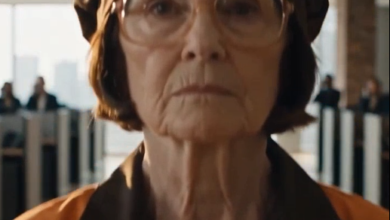
Twelve years earlier, Elena Parker had been the kind of girl people remembered only after they needed something from her.
At Waverly University, she was a scholarship student from Millbrook, a tired river town two hours south where the factories had closed slowly enough that families had time to pretend things might still turn around. Her mother cleaned offices at night. Her father had died when Elena was fourteen, leaving behind a toolbox, a hospital bracelet, and a debt that arrived in envelopes for years after the funeral.
Elena arrived at Waverly with two suitcases, a used laptop, and a promise she had made beside her father’s bed.
She would become a doctor.
Not because it sounded impressive.
Because she had watched her father put off appointments until pain became emergency. She had watched her mother choose between medicine and groceries. She had watched good people become statistics because help was always one bus ride, one insurance card, one missed paycheck away.
Caleb Morrison arrived at Waverly with a leather duffel bag, a family name on one of the business buildings, and parents who treated college like the first floor of a tower already built for him.
He was not cruel when Elena first met him.
That made what came later harder to understand.
He was charming, quick with jokes, generous with coffee, and strangely attentive when he wanted to be. They met during freshman year in an economics lecture neither of them liked. Elena had dropped her notebook. Caleb picked it up and noticed the margin was full of tiny anatomy sketches.
“You draw bones during supply and demand?” he asked.
“I draw bones to survive supply and demand,” she said.
He laughed.
For a while, that laughter felt like light.
They became friends first. Then more. He walked her back from the library after late study sessions. She helped him pass biology, though he later joked he only took the class because she was in it. He bought her a winter scarf after noticing she tucked her chin into her coat sleeves during cold mornings.
Elena did not know then that kindness can be real and still not be strong enough to survive pressure.
The first small crack appeared during sophomore year, when Caleb invited her to a dinner hosted by his parents at a restaurant overlooking the river.
Elena wore her best dress, a dark green one she bought secondhand and altered by hand. She arrived early, nervous enough to check her reflection in the dark restaurant window.
Caleb’s mother, Marianne Morrison, looked at Elena’s dress once.
Only once.
But Elena felt that glance for years.
Dinner was polite. Too polite. Caleb’s father asked where she was from, then asked whether her mother still “worked in facilities.” Marianne praised Elena’s ambition in the soft tone people use when they believe ambition is cute on someone who will eventually learn the rules.
Caleb squeezed Elena’s knee under the table.
She thought that meant he saw it.
Later, outside the restaurant, she asked, “Do your parents dislike me?”
He kissed her forehead.
“They just need time.”
The second crack came when Elena began working weekend shifts at a nursing home.
She needed the money for textbooks, application fees, and the endless costs no scholarship brochure mentions. Caleb wanted her at parties, networking dinners, spring weekends at his family’s lake house.
“You never come anymore,” he said one night.
“I work Saturdays.”
“You always work.”
“I have to.”
He leaned back, frustrated. “Everyone has problems, Elena.”
She looked at him then, really looked, and wondered how two people could use the same word everyone and mean entirely different worlds.
Still, she stayed.
Because love at twenty-two often mistakes endurance for proof.
Senior year, Caleb was offered a junior role at his father’s investment firm after graduation. Elena was accepted into a pre-med research fellowship in Chicago, but the fellowship paid little and required her to move immediately after commencement.
She told Caleb in the campus dining hall, expecting him to be proud.
He stared at the acceptance email on her phone.
“Chicago?”
“For one year. Then med school, hopefully.”
“You didn’t ask me.”
Elena blinked. “Ask you what?”
“If I wanted this life.”
“This is my life, Caleb.”
He went quiet, and in that quiet she heard something breaking.
Over the next month, he became distant. His friends stopped inviting her to group dinners. Marianne Morrison sent Caleb links to apartments near the firm and introduced him to daughters of family friends with careful smiles. Elena studied harder, worked later, and pretended she did not feel the door closing before he touched the handle.
Then came the afternoon outside the dining hall.
It was raining lightly, the kind of spring rain that makes campuses look gentle even when people are not. Elena was carrying library books and a paper cup of soup she had bought because she had skipped breakfast and lunch. Caleb stood near the steps with two friends and a woman named Brooke Langford, whose father sat on the Waverly board.
Caleb asked to talk.
Elena knew before he spoke.
His face had that rehearsed look.
“I think we’ve been trying to force something,” he said.
She looked at his friends, then back at him.
“Can we do this somewhere else?”
He lowered his voice, but not enough.
“We’re just not from the same world, Elena.”
The soup cup shook in her hand.
Brooke looked away.
One of Caleb’s friends pretended to check his phone.
“What does that mean?” Elena asked, though she already knew.
Caleb’s jaw tightened. “It means I need a future that makes sense. My family has expectations. There are rooms I’m going to have to walk into, and I can’t spend my life explaining why you belong there.”
That was the sentence.
Not the breakup.
Not even the public humiliation.
The explaining.
As if she were a stain on a shirt he might have to justify.
Elena nodded once.
She did not cry in front of him.
She did not throw the soup. She did not beg. She simply handed him the scarf he had bought her that winter, because she knew if she kept it, it would become a relic of someone who had almost believed in her.
Then she walked away.
What Caleb never knew was that she went straight to the women’s restroom in the science building, locked herself in a stall, and read the Chicago fellowship email again with tears falling onto the screen.
Not because Caleb had left.
Because part of her had almost turned it down for him.
That was the first truth he never saw.
Part 3
The years after Caleb were not a shining transformation montage.
Elena did not walk out of heartbreak and immediately become impressive.
She became exhausted.
Chicago was cold, expensive, and indifferent. Her fellowship placed her in a public health research clinic on the west side, where she spent mornings entering data and afternoons helping patients fill out forms that seemed designed to make sick people prove they deserved care. She rented a room from an older widow named Mrs. Alvarez, whose kitchen smelled of cinnamon coffee and whose grandson left toy cars under the sofa.
Elena worked nights at a pharmacy two blocks from the train.
She studied on buses.
She fell asleep over flashcards.
She cried once in a laundromat because a machine ate six quarters and that was the last cash she had until Friday.
This was the part of ambition nobody applauds.
There were no chandeliers. No speeches. No elegant revenge. Just a young woman learning that dignity sometimes looks like washing scrubs in a sink and showing up again.
The first redemption twist came with Mrs. Alvarez.
One evening, Elena found the older woman sitting at the kitchen table, one hand pressed against her chest, trying to insist it was only indigestion. Elena called 911 despite Mrs. Alvarez protesting about cost. At the hospital, she stayed until dawn, translating medical instructions into plain language, calling family members, and arguing calmly when a discharge nurse tried to rush paperwork.
Mrs. Alvarez survived.
A week later, she placed an envelope beside Elena’s coffee.
Inside was rent money.
Elena pushed it back.
“I can’t take this.”
“You already did,” Mrs. Alvarez said. “You gave me more time.”
Elena kept the envelope but did not spend it on herself. She used it to pay for medical school applications.
Years later, when people called her driven, she thought of Mrs. Alvarez’s hand on that envelope and understood that some futures are built by people who refuse to let you disappear quietly.
The second twist came when Elena did not get into medical school the first time.
Or the second.
She was waitlisted, rejected, politely encouraged to strengthen her application. Caleb, had he known, might have mistaken those years for proof that he had been right to doubt her. But rejection did not make Elena smaller. It made her more precise.
She trained as a physician assistant first.
She worked in free clinics.
She learned how to listen before diagnosing.
She learned that the poor often arrive with illnesses made worse by shame, delay, and the fear of being scolded for things they could not afford to prevent.
Eventually, a medical school in Ohio accepted her.
She was twenty-seven, older than many classmates, with more debt, fewer safety nets, and a face that already knew what fluorescent waiting rooms did to people.
On her first day, a classmate complained about having to volunteer at a community clinic.
Elena remembered her father’s hospital bracelet.
She said nothing.
She simply went.
The third twist came in the form of a child.
Not hers by birth.
A boy named Mateo arrived at the clinic one winter afternoon with a foster caseworker, a cough, and eyes that watched every exit. He was five, small for his age, with a dinosaur sticker stuck to his coat because no one had remembered to remove it from the last place he had been.
Elena was not his doctor then, only a student rotating through pediatrics. But she noticed he flinched when adults spoke too quickly and relaxed when she sat on the floor instead of towering over him.
“What’s your dinosaur’s name?” she asked.
He looked at the sticker.
“Doesn’t have one.”
“Maybe he’s waiting.”
Mateo considered that seriously.
“Like me?”
Elena’s heart changed shape in that moment.
Over the next two years, Mateo appeared in the clinic again and again through different placements, different caseworkers, different folders with the same frightened child inside them. Elena kept a small pack of dinosaur stickers in her coat pocket. She had no reason to believe she would become anything permanent to him.
Then one night, after a long hospital shift, she received a call from a social worker who had noticed what everyone else had missed.
Mateo had listed “Dr. Elena” as the person he wanted called if he got scared.
Elena sat on the edge of her bed for a long time after that.
She was not yet fully established. She was still in training. She was single. She had debt. She had every practical reason to say she was not ready.
But readiness had rarely introduced itself before life asked something of her.
Eventually, after years of paperwork, interviews, home visits, delays, and one heartbreaking failed placement that returned him to the system for six more months, Elena adopted Mateo when he was seven.
That became the fourth truth Caleb never saw.
He had left because he could not imagine explaining her in elite rooms.
She built a life around bringing overlooked people into rooms where they could finally breathe.
The Prescott Foundation Gala happened three years later.
Elena was thirty-four, now Dr. Elena Parker, founder of BridgeLine Health, a mobile clinic network serving rural and low-income communities across three states. She had not become rich in the way Caleb once understood the word. She still drove a used car. She still forgot to buy nice shoes until an event forced the issue. She still kept her father’s old hospital bracelet in a small box beside her desk.
But she had become trusted.
That was different.
The Prescott Foundation had invited her to speak because BridgeLine was being considered for a major grant. The funding could add two mobile units, hire bilingual staff, and reopen weekend clinics in three counties where hospitals had closed.
Caleb Morrison was at the gala because his firm managed investment portfolios for several donors.
His life had not collapsed visibly.
It had simply hollowed.
He had married Brooke Langford at twenty-seven because their families made sense together. They divorced four years later with no dramatic scandal, only the slow misery of two people who had been well-matched on paper and lonely in every room. His father’s firm had merged with a larger company, leaving Caleb with a title that sounded better than it felt. He attended galas, shook hands, and spoke fluently about impact while feeling less useful every year.
When his boss whispered, “That’s Dr. Elena Parker,” Caleb felt twelve years fold into one breath.
Then Mateo ran to Elena near the stage.
“Mom,” the boy said, “is that the man from your old letter?”
The room did not hear enough to understand.
Caleb heard too much.
Elena’s face changed quickly, not with panic, but with the sharp tenderness of a private door opening at the wrong time.
“Mateo,” she said softly.
But the boy had already looked at Caleb with the curiosity children have before adults teach them to hide it.
“You’re Caleb?”
Caleb tried to speak.
Nothing came out.
Because the old letter existed.
He remembered writing it.
Not the breakup speech outside the dining hall. That had been cowardice dressed as honesty. The letter came two weeks later, after he heard Elena had left campus before graduation weekend celebrations. He wrote it at midnight in his family’s guest house, half-drunk on regret and self-pity, telling her he hoped she would understand someday that he had been under pressure, that his family had expectations, that he wished things were different.
He never apologized for the sentence.
We’re not from the same world.
Elena never answered.
Apparently, she had kept the letter.
Not as a love token.
As evidence.
Not against him, but maybe against the part of herself that might one day be tempted to forget what shrinking felt like.
Caleb finally managed, “Elena.”
She nodded politely.
“Caleb.”
That politeness hurt more than anger would have.
His boss approached, smiling. “You two know each other?”
Elena looked at Caleb for one quiet second.
“We went to college together.”
That was all.
Not we dated. Not he broke me. Not he taught me something cruel about rooms and belonging.
Just a fact.
She did not spend his shame for applause.
That restraint was the fifth twist.
Caleb had imagined, in the flash of dread that followed recognition, that Elena might expose him. She had every right to. She could have told the story and made him the villain under the chandeliers he once chose over her.
Instead, she moved her hand to Mateo’s shoulder.
“Excuse us,” she said. “We’re about to begin.”
Caleb watched her walk toward the stage.
He noticed details now he would once have missed.
The silver pin on her dress was shaped like a bridge. Her black dress was elegant but simple, not designed to impress the wealthy so much as survive the evening without distraction. Her hand rested on Mateo’s shoulder with a steadiness that looked practiced, earned, chosen.
Then Elena spoke.
She did not mention Caleb.
She spoke about rural clinics where mothers drove ninety miles for prenatal care. She spoke about diabetic patients rationing insulin. She spoke about older men like her father who delayed treatment until love had to become grief. She spoke in a calm voice, without performance, but every sentence carried the weight of someone who had touched the problem with her own hands.
Near the end, she paused.
“My work began,” she said, “because someone I loved once needed a room he could not afford to enter in time.”
Caleb looked down.
He knew she meant her father.
But another meaning found him anyway.
He had once told her there were rooms he would have to explain her in.
Now she was building rooms for people no one bothered to explain at all.
The applause was long, but Elena looked relieved only when Mateo gave her a thumbs-up from the front row.
After the speech, donors gathered around her. Caleb stayed back until the crowd thinned. He watched her speak to older women, foundation trustees, young volunteers, a nurse from Kentucky who hugged her with both arms. No one looked at her as if she did not belong.
They looked at her as if the room had been waiting for her.
Finally, Caleb approached.
“Elena,” he said quietly.
She turned.
Mateo stood nearby, holding a plate of fruit and pretending not to listen.
“I owe you an apology,” Caleb said.
Elena’s expression did not harden. That almost made it worse.
“For what part?” she asked.
He deserved that.
“All of it,” he said. “But especially for making you feel like you were something I would have to explain.”
Elena looked at him for a long moment.
The ballroom noise moved around them, soft and expensive.
“I did feel that,” she said.
He nodded.
“I know.”
“No,” Elena said gently. “You know it now. You didn’t know it then.”
Caleb swallowed.
The distinction landed exactly where it needed to.
“I was a coward.”
“You were young,” she said.
“That doesn’t excuse it.”
“No,” she agreed. “It explains why I stopped waiting for you to understand.”
Mateo looked up from his fruit plate.
“Mom?”
Elena touched his hair.
“It’s okay.”
Caleb glanced at the boy. “You read my letter?”
Mateo nodded. “Mom let me read some old things when I asked why people say mean stuff about who belongs where.”
Caleb flinched.
Elena looked at her son, then back at Caleb.
“I kept it because for years, whenever I felt tired enough to choose a smaller life, I would read the last line and remember not to let someone else define my world.”
Caleb did not ask which line.
He knew.
We’re just not from the same world.
In the end, he had been right.
Just not in the way he meant.
Part 4
The Prescott Foundation approved BridgeLine Health’s grant two weeks later.
The official email arrived on a Tuesday morning while Elena was in a mobile clinic parked beside a volunteer fire station in eastern Ohio. She read it between patients, standing beside a supply cabinet that did not close properly, while Mateo sat at a folding table doing homework and eating crackers from a plastic bag.
For a moment, Elena simply stared at the screen.
Then she laughed.
Mateo looked up.
“Good laugh?”
“Very good laugh.”
“New clinic truck?”
“Two.”
He grinned so widely that a nurse poked her head around the corner to see what had happened.
There was no champagne. No chandelier. No room full of applause. Just a crowded clinic, rain tapping the roof, and a boy in a hoodie who wrapped his arms around his mother because he knew what this meant for people he would never meet.
Later that month, Caleb sent a letter.
A real one, written by hand.
Elena almost did not open it.
Not out of anger. The anger had burned down years ago, leaving something quieter and more difficult to name. But old wounds have a way of making even paper feel heavier than it is.
She opened it after Mateo went to bed.
Caleb did not ask for another chance. He did not decorate the apology with memories designed to pull her backward. He wrote about the dining hall, the scarf, the sentence, the way he had confused social comfort with love. He wrote that watching her speak had made him realize he had spent much of his life trying to enter the right rooms, while she had spent hers opening doors.
At the end, he wrote: You were never outside my world. I was outside my courage.
Elena read that line twice.
Then she folded the letter and placed it in the same box where she kept the old one.
Not because she needed reminders of pain.
Because a person’s record should sometimes include the moment they tried to become better.
Caleb changed too, though not in a way anyone would make a movie about.
He left the donor management team six months later and took a lower-paying position helping structure funding for nonprofit health projects. Some people called it a midlife crisis, though he was not yet middle-aged. His father called it sentimental. His mother asked whether Elena had put ideas in his head.
Caleb did not defend himself much.
For once, he allowed people to misunderstand him a little.
It taught him something.
At a BridgeLine event the following year, Caleb attended as a quiet program partner, not a guest of honor. He helped stack chairs after the community dinner and carried boxes of donated blood pressure cuffs to Elena’s van. His suit jacket came off. His polished shoes got dust on them.
Mateo watched him from the doorway.
“You’re different from the letter,” he said.
Caleb paused with a box in his arms.
“I’m trying to be.”
Mateo considered this.
“My mom says trying only counts if you keep doing it when nobody claps.”
Caleb looked across the room at Elena, who was talking with a grandmother about medication refills.
“She would know,” he said.
Elena did not become close to Caleb again in the way people might expect.
She did not need romance to complete the circle. She did not need him to suffer publicly or praise her loudly. She had built a life too full of purpose, motherhood, work, friendship, grief, and ordinary Tuesday dinners to reorganize it around the man who once failed to stand beside her.
But she did allow peace.
A careful, adult peace.
The kind that does not erase what happened, but stops letting it take up the best chair in the room.
One autumn afternoon, Elena drove Mateo to Waverly University for a speaking event. The campus looked almost the same: red brick buildings, wet leaves, students rushing with coffee, the dining hall steps where her young heart had once been handed back to her like something inconvenient.
Mateo walked beside her, taller now, thirteen, carrying her laptop bag because he had recently entered the stage of boyhood where helping his mother was both embarrassing and necessary.
“Is this where he said it?” he asked.
Elena looked at the steps.
“Yes.”
Mateo frowned at them like they had personally offended him.
“They look normal.”
Elena smiled faintly. “Most places do.”
They stood there a moment, mother and son, in the place where one version of Elena had ended and another had begun.
Then Mateo reached into his backpack and pulled out a small dinosaur sticker, the kind Elena had given him years ago when he was scared in a clinic room.
He stuck it carefully on the inside cover of her speech folder.
“For luck,” he said.
Elena laughed softly.
“You know I’m speaking to medical students, right?”
“Doctors need dinosaurs too.”
She looked at him, this child she had chosen and been chosen by, and felt a wave of gratitude so strong it almost hurt.
Inside the auditorium, she spoke about healthcare access, but near the end, a student asked how she handled being underestimated.
Elena paused.
She could have told the whole story. The dining hall. Caleb. The sentence. The class divide. The humiliation.
Instead, she said, “For a long time, I thought being underestimated meant I had to prove people wrong. Later, I learned it was more important to prove the people who believed in me right.”
In the back row, an older woman wiped her eyes.
Mateo sat straighter.
After the talk, Elena and Mateo walked past the dining hall again. The late afternoon sun had broken through the clouds, making the wet steps shine. Students hurried by, laughing, arguing, falling in love, breaking their own hearts in ways they would understand years later.
Elena stopped only long enough to take one breath.
Then she kept walking.
Not away from the past.
Through it.
Years later, people would still ask about the gala where Caleb Morrison saw Dr. Elena Parker and could not speak. Some wanted the sharp version, the satisfying version, the one where the woman rises and the man who doubted her is crushed beneath regret.
But Elena never told it that way.
When Mateo asked her why, she said, “Because my life is not important because he regretted losing me. My life is important because I did not lose myself.”
On the shelf in her office sat a small wooden box Mateo had made in shop class. Inside were two letters from Caleb, a photo of Mrs. Alvarez, her father’s hospital bracelet, a bridge-shaped pin, and a dinosaur sticker with one corner peeling up.
The old letter stayed at the bottom.
The new one stayed beside it.
Not as love letters.
As proof that words can wound, time can reveal, and dignity can grow quietly in the very places someone once said you did not belong.
Follow this page for more heartfelt stories about love, dignity, second chances, and the people we learn to see more clearly with time. 🌷