Part 2: A Daughter Stood Up During a Will Hearing Against Her Aunts and Uncles — Instead of Claiming Her Share, She Read Her Father’s Final Letter
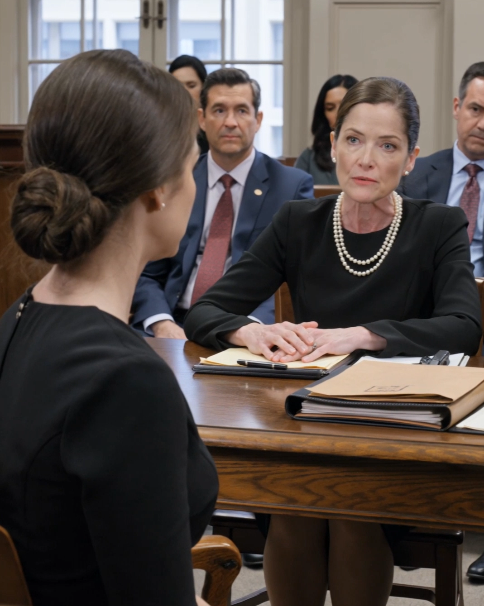
The courthouse in Mason County smelled like old wood, coffee, and winter coats even though it was June.
Claire sat at the long table beside her attorney, though she barely heard the legal words passing over her head.
Probate.
Settlement.
Estate value.
Undue influence.
Those words made her father’s life sound like paperwork.
Thomas Donovan had been more than a file.
He had been a mechanic, a widower, a stubborn gardener, a man who fixed every neighbor’s tractor and pretended not to notice when they could not pay.
He raised Claire alone after her mother died of breast cancer when Claire was twelve.
He did it badly some days.
Beautifully on others.
He burned pancakes.
Forgot field trip forms.
Taught her to check oil before she learned algebra.
And when illness came for him, Claire came home from Chicago with one suitcase and stayed.
At first, her relatives praised her.
“Such a good daughter,” Aunt Patricia said at church.
“Your daddy is lucky,” Uncle Raymond told her near the hospital elevator.
But praise grew thinner when Thomas’s condition lasted longer than anyone expected.
One year became two.
Then three.
Birthdays passed in waiting rooms.
Holidays moved around treatment schedules.
Claire’s marketing job became remote, then part-time, then gone.
Her fiancé visited twice, then stopped calling.
Her relatives sent casseroles at first.
Later, they sent opinions.
“You should put him somewhere professional.”
“You are wasting your best years.”
“He would not want you trapped.”
Thomas heard some of it.
Claire always pretended he did not.
During his last winter, he began keeping a small notebook beside his recliner.
It had a brown leather cover and a grocery store receipt tucked into the front.
Whenever someone visited, Thomas wrote something after they left.
Claire thought it was medication notes.
She never read it.
One afternoon, Aunt Linda came by with a lemon cake and stayed exactly seventeen minutes.
Thomas smiled until she left.
Then he wrote for nearly ten minutes with shaking hands.
“What are you writing?” Claire asked.
“Things people say when they think dying makes a man forget.”
She smiled because she thought he was joking.
He was not.
The first crack in the family story appeared at the funeral.
Patricia arrived late, wearing black gloves and carrying a framed photo of Thomas from twenty years earlier.
She placed it near the casket and announced to anyone listening that Thomas “always believed family should share what family built.”
Claire stood beside the guest book, too tired to react.
Raymond hugged her with one arm and whispered, “We will help you make the right decisions.”
Help.
That word began appearing everywhere.
Help with the farm.
Help with the accounts.
Help with the house.
Three weeks later, Claire received a letter from their attorney.
Her relatives were contesting the will.
They claimed Thomas had not been mentally clear when he left the house and land entirely to Claire.
They claimed she isolated him.
They claimed she pressured him.
They claimed the final will did not reflect “the Donovan family understanding.”
Claire read the letter standing in the kitchen where her father used to peel apples with a pocketknife.
For the first time since his death, she laughed.
Not because it was funny.
Because grief had run out of places to go.
At the hearing, Patricia spoke first.
She described Thomas as generous.
She described the farmhouse as “family legacy.”
She said Claire had always been “possessive” of her father.
Raymond said he had offered practical help, but Claire wanted control.
Linda cried softly while saying she had been kept from “meaningful goodbyes.”
Claire stared at the table.
Her attorney touched her sleeve once.
“You do not have to absorb this silently,” he whispered.
Claire almost said she was used to it.
Then the mediator asked about compromise.
Patricia offered a sale of the property and equal division among siblings, with Claire receiving “a reasonable caretaker consideration.”
The phrase made Claire look up.
Caretaker consideration.
Three years of bathing her father reduced to a line item.
Her hand moved to the folder in her lap.
Inside was the envelope Thomas had given her two nights before he died.
His handwriting on the front said, “Only if they make you defend loving me.”
She had hoped never to open it.
Now Patricia said, “Thomas would be ashamed to see his daughter choose money over family.”
Claire’s fingers closed around the envelope.
The room waited.
And for the first time all morning, she stopped looking like someone being accused.
She looked like someone finally carrying the last thing her father asked of her.
Claire stood slowly.
Her legs felt unsteady, but her voice did not break when she asked permission to read the letter.
The mediator glanced at the attorneys.
Patricia’s lawyer frowned.
“This is highly irregular.”
Claire looked at him.
“So was accusing me of stealing from a dying man without letting him speak.”
The room quieted.
The mediator nodded.
“Proceed.”
Claire opened the envelope.
Inside were three folded pages in her father’s uneven handwriting.
At the top, he had written, “To my brothers and sisters, if you forgot how to be mine.”
Patricia’s face changed first.
Claire began reading.
“I know you will say this is about fairness. You have always liked that word when someone else was paying the cost.”
Raymond shifted in his chair.
Claire continued.
“I was not confused when I signed my will. I was not pressured. I was not alone because Claire kept people away. I was alone because most of you preferred updates to visits.”
Linda lowered her tissue.
The words did not shout.
That made them worse.
Thomas had written each sentence like a man too tired for drama but too clear for silence.
He listed dates.
Not cruelly.
Precisely.
Patricia visited after Christmas for twenty-two minutes, then asked whether the land had been appraised recently.
Raymond called during Claire’s birthday dinner to suggest selling the back acreage while Thomas was “still able to consent.”
Linda promised to stay overnight after Thomas’s second surgery, then left before dinner because the guest room smelled like disinfectant.
Claire’s throat tightened, but she kept reading.
“Claire never told me these things hurt her. She lied badly. She said everyone was busy. She said nobody knew what to do with illness. She protected you from my disappointment longer than you deserved.”
Patricia stared at the table.
The mediator stopped taking notes.
Claire turned to the second page.
“You will say she took my house. Here is what she actually took. She took the night shift when I was afraid to sleep. She took unpaid leave. She took my anger when pain made me mean. She took phone calls from doctors after midnight. She took the smell of sickness into her clothes and still came back into my room smiling like morning had not betrayed her.”
Claire paused.
Her eyes blurred.
Her attorney slid a glass of water toward her, but she did not drink.
She read on.
“You will say she isolated me. The truth is, she opened the door every time you knocked. Most of you did not knock.”
Raymond covered his mouth with one hand.
That was the first time he looked old.
Then came the twist Claire herself had not known.
“I asked Claire to keep a record of expenses. She refused because she said family does not invoice family. So I kept one myself.”
Claire stopped.
She looked at the page, confused.
The mediator leaned forward.
Claire read carefully.
“Patricia owes Claire $18,400 for the loan she called temporary after Daniel’s business failed. Raymond owes $9,200 from the tractor sale he never mentioned. Linda owes no money, but she owes my daughter the truth that she begged Claire not to tell me she had put my wedding ring on an online appraisal site.”
Linda gasped.
“That is not fair,” she whispered.
Claire turned toward her.
“You did that?”
Linda looked away.
Claire’s hands shook harder now.
The family had accused her of taking.
Her father had quietly known who took first.
She continued.
“I forgave these things before I died. Forgiveness does not mean pretending Claire should pay for them again.”
No one interrupted anymore.
The third page changed everything.
Thomas wrote that the farmhouse was not being left to Claire because she was his daughter.
It was being left to her because she had already spent years turning it into a place where other people could survive.
He mentioned the spare bedroom Claire kept ready for hospice nurses during storms.
He mentioned the freezer meals she made for neighbors after treatments, because cooking too much helped her feel useful.
He mentioned the little boy next door who came over after school because his mother worked late and Thomas liked hearing cartoons in the living room.
“I am leaving the house to Claire because she knows a house is not wealth if it cannot shelter someone.”
Claire’s voice faded on the last word.
She had not known he saw that.
She had thought he slept through those afternoons.
Then she read the paragraph that made Patricia finally cry without performance.
“If you are sitting there wondering what you get, here is my answer. Patricia, you get my mother’s Bible because you used to read to me when I was small. Raymond, you get my fishing rods because before money made you sharp, you were the brother who taught me patience at Miller Creek. Linda, you get the blue quilt because you slept under it the summer you were scared of thunderstorms.”
The room changed.
Thomas had not forgotten them.
That hurt more than being cut out completely.
He had remembered them as children before they became adults arguing over land.
Claire kept reading.
“I leave you memories because those are what you gave me in the end. Claire gave me days.”
Patricia pressed both hands to her face.
Raymond stared at the floor.
Linda sobbed once, then stopped as if ashamed to make noise.
Claire reached the final lines.
“Do not make my daughter prove she loved me. If you do, you will only prove you were not watching. And if Claire reads this aloud, it means you pushed her to the place I begged you not to send her.”
Claire folded the letter.
The hearing room was so quiet the hallway clock seemed loud.
Patricia’s attorney cleared his throat but did not speak.
The mediator looked at the siblings.
“Would anyone like to respond?”
Raymond tried first.
He opened his mouth, closed it, and shook his head.
Linda whispered, “I did not think he knew.”
Patricia looked at Claire, but pride fought her grief so visibly everyone could see the struggle.
“I was worried about the land,” Patricia said.
Claire gave a tired nod.
“I know.”
“It has been in the family for forty years.”
“My father was family too.”
The sentence landed gently.
That made it harder to escape.
Patricia’s shoulders dropped.
For years, she had seen Thomas’s illness as an interruption, Claire’s devotion as control, and inheritance as the final math problem grief left behind.
Now the math had vanished.
Only the ledger of attention remained.
Who came.
Who left.
Who remembered medicines.
Who asked what the dying man needed after the visitors went home.
Claire’s attorney slid a document forward.
“My client is prepared to honor every personal bequest listed in the letter, though the will already grants the estate to her.”
Raymond looked up.
“You would still give us those things?”
Claire looked at her father’s letter.
“He wanted you to have them.”
Patricia began crying again.
This time, nobody looked away to spare her.
The mediator asked if the contest would continue.
Raymond answered first.
“No.”
Linda shook her head.
Patricia took longer.
Then she removed her pearl necklace and set it on the table, as if something around her throat had become too tight.
“No,” she said softly. “We withdraw.”
Claire sat down.
She did not feel victorious.
Victory would have required wanting the fight.
Instead, she felt what her father must have felt writing those pages.
Tired.
Relieved.
And deeply sad that love had needed evidence.
The farmhouse was quiet when Claire returned that evening.
The kind of quiet that comes after people leave flowers, casseroles, and opinions behind.
She placed her father’s letter on the kitchen table and stood there for a long time.
Outside, the fields had turned gold under the lowering sun.
The old pickup sat near the barn, one tire low, the windshield dusty.
For three years, Claire had measured time by pill bottles and appointment cards.
Now time stretched strangely.
Too wide.
Too open.
A week later, Patricia came to collect the Bible.
She arrived without pearls, wearing a gray cardigan and holding a paper bag of peaches from the farmer’s market.
Claire almost laughed because Patricia had always hated arriving anywhere empty-handed after a fight.
The Bible sat wrapped in brown paper on the kitchen counter.
Patricia touched it but did not pick it up.
“I remember reading Jonah to him,” she said.
Claire waited.
“He kept asking if the whale was lonely.”
That sounded so much like her father that Claire’s face softened despite herself.
Patricia looked toward the hallway where Thomas’s room had been.
“I should have come more.”
Claire did not say yes.
She did not say no.
Some truths do not need help standing.
Raymond came the next Saturday for the fishing rods.
He stood in the barn with his hands in his pockets, looking at the dust on the tackle box.
“I sold that tractor because I was drowning,” he said.
Claire looked at him.
“I know that now.”
“I told myself Tommy would have said yes.”
“He probably would have.”
Raymond nodded, eyes wet.
“That made it easier to never ask.”
Linda came last.
She cried before she reached the porch.
Claire handed her the blue quilt, folded carefully, smelling faintly of cedar and lavender.
Linda held it against her chest.
“I did appraise the ring,” she whispered.
Claire’s face changed.
“I never sold it. I was scared. My husband had lost work, and I thought if I knew what it was worth, I could sleep.”
“Why did you not ask for help?”
Linda laughed once, broken and small.
“Same reason you didn’t.”
That answer stayed between them longer than anger did.
Months passed.
Claire kept the farmhouse.
But she did not keep it closed.
In the fall, she turned the spare room into a temporary rest space for families caring for hospice patients in Mason County.
Nothing official at first.
Just a bed, clean towels, a kettle, and a small sign near the porch that read, “If you are tired, knock.”
The first person who came was Mrs. Bell from three roads over, whose husband had stopped sleeping through the night.
She rested for two hours while Claire sat with him and listened to baseball on the radio.
By winter, a local nurse began referring people quietly.
By spring, Raymond had fixed the barn roof without charging her.
Linda donated quilts.
Patricia brought groceries every other Tuesday and sometimes stayed to wash dishes without making a speech about it.
None of this erased the hearing.
It only gave the family somewhere else to put their hands.
On the first anniversary of Thomas’s death, Claire found a note tucked inside her father’s old Bible.
Patricia discovered it while reading on the porch and handed it over silently.
It was in Thomas’s handwriting.
Only one line.
“Tell Claire the house sounds best when someone needs it.”
Claire sat on the porch steps and read it until the paper blurred.
That evening, she placed the note in a small frame beside the front door.
Not the letter from court.
Not the evidence.
Just that sentence.
Later, when the house filled with the smell of soup and clean laundry, Claire stepped outside and looked across the darkening fields.
Her father’s old porch light buzzed softly above her.
Behind her, a tired woman slept in the spare room.
In the kitchen, Patricia and Linda argued quietly over whether cornbread needed sugar, while Raymond fixed a loose hinge he had ignored for fifteen years.
Claire closed her eyes.
For the first time in a long while, the house did not feel like something people had fought over.
It felt like something her father had left unfinished on purpose.
Follow this page for more heartfelt stories about family, quiet sacrifice, and the truths people leave behind.