Part 2: An Immigrant Family Was Petitioned Out of the Neighborhood — Then During the Big Storm, They Were the Only Ones Who Opened Their Door
PART 2
Briar Lane had always considered itself a friendly street.
That was the word printed on the welcome sign near the entrance.
Friendly.
It had oak trees, mailboxes shaped like little houses, tidy lawns, and porches where people waved just enough to prove they had manners.
But friendliness can be thin when nobody uncomfortable moves in.
The Alvarez family disrupted the rhythm.
Not loudly.
Not intentionally.
Simply by arriving with more life than the street expected.
On Saturdays, cousins visited after church fundraisers.
On summer evenings, the children played soccer in the driveway until Rosa called them in.
On Sundays, Mateo’s mother, Abuela Carmen, sat under the carport peeling oranges for every child who passed by.
Some neighbors smiled.
Some accepted the oranges.
Some waited until doors closed and said things that sounded reasonable only because they were spoken quietly.
“They are nice, but…”
“It is just a different lifestyle.”
“I worry about property values.”
Linda Whitaker collected those phrases like signatures.
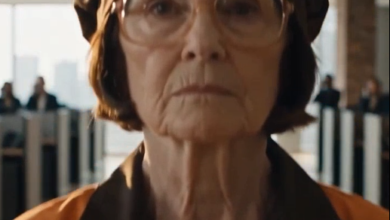
She was sixty-four, white American, widowed, sharp-haired, and proud of having served as HOA secretary for eleven years before the neighborhood association dissolved.
She missed the authority more than she admitted.
The old blue house bothered her before the Alvarez family even finished unloading.
A wind chime shaped like a sun appeared near the porch.
A statue of the Virgin Mary stood beside the tomatoes.
A secondhand basketball hoop leaned near the garage.
Linda watched it all from behind white curtains and called it clutter.
The petition began after Mateo parked a work trailer in his driveway for three nights while repairing storm damage in another county.
Linda wrote the first draft.
She did not use ugly words.
Ugly ideas often arrive wearing polished language.
“Concerns regarding traffic.”
“Improper use of residential property.”
“Noise disturbance.”
“Neighborhood compatibility.”
Rosa found out from Mrs. Green, an elderly Black American woman at the corner house who refused to sign.
“They came to me twice,” Mrs. Green said, placing one hand over Rosa’s. “I told them I’ve seen worse things on this street than children laughing.”
Rosa smiled, but her eyes shone.
“Thank you.”
Mrs. Green leaned closer.
“Do not thank me for basic decency, honey. It lowers the price of it.”
Rosa carried that sentence home like a small candle.
Mateo said little when she showed him the petition.
He sat at the kitchen table, still in work boots, reading each line carefully.
Their oldest son, Diego, twelve, stood near the hallway listening.
“Are they making us leave?” Diego asked.
Mateo looked up.
“No.”
“But they want to.”
Rosa answered before Mateo could.
“Sometimes people are afraid before they are fair.”
Diego did not like that answer.
Neither did Mateo.
But he had lived long enough to know anger could burn energy a family might need later.
Then came the weather alerts.
A tropical system in the Gulf strengthened faster than expected.
By Tuesday, local news was showing maps with red bands curling toward the coast.
By Wednesday, hardware stores were packed.
By Thursday, people on Briar Lane started pretending they were not scared.
Mateo did not pretend.
He had survived Hurricane Elena as a child in Mexico, before his family crossed legally years later and rebuilt their lives in Texas.
He remembered water moving through streets like it had been waiting for permission.
He remembered his father tying rope between porch posts so neighbors could hold on while crossing.
He remembered strangers sleeping on their floor because dry space was not private when roofs failed.
So Mateo prepared.
Plywood.
Sandbags.
Generator.
Battery lanterns.
Cases of water.
Rice.
Beans.
First-aid supplies.
Extra blankets.
He also cleared the garage.
That was the first thing nobody understood.
Linda saw him dragging tools to shelves and thought he was protecting his own things.
She did not see him laying old rugs on the concrete floor.
She did not see Rosa folding towels into plastic bins.
She did not see Carmen cooking two huge pots of chicken soup because “fear makes people hungry after it passes.”
By Friday afternoon, Mateo knocked on five doors.
Linda did not answer hers.
At the Henderson house, nobody opened because they had signed the petition and now felt awkward.
At Mrs. Green’s, he left his number taped beside the doorbell.
“If water rises, come to us,” he wrote.
Mrs. Green read it twice.
Then she put it in her pocket.
PART 3
The storm arrived after dark.
Not with drama at first.
Just rain.
Hard rain.
Sideways rain.
Rain that made porch lights blur and gutters choke within minutes.
By ten, the power failed on half the street.
By eleven, the other half went black.
Briar Lane became a row of dark houses and frightened windows.
Inside the old blue house, Mateo’s generator coughed once, then caught.
One lamp glowed in the living room.
Another in the garage.
Rosa checked the radio.
Carmen stirred soup.
The children carried bottled water to a table near the hallway, moving with the seriousness of kids given adult-sized tasks.
Diego looked toward the front window.
“Nobody’s coming.”
Mateo tightened the latch on the garage door.
“Storm not finished asking.”
At 12:40 a.m., the first knock came.
Mrs. Green stood on the porch in a raincoat, soaked at the edges, holding a small bag of medication against her chest.
Behind her was her grandson, Marcus, carrying her oxygen concentrator.
Mateo opened the door before they finished knocking.
No speech.
No hesitation.
He took the machine from Marcus and pointed them toward the living room.
Rosa wrapped Mrs. Green in a towel.
Carmen handed her soup.
Mrs. Green looked around the house and whispered, “You prepared for company.”
Rosa only smiled.
“We hoped nobody would need it.”
At 1:17 a.m., Linda Whitaker called 911 and got a busy signal.
Water had entered under her back door.
Her living room rug floated in slow, terrible waves.
She tried lifting a box of photo albums onto the couch, but the bottom collapsed from dampness.
Then something hit the side of her house, hard enough to rattle the wall.
She stood in the dark with a flashlight shaking in her hand, suddenly not a woman with standards, not a petition writer, not a neighborhood guardian.
Just old.
Alone.
Wet to the ankles.
Across the street, light glowed from the Alvarez house.
She stared at it for several seconds.
Pride is a strange thing in floodwater.
It feels solid until the water reaches your knees.
Linda wrapped her late husband’s military photo in a plastic grocery bag and stepped onto the porch.
The wind shoved rain into her face.
She tried to cross the yard and nearly fell.
Then headlights cut through the dark.
Mateo’s work truck rolled slowly through the rising water, hazards blinking.
Diego sat beside him, eyes wide.
Mateo jumped out wearing a yellow rain jacket and tied a rope from his truck to Linda’s porch rail.
Linda shouted something, but the storm swallowed it.
Mateo pointed to the rope.
Hold.
She did.
He crossed to her, took the photo bag in one hand, and offered his arm with the other.
Linda hesitated only once.
Then she grabbed him.
He brought her into the blue house at 1:31 a.m.
The first person she saw was Rosa.
The same woman whose cooking smells Linda had complained about.
The same woman whose relatives she had counted through blinds.
Rosa took Linda’s wet coat and said, “You’re safe here.”
Linda tried to answer.
Nothing came.
More knocks followed.
The Hendersons came with two toddlers and a dog wrapped in a towel.
Mr. Price from the corner arrived with a bleeding hand after cutting it on broken glass.
A teenage girl from three houses down came barefoot, carrying her cat inside a pillowcase.
One by one, the people who had debated whether the Alvarez family belonged stood dripping in their hallway.
Nobody asked about the petition.
That silence was its own confession.
Mateo moved through the house with calm urgency.
He set up lanterns.
Checked injuries.
Found dry socks.
Opened the garage for families with pets.
Rosa translated weather updates from Spanish radio, then checked English alerts on her phone whenever service returned for seconds.
Carmen fed everyone.
Not ceremonially.
Practically.
Soup in mismatched bowls.
Rice in paper cups.
Warm tortillas wrapped in cloth.
At 2:30, the Henderson toddler began crying because his blanket was still at home.
Carmen disappeared into a bedroom and returned with a soft crocheted blanket, blue and white.
Linda recognized it.
She had seen Carmen knitting on the porch and once told another neighbor, “They always have stuff hanging everywhere.”
Now a child clung to that “stuff” and stopped crying.
That was the first twist inside the shelter.
The things people called clutter were preparations for comfort.
At 3:10, Marcus noticed Mateo’s hands shaking while lifting a sandbag near the back door.
“You need help?”
Mateo nodded.
Not proud.
Not performing.
Just human.
Four men followed him to the garage.
Two had signed the petition.
One had argued at the mailbox that “work trailers did not match the neighborhood.”
Now they stood knee-deep in water, passing sandbags hand to hand, following Mateo’s instructions because he was the only one who seemed to know where water wanted to go next.
At 4:00, Linda sat at the kitchen table wrapped in one of Rosa’s towels, staring at the room.
Children sleeping on couch cushions.
Neighbors whispering.
Carmen checking soup.
Mateo standing by the door, soaked and exhausted.
Her petition folder was at home.
Probably wet now.
She suddenly remembered every careful phrase she had written.
Neighborhood compatibility.
The words turned bitter.
Rosa placed tea in front of her.
Linda looked up.
“Why did you let me in?”
Rosa’s face showed no triumph.
Only tiredness.
“Because you knocked.”
That answer hurt more than an accusation.
Linda held the warm mug with both hands.
“I signed my name first.”
Rosa sat across from her.
“I know.”
Linda’s lips trembled.
“I told people you were changing the street.”
Rosa looked toward the living room, where neighbors slept under borrowed blankets.
“Yes,” she said softly. “Maybe.”
By morning, the worst had passed.
Briar Lane looked wounded.
Branches down.
Fences broken.
Cars flooded.
Porches covered in debris.
But everyone inside the old blue house was alive.
When emergency crews arrived near noon, they found twenty-three people, three dogs, one angry cat, and a grandmother still insisting everyone take one more tortilla.
The fire captain asked Mateo how they had organized so quickly.
Mateo shrugged.
“My father taught me. Dry floor is not only for family.”
A local reporter arrived later, drawn by a neighbor’s post about the house that sheltered the street.
Linda walked into the frame before anyone asked her to.
Her hair was still damp.
Her eyes were swollen.
“I started the petition against this family,” she said.
The reporter blinked.
Rosa looked startled.
Linda continued.
“I used polite words for ugly fear. Last night, they opened their home before I found the courage to knock.”
Nobody spoke for a moment.
Then Mrs. Green said from the porch, “Make sure you print that part right.”
PART 4 – ENDING
The petition never reached any board.
Three days after the storm, Linda walked door to door with the same clipboard.
This time, she was collecting withdrawals.
Some neighbors signed quickly from embarrassment.
Some apologized.
Some tried to explain what they had meant before, as if intention could dry out the damage.
Linda did not let them talk too long.
“I am not here for excuses,” she said. “Just signatures.”
When she reached the Alvarez house, Mateo was repairing a broken porch step.
Diego was carrying ruined rugs to the curb.
Rosa opened the door with a tired smile that made Linda feel smaller than anger would have.
Linda handed her the clipboard.
“It’s done.”
Rosa looked at the signatures.
Then at Linda.
“Thank you.”
Linda shook her head.
“No. Please don’t make this easy for me.”
Rosa did not.
She accepted the clipboard and said nothing more.
That silence gave the apology room to grow roots.
In the weeks after the storm, Briar Lane became louder in a different way.
Not perfect.
Never that fast.
But different.
Neighbors rebuilt fences together.
Mateo’s work trailer was parked openly in the driveway because people needed tools, boards, nails, and someone who knew how to use them.
Rosa organized a supply table under the carport.
Carmen’s soup became famous for reasons that embarrassed her and delighted everyone else.
Children from three houses came over after school, not to stare, but to help sort canned goods for families still displaced.
Linda showed up every afternoon with gloves, bottled water, and an expression of determination that looked almost painful.
One day, she brought an apology letter.
Not typed.
Handwritten.
Rosa read it on the porch while Linda stood with both hands clasped.
“I do not expect forgiveness,” the letter said. “I am learning the difference between being polite and being kind.”
Rosa folded the paper carefully.
Then she invited Linda inside for coffee.
Not because everything was healed.
Because a door can open before a heart is finished deciding.
By Thanksgiving, the street held a potluck in the Alvarez driveway.
Someone joked that it was the first neighborhood event nobody had tried to regulate.
Folding tables lined the curb.
There was turkey, tamales, green bean casserole, cornbread, sweet potatoes, rice, pie, and three dishes nobody could identify but everyone praised carefully.
At sunset, Mrs. Green tapped a spoon against her glass.
“I want to say something before people start taking leftovers like civilized thieves.”
Everyone laughed.
She looked toward the blue house.
“Last month, we learned who had room for us.”
Mateo looked down, uncomfortable with attention.
Rosa reached for his hand.
Mrs. Green continued.
“And some of us learned our hearts had less room than our houses.”
Linda looked at the ground.
Then she lifted her face.
“Yes,” she said clearly.
No one clapped.
It was not that kind of moment.
Instead, Carmen began passing plates to children, and life continued with the quiet mercy of ordinary things.
Months later, the welcome sign at the entrance to Briar Lane was replaced after storm damage.
The old one had said, “A Friendly Street.”
The new one was painted by neighborhood children on a Saturday morning.
It said, “Briar Lane: Everyone Has Shelter Here.”
Diego added a small blue house in the corner.
Linda painted the porch light.
When she finished, she stood beside Rosa and looked at it for a long time.
“I wish I had known you sooner,” Linda said.
Rosa smiled gently.
“We were across the street.”
That sentence stayed with Linda longer than any speech could have.
The following hurricane season, Briar Lane held a preparedness day.
Mateo showed neighbors how to stack sandbags.
Rosa made a contact list.
Carmen taught children how to fold blankets tight enough to carry.
Linda handed out copies of the plan and made sure every page had the Alvarez family’s number at the top.
Not because they were expected to save everyone again.
Because finally, the whole street understood that belonging was not proved by sameness.
It was proved by who opened the door when the water rose.
Follow this page for more heartfelt stories about neighbors, hidden kindness, and the people we often misjudge before we truly know them.