A Fourteen-Year-Old Walked His Three Siblings Six Kilometers to School Every Morning — Then Our Club Learned Who Had Been Leaving Food at Their Door
Mateo’s parents, Elena and Rafael Alvarez, had been required to leave the United States five months earlier after an immigration matter they could not resolve in time. All four children had been born here. Mateo understood that difference, though he knew far less about the legal process than he thought he did.
Elena and Rafael had tried to arrange care before leaving. They had spoken with a relative who initially said she could come to Ohio. At the last minute, illness kept her from traveling. The parents told Mateo whom to call and sent what money they could. They also believed a neighbor was checking on the children. They did not understand that Mateo had decided to conceal how much responsibility had fallen on him.
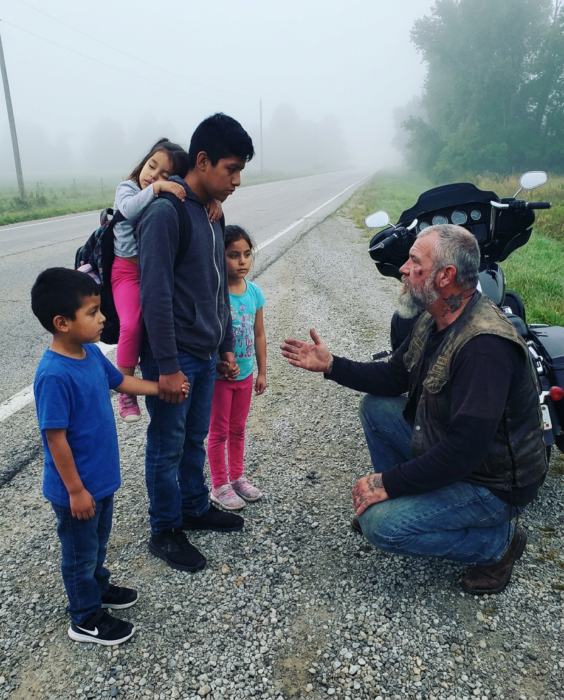
He feared that if anyone saw how the household was running, the younger three would be separated. He had heard stories at school and fragments of adult conversations, none of them about his own case, and built a frightening certainty from them. He did not tell his teachers where his parents were. When classmates asked, he said they were working away from home.
At five each morning, Mateo woke first. He heated breakfast, packed lunches when there was enough food, and laid Mia’s clothes on a chair. Isabel, nine, tied Mia’s hair because Mateo could never make the sides even. Nico, seven, checked the water bottles. They left early so Mia could walk the first half of the route at her own speed. Mateo carried her when she tired. They reached school on time and came back by the same road after classes.
In the evenings, Mateo sometimes worked at a car wash. He dried vehicles, emptied bins, and took small amounts of cash. The owner thought Mateo had permission to work; he did not know Mateo was returning to a house without an adult caregiver. Some nights Mateo did his homework after the younger three went to sleep. He had not missed a day of school during those five months. His attendance record, which people later praised, concealed how little rest he was getting.
When Cal told me what Mateo had said at the roadside, he was upset. He wanted to drive straight to the house. I wanted to as well. Lena, another club member and a retired school office manager, urged us to speak first with the people whose job was to protect children. Four children were living alone. Good intentions and a bag of groceries could not make that safe.
The school had already begun responding to the concerns we reported. We called again with the new information Mateo had shared and asked how to provide our names to the family support workers involved. Staff could not tell us their next steps, but they listened. That afternoon, trained workers met the children, spoke with Mateo and his siblings, and began locating their parents and possible caregivers. Cal and I made clear that Mateo had spoken because he was afraid. We asked them to explain each step to him rather than let his worst guess fill the silence.
Mateo called Cal that evening. He had kept the phone number Cal gave him in case the road ever became unsafe. His voice was flat.
“You told,” he said.
“Yes,” Cal answered. “You four needed adults there tonight.”
Mateo said somebody might take Mia away. Cal did not promise a result he could not control. He said the workers were looking for a way to keep the siblings together and that he would tell them everything he knew about people willing to help. Mateo was quiet for a long time. Then he said Mia had hidden under her bed when the visitors arrived.
I could hear the strain in Cal’s voice after the call. He had known the boy for less than a week, but he knew Mateo would remember this as the day a stranger broke his confidence. Cal still believed the call was necessary. He also knew he had to keep showing up if Mateo would let him.
A temporary adult caregiver stayed with the children while staff checked family contacts and longer-term options. Mateo finally slept through a morning alarm. Isabel woke him in a panic, sure they would miss school. The caregiver made breakfast and drove them. Isabel later told Lena that she had not seen Mateo sleep that deeply in months.
The following afternoon Mateo stood outside the house when Cal arrived with permission from the caregiver. He did not invite him in. Cal stayed by the gate and asked whether anyone had explained the plan for that week. Mateo said the workers were still talking to relatives and that the children were together for now.
“Are you angry with me?” Cal asked.
“Yes.”
Cal nodded. “You can be.”
He left a number for the caregiver and went back to his bike. Mateo kept standing at the gate until the engine faded down the lane.
The first question was who could care for all four children while their parents and the appropriate agencies worked through the next steps. Elena and Rafael had names to suggest. One relative lived too far away to come immediately; another could help for short periods but had no room for four children. The family support workers evaluated the available options and kept the parents involved as they were able. We waited for those decisions instead of making our own arrangements around them.
Cal and his wife, June, offered to be considered as caregivers. They had raised a daughter and had space in their house now that she lived nearby with her own family. The offer went through the required checks and approval process. June made certain Cal understood what he was offering. Children who had been caring for themselves would need room to be angry, frightened, noisy, and unsure of them. She did not expect gratitude in exchange for clean beds.
While that process moved forward, the four siblings remained together with approved temporary care. Cal visited when the adults responsible said it was welcome. On one visit he brought a card game. Nico wanted to play immediately. Mateo sat at the far end of the table and watched for errors. He corrected Cal twice and did not smile. Cal kept coming.
That same week I saw another grocery bag appear at the old house. The children were not living there then, yet somebody had left bread and vegetables on the step as though the evening routine had never changed. I called Cal. We waited down the lane the following Thursday, where we could see the porch without approaching anyone’s door.
At dusk a small woman came around the corner pulling a wheeled shopping cart. She took a paper bag from it, climbed the steps, and set the bag in the dry spot beside the door. She adjusted it so the bread would not be crushed. Then she began to walk away.
Cal stepped out where she could see him. “Mrs. Harlan?”
She stopped with both hands on the cart handle.
Her name was Ruth Harlan. She was seventy-nine and lived two houses down. Her husband, Walt, had ridden with our club until he died eight years earlier. Cal still kept Walt’s old photograph on the garage wall. Ruth came to some summer cookouts but avoided crowded evenings. Cal had not known she was the neighbor Elena and Rafael believed would check on the children.
Ruth looked at the bag, then at Cal’s vest. “I know they’re somewhere safe,” she said. “I forgot they weren’t here tonight.”
She had been bringing food every week since the parents left. At first she thought another relative would arrive soon. When the weeks passed, Mateo asked her not to tell anyone. He was afraid of losing his siblings, and she had seen how frightened he became whenever an unfamiliar car slowed near the house.
She knew he was working evenings. She knew four children should not be alone. Several times she had almost called for help. Then Mateo would answer the door with Mia in his arms and tell her everything was fine. Ruth supplied food and watched for the lights to come on each night. It was much more than her small pension could comfortably cover.
“Why didn’t you tell us?” Cal asked.
Ruth looked almost offended. “You boys have your own families.”
“Walt was our family.”
“I thought you’d say I was minding somebody else’s business.” Her voice dropped. “And Mateo trusted me.”
Cal did not scold her. I think he saw that she had been caught between her promise to Mateo and her fear for the children. Ruth looked down at the bag again and asked how they were doing. Cal told her they were together and with adults. He asked whether she would speak with the family support workers about what she had seen. She agreed if they would let her explain to Mateo herself.
At our garage that night, Cal called a meeting. Some members wanted to pay Ruth back for every grocery bag immediately. Lena pointed out that we did not know what Ruth wanted and should ask her. Vince wanted to repair her porch steps, which had begun to sag. We could at least offer that. More pressing was making sure the workers knew how long Ruth had watched over the children and how close the siblings felt to her.
Ruth came to the meeting herself. She stood beneath Walt’s photograph and told the club about the first winter evening Mateo had answered the door. The heat had been set low to save money. Mia wore a sweater over her pajamas. Ruth had brought a pot of soup and asked for the container back whenever they finished, giving Mateo a reason to open the door again. She had kept using the same pot until its handle loosened.
Nobody told her she had been minding somebody else’s business. Cal offered her a chair, and she stayed to help plan a visit with the children. When she left, Vince carried the empty shopping cart to her car. She told him to put it back down. She could manage it. He did, then walked beside her to the curb.
Cal and June were approved to care for the four siblings together while the longer-term plan was worked out. The parents were consulted through the channels available to them, and the family support workers remained involved. Mateo, Isabel, Nico, and Mia moved into two bedrooms at the Rourkes’ house. June told them which cupboards held cups and snacks. Cal showed them the back door and the night-lights in the hall. Neither called it their “new home” in front of the children.
On the first night Mateo packed the younger three’s school bags and lined them against the wall. June told him she had set an alarm and would drive them in the morning. He checked that the alarm was on. Half an hour later he checked again.
The next day he woke at five anyway. He found June in the kitchen preparing breakfast. He offered to help. She gave him fruit to wash, then told him he could go back to bed if he wanted. Mateo stayed at the table watching her make toast. He did not yet believe an adult would keep doing it tomorrow.
Ruth visited the following afternoon. She asked permission before coming in and waited while Mateo decided whether to see her. He appeared in the doorway with his arms crossed. She told him she had spoken to the people helping the family and was sorry she had kept the secret as long as she did. Mateo said she was the only one who had kept it at all. Ruth accepted the anger without arguing.
Mia ran to her before either could say more. Ruth had often left an extra banana in the grocery bag because Mia liked one with breakfast. Mia asked whether she had brought any. Ruth reached into her handbag and produced one, slightly bruised from the trip. June fetched a plate. The visit ended with Nico showing Ruth where he slept and Mateo walking her to the car.
The club wanted Ruth nearby. Her house was safe, but the porch needed repair, her grocery bills had left little room for unexpected expenses, and she was tired after months of watching the children. Cal asked whether she would accept help. She insisted that he come look at the porch first rather than plan a rescue without her. Vince repaired the steps with her approval. June invited her for dinner twice a week. Over time Ruth chose to spend longer stretches in their guest room, especially while she recovered from a winter illness. She kept her own house and her own key. When she called the Rourkes’ place “the busy house,” we knew she felt welcome there.
Ruth brought Walt’s stories with her. She told the children how he used to polish his Harley until he could see the porch railing reflected in it, then ride home through rain and start over. Nico asked whether Walt had been as big as Cal. Ruth said nobody was as big as Cal when they were blocking a kitchen doorway, and Cal moved so she could pass.
Mateo had harder adjustments. At school, teachers noticed that he was more tired once he no longer had to spend each evening organizing the household. He worried about his grades and about money for the younger children. He had also lost the job at the car wash when the owner learned the full situation. Cal told him that earning money for the household was an adult responsibility now. Mateo asked what would happen if Cal got tired of it.
Cal answered plainly. “You’ll hear about plans from us and the people helping your family. We won’t make you guess.”
Mateo didn’t thank him. He did, however, stop hiding food in the bottom of his school bag after June showed him the pantry remained stocked each week.
Elena and Rafael called when arrangements allowed. The first calls were difficult. Mia wanted to know exactly when they were coming back. Their parents could not give her a date. Mateo tried to report that everyone was fine and omit what the five months had been like. Elena heard the exhaustion in his voice. She asked to speak with June afterward, then thanked her for taking the children together.
The club helped the parents obtain qualified immigration counsel. The lawyer reviewed their circumstances, documents, prior proceedings, and possible lawful avenues for return. He was careful with us: a fundraiser could pay fees and travel costs, but it could not guarantee a legal result or shorten every required step. We agreed to let him do the legal work and kept our attention on the family’s daily needs.
We raised money through club events and accounted for the expenses with the parents and caregivers. Some went to legal fees. Some paid for school supplies, counseling and transportation, and a larger table at the Rourkes’ house because six people and Ruth could barely fit around the old one. Mateo helped choose it. He wanted rounded corners so Mia would stop catching her hip when she ran through the kitchen.
At night, when the younger three were asleep, Mateo sometimes sat on the back step. Cal joined him if he was invited. They talked about motorcycles, weather, and once about the road they had walked. Mateo said he still dreamed of missing the bend and finding one of the children gone when he turned around.
Cal did not tell him to forget it. He said the children were asleep inside, June knew where they were, and Mateo could go check once if he needed to. Mateo did. Then he came back out and sat with Cal until the porch light filled with moths.
For sixteen months, the family lived by dates they could not always control: appointments, document requests, calls with the lawyer, school terms, and birthdays that Elena and Rafael attended by phone. There were encouraging days and delays. Each time the children asked for a return date, the adults answered with what they knew and admitted what they did not.
Isabel marked the months on a calendar in the room she shared with Mia. Nico learned to video-call his parents without waiting for a special occasion; he liked showing them whatever he had built that afternoon. Mia occasionally refused to speak, then took the phone from June ten minutes later to tell her mother about a scraped knee. Elena and Rafael remained their parents throughout. June and Cal helped the children reach them whenever they could.
Mateo had a harder time giving up the role he had made for himself. He checked permission slips before June saw them and worried if Nico needed new shoes. When school called about an ordinary appointment, Mateo asked whether he should come home to handle it. His counselor helped him recognize how much responsibility he had carried. Sometimes he wanted to talk. Sometimes he wanted to play basketball with classmates and leave the subject alone. June made room for both.
Ruth became part of their routine. On Thursdays she cooked a large pot of soup at the Rourkes’ house. The children washed vegetables and argued over whose turn it was to set the table. She told stories about Walt and, when Mateo asked, about the months she had delivered groceries. She was honest that she should have sought more help sooner. Mateo told her he had begged her not to. They could both remember their fear without pretending the arrangement had been safe.
One afternoon Ruth handed him the old soup pot with its repaired handle. “You’re allowed to use it for something you like now,” she said.
Mateo made popcorn in a different pot, because June warned him the old one was the wrong shape. He stored Ruth’s on the bottom shelf anyway. Mia kept using it to hold wooden spoons while she played restaurant.
The lawyer called Cal on a Tuesday, then spoke directly with Elena and Rafael and the family support workers. A lawful path back had been completed, subject to final travel arrangements. Elena and Rafael would be able to return. Cal wrote down every detail he was allowed to share so he would not turn hope into a promise about a flight that had not yet been booked.
When the travel date was confirmed, June gathered the children at the dining table. Ruth sat beside Mia. Mateo asked first whether they were all going to the airport. June said yes, if they wanted to. Isabel asked whether their parents would come home to the same house. They would begin by staying with family and working through a reunification plan with the people already supporting them. Everyone would know where the children were that night. There would be no rushed handoff in an airport corridor.
Mateo looked at Cal. “You’re sure they can come?”
“The lawyer spoke to them,” Cal said. “Their flight is booked.”
Mateo stood up so abruptly his chair slid against the floor. He went to the back step. Cal followed after a minute and found him staring at the yard. Mateo said he had spent so long planning what to do if his parents never returned that he didn’t know how to plan for this.
“You can just meet them,” Cal said. “We’ll handle the rest together.”
On the day of the flight, fifty riders gathered in a permitted area near the airport, away from the passenger doors and traffic lanes. The children’s welcome would happen inside with the family. The motorcycles were there because the club wanted Elena and Rafael to see the people who had helped keep their children together, if the parents wanted to meet us afterward.
Ruth wore a navy coat Walt had bought her years before. She carried a small bag of snacks, even though June had packed food too. Cal offered her his arm on the walk to the terminal. She told him she could walk perfectly well, then took it because the floor was slick.
The arrival board changed. Passengers began coming through in uneven groups. Mia pressed forward and June gently kept her behind the line. Nico held his phone ready to take a photograph. Isabel watched each face. Mateo stood so still beside Ruth that I wondered whether he could breathe.
Elena appeared first, pulling a suitcase. Rafael was a few steps behind. Mia called out. Both parents dropped their bags. The four children moved toward them together, Mateo last only because he made sure Nico had cleared the crowd. Elena drew him in with one arm while holding Mia in the other. Rafael wrapped his arms around the rest. They stood there until a traveler with a luggage cart quietly moved around them.
Ruth stayed beside Cal. Elena saw her over Mateo’s shoulder and reached out a hand. “Thank you for feeding them,” she said when she could speak. Ruth shook her head and pointed at Mateo, but Elena kept hold of her hand.
Outside, Rafael saw the motorcycles lined up in the designated area. Fifty Harleys filled the row. He looked at Cal, then at Mateo. Mateo told him they were the people who had seen them walking to school. Rafael’s eyes moved back toward his children. Cal said he was glad the family had arrived safely. He left the rest for later, when they could talk somewhere quiet.
Reunion did not erase sixteen months of changed routines. The children spent time with Elena and Rafael while the adults followed the reunification plan. Mia wanted her parents close every minute, then became angry when they went into another room. Nico showed them everything in the Rourkes’ house, including the place where he had drawn a faint mark on the pantry shelf. Isabel asked practical questions about where they would live and how she would get to school.
Mateo needed room to be fourteen. He loved his parents and had spent months wanting them home. He was also used to deciding when the younger three ate, slept, and left the house. Elena and Rafael thanked him for keeping them together while making clear he no longer had to run the family. He argued with his father over small things, then apologized, then argued again. The adults stayed with him through it.
Before the children moved back to live with their parents, the family had dinner at Cal and June’s table. Ruth made soup. June set out enough bowls for everyone, and Vince brought bread without staying because there was barely room for the people who belonged at that meal. Elena asked Mateo to sit beside her. When Mia spilled water, three adults reached for a towel. Mateo stayed in his chair. He looked startled, then returned to his soup.
The morning after the children moved home, I rode the old school road alone. Fog lay over the fields. I stopped at the wide shoulder where we had first seen the four of them. A school bus came around the bend and continued toward town. There were no children walking beside it.
Later I found Cal at the garage. He was repairing a loose mirror on his Harley. I told him the road was clear. He nodded and tightened the last bolt. That was his way when news mattered too much for a speech.
The club continued to see the family. We were friends who called first, visited when invited, and returned children by the agreed time. Ruth still brought food, though now she sat at the table to eat it. She had grown close to Elena. Sometimes the two cooked together while Rafael and Cal worked on a small shelf for the kitchen. Ruth claimed Rafael measured more carefully. Cal said she was allowed to be wrong in her own house.
Mateo stopped by the garage after school on some Fridays. He learned maintenance tasks under supervision and asked questions Cal could answer. He also joined an after-school running group. The first day he told me about it, I thought of the six-kilometer walk and kept that thought to myself. He had chosen the running group because two friends were going. He came back sweaty, complained about the coach’s drills, and went home to do homework before dinner.
The car wash owner visited once to apologize to Mateo and to the adults. He said he should have asked more questions when a fourteen-year-old kept accepting late shifts. Mateo did not have to make him feel better. He listened, said he was glad he no longer worked there, and returned to the bike part he was cleaning.
Ruth turned eighty the following year. We held a cookout at the Rourkes’ house, where the yard could fit the club and the Alvarez family. Someone brought a photograph of Walt from a ride eight years earlier. Ruth put it beside a newer photograph taken at the airport: four children, two parents, Cal and June, and Ruth in her navy coat. She did not want either photograph hung above the other.
As the evening cooled, Mateo carried extra chairs into the garage. Cal offered to help. Mateo gave him two and kept two for himself. When they came back, Mia ran to Mateo with a scraped palm. He checked it, then called for Elena. Mateo stayed beside his sister while their mother washed the scrape and found a bandage. The three of them went back outside together.
We still ride that road some mornings. The shoulder remains narrow, and the bend still makes Cal signal for us to slow down. The school bus uses it now. When we see it, we leave plenty of room and continue toward town.
Mateo once asked whether I remembered what he said on the third morning, when Cal offered help. I told him I remembered how firmly he refused to let the younger three get on motorcycles. He smiled at that. Then he asked if I remembered that he had thanked us first. I did.
“You seemed pretty angry,” I said.
“I was scared.”
He was tall enough by then to look Cal nearly in the eye. Nico and Isabel were arguing behind him about whose turn it was to choose a movie. Mia waited by Elena’s car with a sweater over one arm. Mateo glanced back to check on them, the same quick movement I had seen through the fog. Then he let Elena call them to the car.
At the garage, we keep a photograph from Ruth’s eightieth birthday. Walt’s old club photograph hangs beside it. Ruth says the newer one makes everyone look tired. She also makes sure nobody moves it.
Every winter she asks whether the Alvarez family has enough soup containers. Elena tells her yes. Ruth brings one over anyway, then stays for dinner. Cal walks her to her car afterward. She tells him she can manage the path. He says he knows, and walks beside her.
The last time I saw Mateo on the school road, he was there with his parents and siblings at a community event, waiting for a group walk to begin. Mia reached for his hand. He took it. When the signal came, all six of them started forward together.
Follow this page for more biker stories about the families we meet, the people who quietly help them, and the roads that lead us back to one another.