Part 2: An Elderly Woman Knitted Every Day in a Nursing Home and Was Looked Down On by a New Staff Member — Until a Reporter Revealed Who She Really Was
Green Hollow Care Center sat on a quiet street outside Columbus, Ohio, between a maple grove and a medical office building with tinted windows.
It was not a cruel place.
That was what made the small cruelties harder to name.
The lobby had fresh flowers on Mondays, framed paintings in soft colors, and a coffee station for visiting families.
There were holiday banners in the dining room and cheerful calendars taped near the elevators.
But in places like Green Hollow, dignity often depended on who was busy, who was watching, and who still had family willing to complain.
Eleanor Whitmore had few visitors.
A niece came every other month from Cincinnati and stayed exactly one hour.
A former neighbor sent Christmas cards with loopy handwriting.
Once a year, a man in a postal uniform brought a package and refused to leave it at the desk until Eleanor signed for it herself.
Most staff assumed she had lived a quiet life.
Widowed.
Childless.
Forgetful sometimes.
Harmless.
That was how Madison Vale first filed her away.
Madison was twenty-nine, white American, with sleek dark hair, long eyelashes, and a bright badge that still looked new.
She had trained in hospitality before moving into senior care, and she believed she was good with older people because she smiled often.
But her patience was thinner when residents moved slowly, repeated stories, or needed help with things that embarrassed everyone involved.
Eleanor’s knitting annoyed her most.
The yarn rolled under chairs.
The needles clicked during morning announcements.
The red thread appeared everywhere, tucked inside baskets, around chair arms, even once looped carefully around Eleanor’s wrist while she slept.
Madison called it clutter.
Nurse Linda called it comfort.
Linda was a Black American woman in her fifties, broad-shouldered, calm, and too experienced to confuse quiet residents with simple ones.
She always paused by Eleanor’s chair before breakfast.
“What are we making today, Mrs. Whitmore?”
Eleanor would lift the piece gently.
“Something warm.”
“For someone special?”
Eleanor’s smile would tilt.
“Everyone cold is special.”
That was the first thing Linda kept in her mind.
Eleanor did not knit randomly.
She counted rows under her breath.
She measured tiny sleeves with the edge of an old photograph.
She wrote initials on small tags and tied them to finished pieces with white ribbon.
When her fingers cramped, she pressed them against a heating pad, waited ten minutes, and picked up the needles again.
One afternoon, Madison found Eleanor in the lounge surrounded by three small hats and a half-finished blanket.
A ball of red yarn had rolled near the hallway.
Madison picked it up sharply.
“This is becoming a safety issue.”
Eleanor reached for it.
“I’m sorry, dear.”
“You always say that.”
Eleanor’s hand stopped.
Across the room, Mr. Boone, a retired bus driver, looked up from his newspaper.
Madison lowered her voice, though not enough.
“You know, some residents do activities to stay engaged. But you can’t just sit here all day making things nobody asked for.”
The room went still in that tired way nursing homes sometimes go still.
Not because people did not hear.
Because they had heard too much in life already.
Eleanor folded the small hat into her lap.
“I understand.”
Madison walked away.
Linda saw Eleanor’s fingers trembling afterward.
Not from arthritis.
From holding back something older than pain.
That evening, Linda helped Eleanor back to her room.
The room was neat, almost too neat.
One framed black-and-white photo sat on the dresser.
It showed a much younger Eleanor in a hospital gown, holding a bundle so small it looked like folded linen.
Beside the frame was a wooden box with brass hinges.
Linda had seen it before, but never opened.
“Can I ask something?” Linda said.
Eleanor looked at her.
“You may.”
“Who are the little sweaters for?”
Eleanor touched the wooden box.
“For babies who arrive with nothing their size.”
Linda waited.
Eleanor did not continue.
That was all the reveal she allowed.
The reporter came the following Tuesday.
Her name was Rachel Kim, an Asian American journalist in her late thirties from Channel 6.
She was filming a segment about staffing shortages, resident loneliness, and the quiet realities of long-term care.
Madison loved the idea of cameras.
She guided Rachel through the bright parts first.
The garden.
The therapy room.
The dining hall.
She introduced residents by first names and spoke loudly, even when they answered softly.
Then Rachel saw Eleanor by the window.
Red yarn in her lap.
Needles moving slowly.
A tiny sweater forming beneath her hands.
Rachel stopped walking.
The camera operator nearly bumped into her.
Madison smiled too quickly.
“Oh, that’s Mrs. Whitmore. She likes to knit. Keeps her busy.”
Rachel did not move.
Her eyes had gone to the tiny red sweater.
Then to Eleanor’s face.
Then to the old photograph barely visible in the open knitting basket.
“Mrs. Whitmore,” Rachel said carefully, “may I ask your first name?”
Eleanor looked up.
“Eleanor.”
Rachel’s voice changed.
“Eleanor May Whitmore?”
Madison blinked.
Eleanor’s needles paused.
“Yes.”
Rachel lowered the microphone.
“My mother still has one of your red blankets.”
For the first time since Madison had known her, Eleanor looked startled.
“She does?”
Rachel nodded, eyes filling.
“She said it was the first thing that made me look like I belonged in the world.”
The lounge went silent.
Madison stared between them, no longer smiling for the camera.
And Eleanor, who had been treated like a harmless old woman with yarn, slowly placed one hand over the tiny red sweater as if protecting a life inside it.
Rachel asked if they could sit.
Not for the scheduled segment.
For the real story.
Eleanor looked toward Madison, then toward Linda, who had appeared near the nurses’ station with both hands folded over a chart.
Linda nodded once.
Not pressure.
Permission.
Eleanor set the knitting needles across her lap.
“I’m not sure there is much story left,” she said.
Rachel sat in the chair beside her.
“My mother would disagree.”
The camera operator asked softly if he should keep rolling.
Rachel looked at Eleanor.
Eleanor gave a small nod.
The red sweater rested between them like a match struck in a dim room.
Rachel began with what she knew.
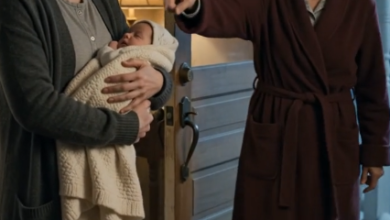
She had been born premature in 1986, weighing less than three pounds, in a hospital that had limited neonatal supplies.
Her mother often told her about a red blanket waiting in the NICU, folded inside a warmer, handmade and impossibly small.
“She said the nurses called them Whitmore wraps,” Rachel said.
Eleanor’s eyes lowered.
“They weren’t supposed to call them that.”
“But they did.”
A nurse passing through the lounge stopped.
Mr. Boone folded his newspaper.
Even Madison stood still, one hand gripping her tablet.
Eleanor looked toward the window, where pale winter sunlight touched the yarn in her lap.
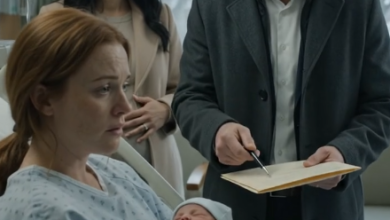
“My son was born too early,” she said.
The words came evenly, but the room felt them shift.
“1959. Back then, they did not have what they have now. He lived twelve hours.”
Linda closed her eyes.
Eleanor continued.
“The hospital wrapped him in a towel meant for adults because there was nothing small enough.”
Her hands moved over the red sweater.
“I remember thinking, this world did not even have clothes ready for him.”
No one spoke.
“He was named Samuel.”
That was the first time most people at Green Hollow heard Eleanor mention a child.
She had not been childless.
She had been a mother for twelve hours and grieving for sixty-four years.
After Samuel’s death, Eleanor did not speak for weeks.
Her husband, Paul, sat beside her every evening, helpless in the way good men become when love cannot repair the thing broken.
One night, Eleanor took up knitting needles her own mother had left behind.
She made one tiny blanket.
Then another.
Then a hat.
Then a sweater.
At first, she brought them to the hospital anonymously.
The nurses accepted them because need has no time for questions.
Years passed.
The hospital changed names twice.
The neonatal unit expanded.
Eleanor kept knitting.
Red became her signature because Samuel’s first and only blanket had been a faded red towel from the maternity ward laundry.
Every stitch was a correction.
Every blanket said what the world had failed to say to her son.
You were expected.
You were worthy of tenderness.
You arrived, and someone made room.
Rachel’s microphone trembled slightly in her hand.
“How many have you made?”
Eleanor gave a small embarrassed laugh.
“I stopped counting around ten thousand.”
Madison’s face drained.
Ten thousand.
Not imaginary crafts.
Not clutter.
Not meaningless busywork.
Ten thousand babies wrapped by hands she had mocked for moving too slowly.
Rachel asked about the wooden box.
Eleanor hesitated, then asked Linda to bring it from her room.
When Linda returned, Eleanor opened it on her lap.
Inside were letters.
Hundreds of them.
Thank-you notes from parents.
Photos of tiny babies wrapped in red blankets, then later photos of toddlers, teenagers, wedding days, graduation caps.
Some envelopes were worn soft from rereading.
Eleanor lifted one photograph.
A baby in a red hat.
Then a second photo clipped behind it.
A young man in a firefighter uniform.
“He was one pound, fourteen ounces,” Eleanor said. “His mother sent this last year.”
Rachel covered her mouth.
Madison looked away, but there was nowhere kind to rest her eyes.
Eleanor took out another letter.
“This family lost their daughter after three days,” she said. “They said the blanket was the only thing they could hold after she was gone.”
Her voice thinned.
“So I kept making them.”
The main twist had unfolded, but Rachel sensed more.
“Why did you come to Green Hollow?” she asked.
Eleanor smiled faintly.
“My hands stopped agreeing with my intentions.”
Her arthritis had worsened.
Paul had died years earlier.
The house became too large, the stairs too sharp, the winter sidewalks too dangerous.
Her niece arranged Green Hollow because it was close enough for occasional visits and had a decent reputation.
Eleanor brought only clothes, photographs, yarn, and the wooden box.
The hospital still sent requests through volunteers.
She still knitted as many as she could.
But she did not tell the staff who she was because attention made her tired.
“I do not need people clapping for grief,” she said.
That sentence settled over the lounge.
Madison flinched as if it had found her specifically.
Rachel turned carefully.
“Mrs. Whitmore, do you know how many families still talk about you?”
Eleanor looked genuinely confused.
“They talk about the babies.”
“They talk about the woman who made sure they were warm.”
Rachel reached into her bag and pulled out her phone.
She opened a photo.
Her mother, older now, sat in a living room holding a carefully folded red blanket.
Rachel’s voice broke.
“She keeps this in her cedar chest. Every year on my birthday, she takes it out and says someone loved me before she knew I would live.”
Eleanor’s eyes filled then.
Not with sadness only.
With recognition returning from a place she never expected.
Madison stepped forward before she seemed ready.
“Mrs. Whitmore,” she said.
Her voice cracked.
Eleanor looked at her.
Madison’s polished confidence had vanished.
“I’m sorry,” she whispered. “I treated your work like it was in the way.”
Eleanor studied her for a long moment.
Then she looked at Madison’s hands.
They were young, unscarred, manicured, restless.
“My work was in the way,” Eleanor said gently. “You just did not know of what.”
Madison began crying.
No one comforted her too quickly.
She needed the discomfort.
Rachel’s segment changed completely.
It aired that evening as “The Woman Who Knitted Ten Thousand Beginnings.”
Within hours, Green Hollow’s phone began ringing.
Parents called.
Former NICU nurses called.
Adults who had once been premature babies called because their mothers recognized the name.
Photos flooded the station.
Red hats.
Red blankets.
Red sweaters on babies small enough to fit in one hand.
The next morning, Madison walked into the lounge carrying a rolling cart.
Not medication.
Yarn.
Red yarn, white ribbon, labeled bins, soft measuring tape, and a sign she had printed herself.
“Mrs. Whitmore’s Warmth Project.”
Eleanor looked at the sign.
Madison swallowed.
“I can change the name.”
Eleanor touched the edge of a skein.
“Add Samuel.”
Madison nodded quickly.
By noon, the sign read: “Samuel’s Warmth Project, founded by Eleanor Whitmore.”
That afternoon, the administrator called a public meeting.
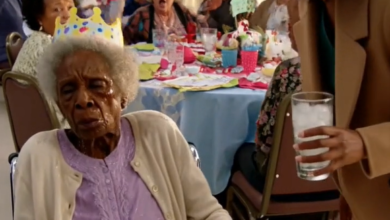
Staff, residents, families, and local reporters gathered in the dining hall.
Madison stood beside Eleanor’s wheelchair, face bare of the usual practiced smile.
The administrator apologized for Green Hollow’s failure to recognize and protect the dignity of a resident whose lifetime of service had been sitting in plain sight.
Then Madison asked to speak.
She did not make excuses.
She said she had mistaken age for emptiness and quiet for uselessness.
She said she had mocked work she had not bothered to understand.
She turned to Eleanor.
“I am sorry for every time I made you feel small in the place that was supposed to care for you.”
Eleanor looked at her for a long moment.
Then she lifted the unfinished red sweater.
“There is room for another pair of hands,” she said.
That was not absolution.
It was an invitation to become different through work.
Madison took it with both hands.
Green Hollow changed after that.
Not perfectly.
Places do not transform overnight because one story goes viral.
But people began looking twice.
At Mr. Boone’s folded newspaper.
At Mrs. Patel’s humming near the window.
At the silent man in Room 19 who lined up sugar packets according to colors only he understood.
Staff meetings included a new question after medical updates.
“What do we still not know about this person?”
Sometimes the answers were small.
A former baker.
A retired bus driver who knew every street in Columbus by memory.
A woman who once played piano in hotel lounges and still moved her fingers over tabletops when jazz came on.
Eleanor did not become comfortable with attention.
She tolerated it because the attention brought yarn, postage money, volunteers, and a new connection with the hospital NICU.
Samuel’s Warmth Project moved into a sunny corner of the activity room.
A wooden shelf held finished blankets.
A binder held requests.
A bulletin board displayed photos from families who gave permission.
At the center was a small frame with Samuel’s name.
No photograph.
Eleanor had none.
Only the name, stitched in red thread on cream cloth.
Madison came early on Tuesdays to help.
At first, her stitches were too tight.
Eleanor told her so.
Madison laughed through embarrassment and tried again.
Linda joined when her shift ended.
Rachel returned twice without a camera.
The third time, she brought her mother.
The older woman walked slowly into Green Hollow holding the red blanket that had once wrapped Rachel.
When she saw Eleanor, she pressed the blanket to her chest.
“I have wanted to thank you for thirty-eight years,” she said.
Eleanor reached for her hand.
“You kept it.”
“I kept her,” the woman replied, nodding toward Rachel.
Eleanor smiled.
“That is the better part.”
Winter softened into spring.
The maple trees outside Green Hollow turned green again.
Eleanor’s hands grew stiffer, and some days she could knit only one row before resting.
Madison learned to read her face.
She brought tea before being asked.
She untangled yarn without sighing.
She stopped calling residents “sweetie” unless she knew they liked it.
One afternoon, a package arrived from St. Catherine’s Hospital.
Inside were photographs of six newborns wrapped in red hats and blankets from Samuel’s Warmth Project.
One baby wore the tiny red sweater Eleanor had been knitting the day Rachel recognized her.
Madison placed the photo in Eleanor’s lap.
Eleanor touched it with one finger.
“Look at him,” she whispered.
The baby’s eyes were closed.
His fist rested near his cheek, smaller than a plum.
Madison knelt beside the wheelchair.
“Do you want me to put it on the board?”
Eleanor shook her head.
“Not yet.”
She held the photo a little longer.
Outside the window, a delivery truck passed.
Somewhere down the hall, Mr. Boone complained that the coffee tasted like warm brown water.
Life at Green Hollow continued in all its ordinary noise.
Eleanor looked at the baby in the red sweater and, for a moment, saw not what she lost, but what her loss had kept warm.
Later that week, the facility hosted families for an open house.
This time, Eleanor was not placed near the window as decoration.
She sat beside the knitting table with Madison at her side, teaching a ten-year-old visitor how to make a simple row.
The child’s stitches were messy.
Eleanor admired them anyway.
“Is it hard?” the girl asked.
“Yes,” Eleanor said. “Most worthwhile things are at first.”
Madison smiled at that.
When evening came, staff began folding chairs and clearing paper cups.
Eleanor remained by the table, a red skein resting against her lap.
Madison brought her shawl.
“Ready to go back to your room?”
“In a minute.”
Madison waited.
Eleanor looked toward the bulletin board, the tiny red garments, the letters, the photographs, and Samuel’s stitched name in the center.
Then she picked up her needles.
Her hands moved slowly.
One loop.
Then another.
Not fast.
Not perfect.
Still making warmth.
Follow this page for more heartfelt stories about quiet lives, hidden legacies, and the people we too often overlook. 🌿